HALO Brand Guidelines
A wearable blanket called the SleepSack, and the name that grew up around it.
Aa
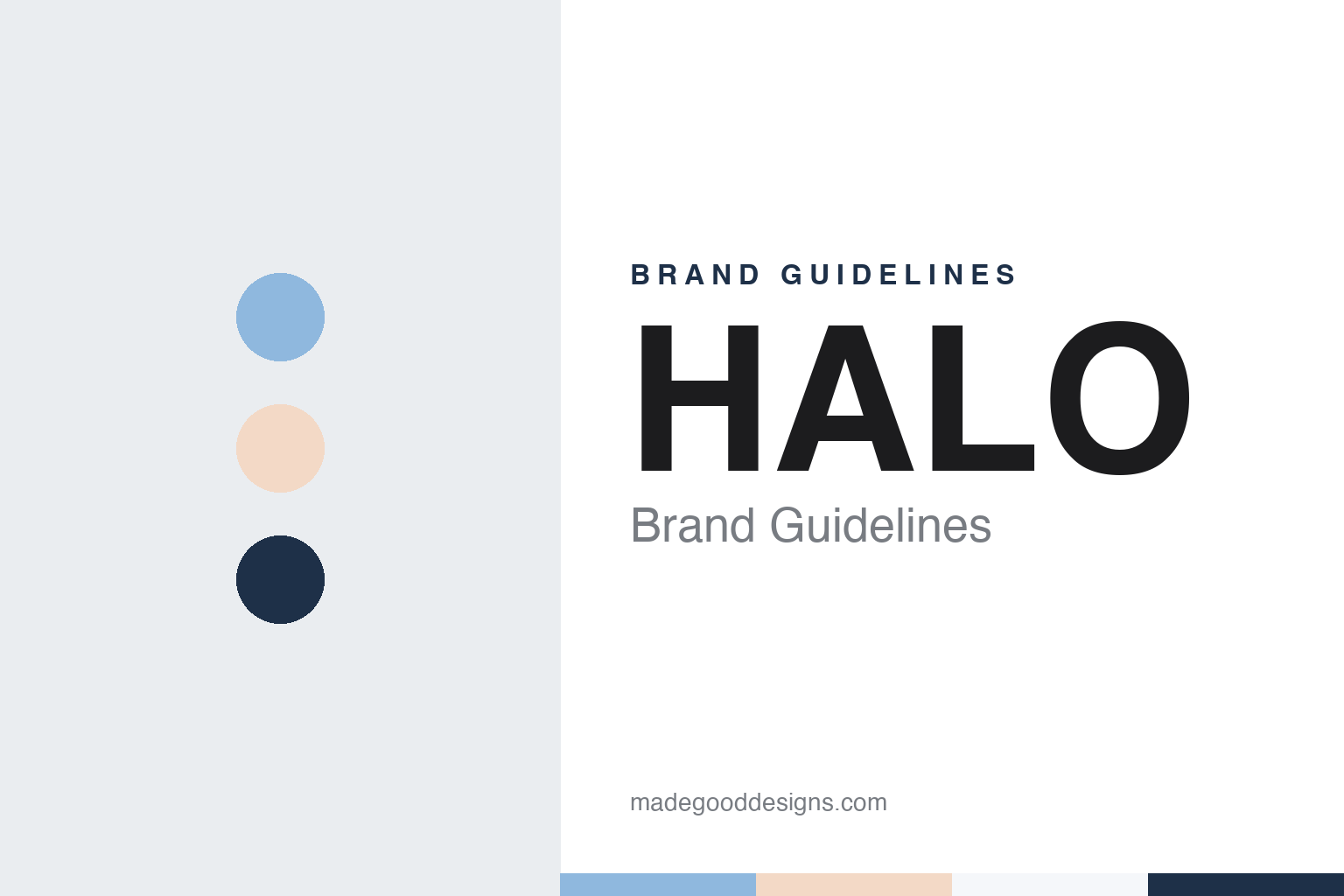
Two constants: a nursery blue, slate navy and blush palette and a clean geometric sans register. Abstract homage — not a HALO product or mark; no wearable blanket, bassinet, pack or logo is reproduced.
A blanket you wear
An American brand that took its name from its first company.
HALO is an American brand of baby sleep products best known for the SleepSack, a wearable blanket, and sold today alongside the muslin brand aden + anais. The company’s own “Our Story” page names its founder as Bill Schmid and says that it was he who designed the SleepSack. The same page describes the business as a hub for sleep products, information and advice, built on the belief, in its words, that “a well rested parent is a better parent”.
The name is older than the blanket. The earliest capture of halosleep.com saved by the Internet Archive, dated 12 December 1998, belongs to a company called HALO Sleep Systems, Inc. At that point the site sold a single product, a crib mattress with a small built-in fan that it called the Halo Sleep System, and the page was little more than a description of the mattress, a telephone number for orders and an email address. There was no wearable blanket on the page and no mention of the SleepSack name.
That changed within a few years. A capture of the same address from 18 January 2002 shows a site with a new footer, “© Halo Innovations, Inc., 2001”, and a new product at the top of the page: “the new HALO Infant SleepSack”, written with a trademark symbol after both words. The mattress was still there, now listed below the blanket. The menu ran from home to sleepsack, crib mattress, resources, purchase information and a page for articles, and the brand name was set in capital letters throughout the page while the company name in the footer was not. That split — HALO in capitals for the brand, Halo Innovations in ordinary type for the company — has carried through the brand’s later material, and the two-word SleepSack name, with its capital S in the middle, is still how the company writes it today.
Colour
From a wearable blanket to a family of products, and a new owner.
By early 2004 the website had grown into a small online shop. A capture from 22 March 2004, carrying the line “Copyright 2003 HALO Innovations, Inc.”, used the phrase “wearable blanket” for the product, and its menu now ran from products and testimonials to a shopping cart, safety resources and an About Us page. The home page announced that an extra-small size was now available in all colours and fabrics, that new cotton products were coming in May, including a Secure-Fit crib sheet, and that a giraffe print was on the way. A lullaby CD was offered in a gift section. Short testimonials, signed with a first name, an initial and a state abbreviation, ran down the side of the page under the heading “What Moms Say”.
The next change was a change of ownership. A Business Wire release dated 12 December 2016, datelined San Francisco and New York, announced that aden + anais, which it described as a portfolio company of the private equity firm Swander Pace Capital and a marketer of soft goods for infants and toddlers, had acquired HALO Innovations. Financial terms were not disclosed. The release quoted Raegan Moya-Jones, the founder of aden + anais, saying: “HALO is the ideal addition to our company,” and describing her company as “longtime admirers of HALO”. It quoted Corby Reese and Heather Smith Thorne, both managing directors at Swander Pace Capital, on the combination of the two businesses.
The same release gave a snapshot of the HALO range at the time of the sale. It named two products: the SleepSack wearable blankets and the Bassinest Swivel Sleeper, a bedside bassinet. It listed the retailers where HALO products could be found as including Target, Buy Buy Baby, Babies R Us, Walmart and Amazon. From that point on, HALO and aden + anais were sold by the same company — one brand rooted in sleep products, the other in muslin swaddles and blankets.
Typography
Design and documentation.
Baby-gear brands sit at a crowded and closely watched point in family life, between the hospital bag, the nursery and the car. Some began with a parent’s own improvised solution to a problem at home; others grew out of established nursery companies or were later folded into larger groups, and a single name can be sold everywhere from a department store to a registry list to its own website.
A baby-gear brand’s identity is usually carried less by a logo than by the products themselves — their names, their fabrics and colours, the shapes parents learn to recognise and the way a range is presented on a shelf or a screen. The companies behind these names may have changed hands, widened their ranges or moved where their products are made since they started.
That makes the plain questions worth asking: who started each brand, who owns it now, and where its products are actually made. Each guide separates what independent, dated sources record from what the company says about itself — its founding story, its owners over time and the way its products and packaging have changed — and marks plainly what rests only on the company’s own word.
Aa
A clean geometric sans for a brand that sets its name in capitals. (Specimen set in Montserrat, a sans-serif STAND-IN; NOT the HALO logo.)
HALO
Transom Capital, Halo Dream and a shared website.
Ownership changed again in 2023. A GlobeNewswire release datelined Los Angeles, 13 June 2023, announced that Transom Capital Group, a private equity firm, had completed its acquisition of Aden & Anais, Inc., which it described as a global designer and manufacturer of infant products sold under the brands HALO and aden + anais. The release said HALO offered wearable blankets, bassinets and tech-enabled products, and that aden + anais made swaddles, bibs, blankets and bath products. It quoted Russ Roenick, a managing partner at Transom, welcoming the two brands, and said the company would operate as an independent entity within Transom’s portfolio.
The website reflects that shared ownership. The HALO site at halosleep.com now carries a banner for a “Halo x aden + anais” collaboration, and its footer has two columns of brand links, one for HALO and one for aden + anais, each with its own story, size chart and product registration page. The page title lists the categories the company now sells under the HALO name — bassinets, cribs, crib mattresses, SleepSacks and swaddles — and the copyright line at the foot of every page reads “Copyright © 2025 Halo Dream, Inc.” The company’s Our Story page lists four brand values: functionality, customer focus, innovation and being mission-driven.
For a design guide, HALO shows how a short name in capitals, carried over from a 1990s company, can outlast its first product and end up on the label of a much wider range — and on a website it shares with a second brand. Compare Hatch, the American sleep-device brand that began with a smart changing pad, and Graco, the American nursery and car-seat brand. For this guide we use nursery blue, slate navy and blush with a sans, an unofficial interpretation; no product or logo is reproduced.
Explore & save
Keep HALO’s identity on hand — save it to a board in the Made Good inspiration library.
HALO identity set
Pin the HALO nursery blue, slate navy and blush palette and the clean geometric sans register to your own board.