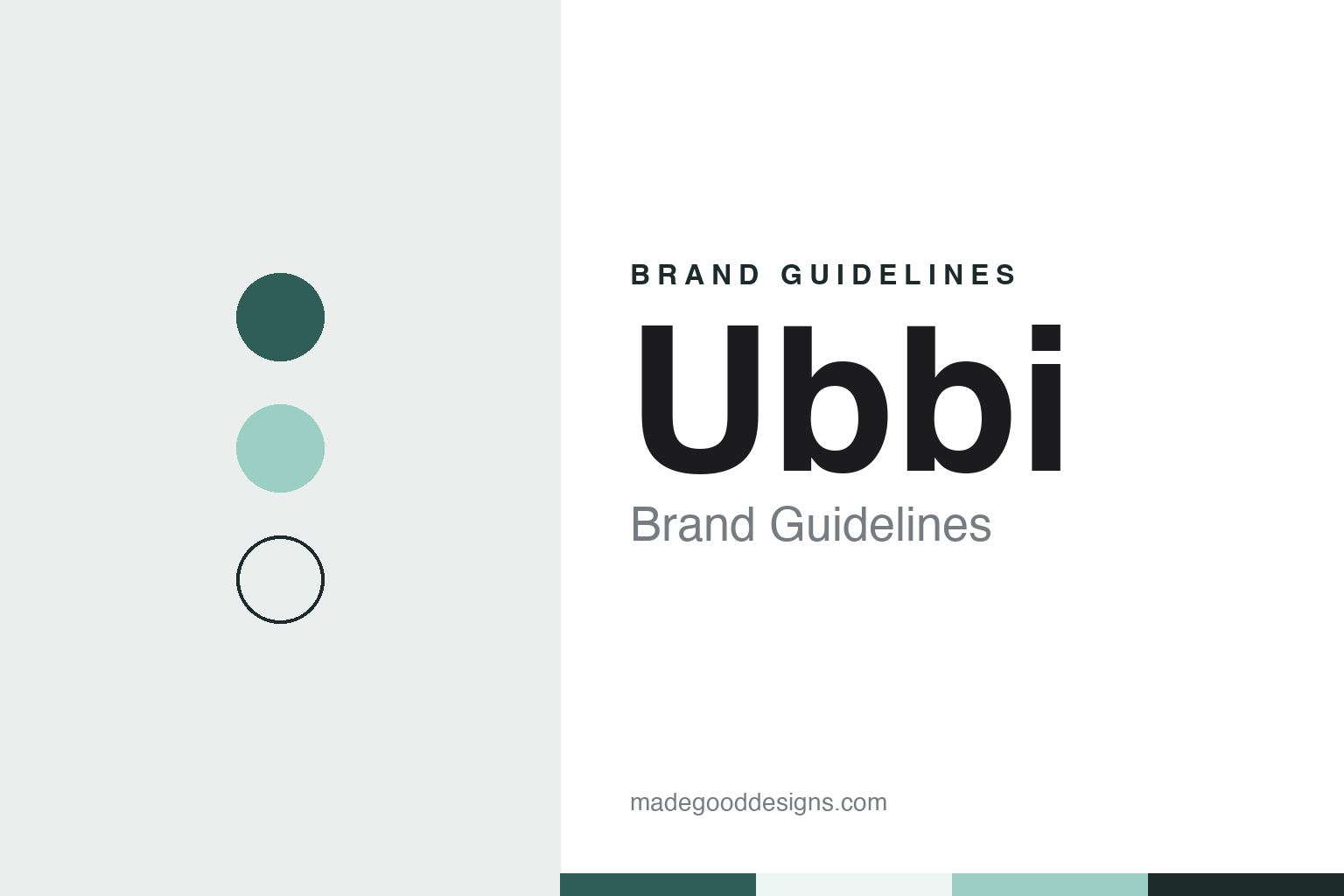
Ubbi Brand Guidelines
Pearhead’s Brooklyn steel nappy pail brand.
Aa
Two constants: a green, mint and steel palette and a soft geometric sans register. Abstract homage — not an Ubbi product or mark; no pail, logo or packaging is reproduced.
A Steel Can
A keepsake company, an engineer and a waste container.
Ubbi is a brand of Pearhead, Inc., a company based in Brooklyn, New York. The clearest dated record of the link is a patent. United States patent records, as shown on Google Patents, list an application for a “waste container” submitted on 22 September 2011 and granted on 30 September 2014; the assignee is Pearhead Inc., and the first of its seven named inventors is Thomas Ray Sakaguchi. Ubbi’s own patents page lists that patent against its nappy pail.
Pearhead itself is older than Ubbi. On its website the company says Pearhead, Inc. was started in 1999 by Tom Sakaguchi and Ken Berlin with a single product, a “babyprints” wall frame, and that it is based in the Sunset Park neighbourhood of Brooklyn. Pearhead describes itself as a baby and pet keepsake company that has grown into a gift and lifestyle business; its own brand list names Pearhead and a lower-priced line called Little Pear.
Ubbi arrived on the web soon after the patent filing. The Internet Archive’s earliest captures of ubbiworld.com date from January 2012. The site’s “about” page at that time introduced the brand in lowercase — “Enter the world of ubbi” — and described products designed “with parents in mind,” with a team that worked on everything “from concept and design to production and customer service.” The same capture lists sections for products, a blog, news and a shop.
By 2013 the site had organised itself around one object. Its navigation, as captured by the Internet Archive, invited visitors to “meet the can of steel” and listed the nappy pail, a cloth pail liner, plastic bags and decorative decals for the pail. The steel pail is the product the brand is built on; the company says it takes any standard bin bag, and it still calls the pail its “can of steel.”
Colour
From one pail to a family of products.
Ubbi’s current “about” page sets out the brand’s intentions in its own words. It says Ubbi products are “designed and created with parents and children in mind,” describes the nappy pail as working with “any standard trash bag or reusable cloth liner,” and says the brand is expanding its “signature diapering selection” and “extending into the feeding category.” Those are the company’s descriptions of its own products; we give them as its claims.
The range on ubbiworld.com in 2026 shows how far that expansion has gone. Under diapering it sells the nappy pail, a larger Venti pail, bags and nappy sacks, and an on-the-go bag dispenser. A separate line called Fleuri by Ubbi covers bags, including an all-day nappy bag and a stroller organiser. Bath products include toy drying bins and toy sets; feeding products include a bottle drying rack, a bottle brush, a bento box and a snack container; and there are toilet-training items, oral-care products such as silicone training toothbrushes, and nursery accessories.
The brand has also moved beyond babies. Ubbi’s website now has a pet section, with a pet waste pail and bags, a litter scoop, bag dispensers, toys and a food bowl, sold under the same Ubbi name as the nursery range.
Ubbi sells in more than one market. Its website offers a United States store and a United Kingdom store priced in pounds, where the pail is called a “nappy bin” rather than a “diaper pail,” and it lists international distributors. The patents page on the same site lists design and utility patents for the pail, the bath toy drying bin and a nappy caddy, including products it marks as discontinued.
Pearhead’s other businesses sit close to Ubbi’s. Pearhead sells baby keepsakes — print kits, frames and first-year books — together with pregnancy, feeding and pet ranges, and its online store has its own patents page and a page of recall information.
Typography
Design and documentation.
Baby-feeding brands sell some of the most closely handled objects in a household: bottles, teats, cups, soothers and the containers and pails that sit beside them. Some of these names began as small family firms or around a single product, and some now belong to much larger consumer-goods or electronics groups, so the name on the pack and the company behind it are often not the same.
A feeding brand’s identity can rest on a short name, a recognisable product shape and its packaging as much as on any single logo, and the same name may pass through several owners while the products on the shelf look much the same. That makes the plain questions behind each name worth asking: who started it, who owns it now, and where its products are actually made.
Each guide separates what independent, dated sources record from what the company says about itself — its founding story, its owners over time and where it makes its products — and makes no claims about what any product does.
Aa
A soft geometric sans — friendly but tidy, like the brand’s lowercase name. (Specimen set in Quicksand, a sans STAND-IN; NOT the Ubbi logo.)
Ubbi
A brand built around one object.
Ubbi is a useful case for designers because the brand began with a single household object rather than a name or a logo. The 2011 patent describes a waste container; the 2012 website introduced the brand name in lowercase; and by 2013 the site was presenting the pail as the “can of steel.” Later products — bins for bath toys, drying racks, pet waste pails — extend that object into other rooms.
The ownership is set out in the patent records, where Pearhead Inc. is the assignee of the pail patent that Ubbi’s own website lists, and Tom Sakaguchi, a Pearhead co-founder by Pearhead’s account, is among the named inventors. The palette and type in this guide are an interpretation for designers, not an official specification.
Ubbi also shows a brand adapting its language by market. The United States site speaks of a diaper pail and the United Kingdom site of a nappy bin, while the product and name stay the same.
For a design guide, Ubbi shows how a single well-defined object can carry a whole brand, from the nursery to the pet corner. Compare Munchkin, the Van Nuys baby-products company Steven Dunn founded in 1991, and Skip Hop, a New York baby brand that began with a bag. For this guide we use a muted pail green, mint and a pale steel with a soft geometric sans, an unofficial interpretation; no product or logo is reproduced.
Explore & save
Keep Ubbi’s identity on hand — save it to a board in the Made Good inspiration library.
Ubbi identity set
Pin the Ubbi green, mint and steel palette and the soft geometric sans register to your own board.