Krakus Brand Guidelines
The Polish ham in a one-pound tin.
Aa
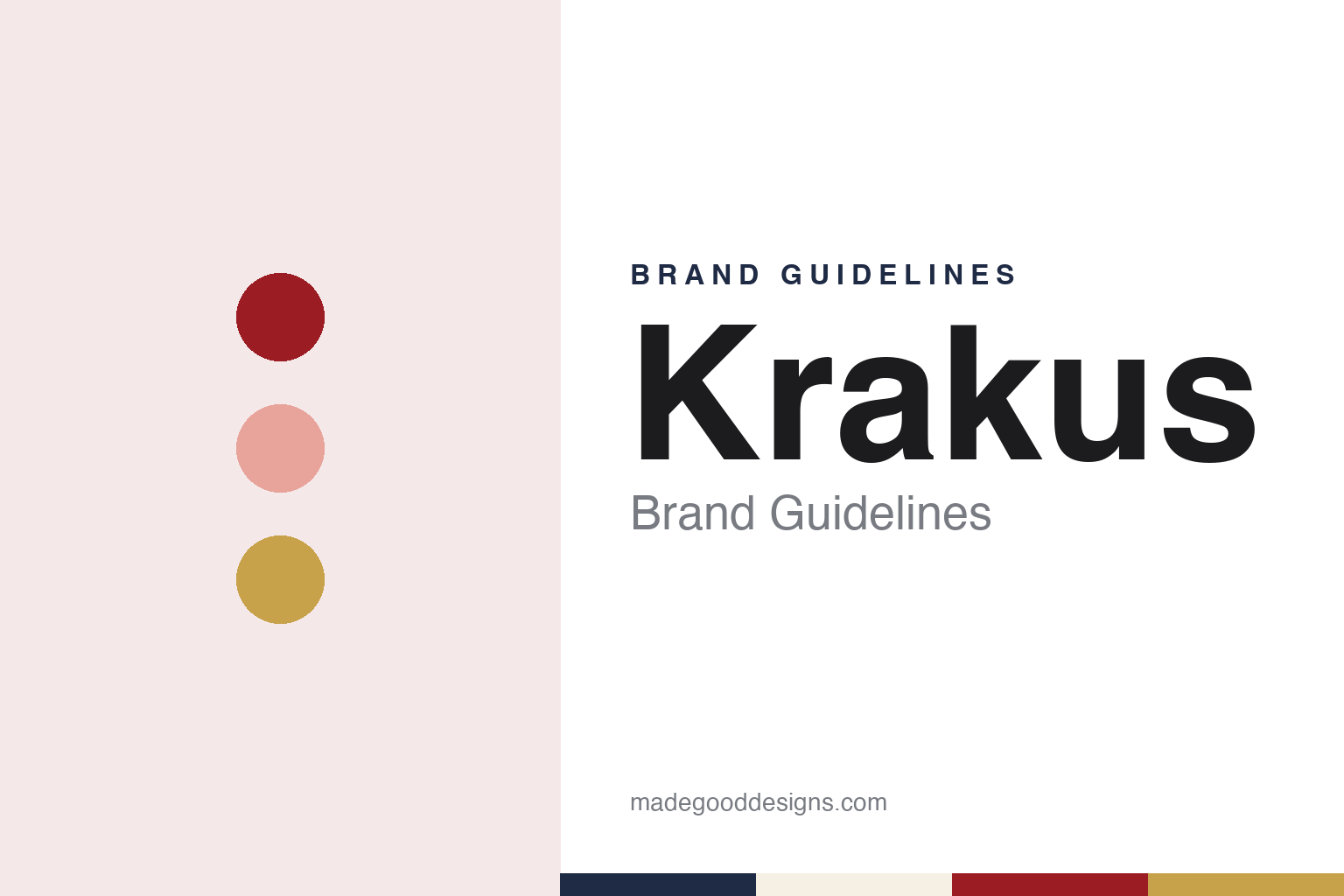
Two constants: a tin red, export navy and lid gold palette and an export slab serif register. Abstract homage — not a Krakus product or mark; no tin, label or logo is reproduced.
A ham for America
A state trading house and a trademark across the ocean.
Krakus began as an export. On 1 February 1951 the Polish state registered a new import-export central for animal products called Animex, Polish Wikipedia says, citing a 2013 article by Jacek Zalewski in the business daily Puls Biznesu. Zalewski wrote that the story of Krakus is tied to that founding. Even in the years of the six-year plan, he noted, the socialist economy needed hard currency, and with that aim Animex registered Polish ham under the name Krakus as a protected trademark in the United States. Animex’s own timeline gives 1951 as the year the brand was created and says the “Polish Ham” made in Poland under the Krakus name quickly became the country’s calling card across the ocean.
The ham was designed for English-speaking markets from the start. Puls Biznesu reported that by 2013 Krakus had been packed in one-pound tins for seven decades, a weight no Polish or European standardisation had changed, and that it was also sold as a foil-wrapped block. Zalewski placed Krakus beside Wyborowa vodka as one of the very few products of communist-era Poland to earn a name around the world.
In America the tin became a minor celebrity. According to the same article, President Dwight Eisenhower and the presidential candidate Bob Dole were photographed with it, as were Hollywood stars. Playing on the double meaning of “ham” in American slang, Krakus for many years gave a “Polish Ham of the Year” award, a gold tin presented to a successful performer of Polish descent; Puls Biznesu lists the singer Bobby Vinton, the television host Pat Sajak and the actor Christine Baranski among the recipients.
Colour
An export ham that Poles could rarely buy.
At home Krakus was a luxury. Zalewski wrote in Puls Biznesu that ham in general was the king of foods in the Polish People’s Republic, and Krakus its emperor: convenient to store, whether in state reserves or a household cupboard, and impressive for its foreign-language lettering and colourful packaging. In the 1960s it turned up in the state Delikatesy shops, especially before holidays, and carried the reputation of an “export reject,” which in that period meant the highest quality.
In the 1970s, after the creation of so-called internal export and the Pewex shop chain, Krakus could be bought only for hard currency or for the dollar-backed vouchers issued by the Pekao bank, Puls Biznesu reported. Its absence from ordinary shops continued through the ration cards of the 1980s, when the tins’ imperial weight did not fit the meat coupons. The tin even became a yardstick: Zalewski described an index of Polish purchasing power that counted how many kilograms of Krakus ham an average monthly wage could buy, a measure of how the gap with richer European countries changed over the years.
The freeing of food prices in 1989 turned that world upside down. By 2013, Puls Biznesu wrote, tins of the ham that had started the whole family of Krakus cold meats were stacked in hypermarkets and discount stores, competing against a large range of fresh cuts. For the brand’s sixtieth anniversary Animex published a book of recollections, Historie Krakusa, with memories of the ham from well-known and less-known consumers; the newspaper reprinted several, from Pewex parties to the first sight of a Krakus tin on an American shelf.
Typography
Design and documentation.
The seven brands in this group all make food or drink, and all of them come from Poland: Goplana, Mlekovita, Łowicz, Krakus, Żywiec, Kubuś and Winiary. Polish food and drink brands in general sit at many different points in the trade, from cooperatives and family firms to names that now belong to much larger food groups, and a single brand can be sold everywhere from a corner shop to a supermarket shelf.
A food or drink brand’s identity is usually carried less by a single product than by a pack, a name and the meal or moment it promises, because the company behind the name may have changed hands, moved its factory or grown far beyond the town where it started. That makes the questions behind each name worth asking plainly: who started it, who owns it now, and where its products are actually made and packed.
Each guide separates what independent sources record from what the company says about itself — its founding story, its owners over time, where its products are made and how its packaging has changed — and marks plainly what rests only on the company’s own word.
Aa
An export slab serif for a ham name of 1951. (Specimen set in Zilla Slab, a slab-serif STAND-IN; NOT the Krakus logo.)
Krakus
Smithfield, WH Group, and a second Krakus on the pickle shelf.
Animex changed form several times while Krakus stayed its flagship. The state central became a limited company in 1983 and later a joint-stock company that also ran production; its shares were admitted to trading on the Warsaw Stock Exchange on 29 June 1995 and were quoted until 2002, Polish Wikipedia says, citing Puls Biznesu. In April 1999 the American meat company Smithfield Foods took a majority stake, and after taking Animex off the exchange returned it to a limited company. Since September 2013 Smithfield, and with it Animex, has been part of the Chinese WH Group. Animex Foods, based in Warsaw, calls Krakus its oldest brand; its other names include Morliny and Berlinki. Polish Wikipedia, citing the company in 2020, lists twelve Animex production plants in Poland, among them Ełk, Suwałki, Iława, Starachowice, Szczecin, Opole and Kutno.
Animex markets Krakus today with the line “Krakus Mistrz Szynki” (Krakus, master of ham) and says it has been loved for 70 years. It describes the range as hams, smoked meats, dry sausages and kabanos, made, the company says, from selected meat from local farms and according to the rules of the meat-curing craft.
A second Krakus sits elsewhere in Polish shops. The Krakus pickles, soups and soup concentrates belong to Grupa Maspex, which bought them in 2015 from Agros Nova together with Łowicz. That brand’s own history says it was established in 1965 to sell Polish preserves abroad only; that its first products, fruit jams, reached Polish shops in 1992; that Agros-Fortuna took it over in 2000; and that it moved to Maspex in 2015 and got new labels in 2016. Maspex calls its pickled cucumbers, red barszcz and żurek the brand’s icons. The two Krakus ranges share a name and an export past but have different owners.
For a design guide, Krakus shows how a single tin, sized in pounds for American shoppers, could become a household symbol of scarcity and status at home. Compare Łowicz, which came to Maspex alongside the Krakus pickles, and ElPozo, the Spanish pork brand. For this guide we use tin red, export navy and lid gold with a slab serif, an unofficial interpretation; no product or logo is reproduced.
Explore & save
Keep Krakus’s identity on hand — save it to a board in the Made Good inspiration library.
Krakus identity set
Tin red, export navy and lid gold with a slab serif — an unofficial interpretation of the Krakus name.