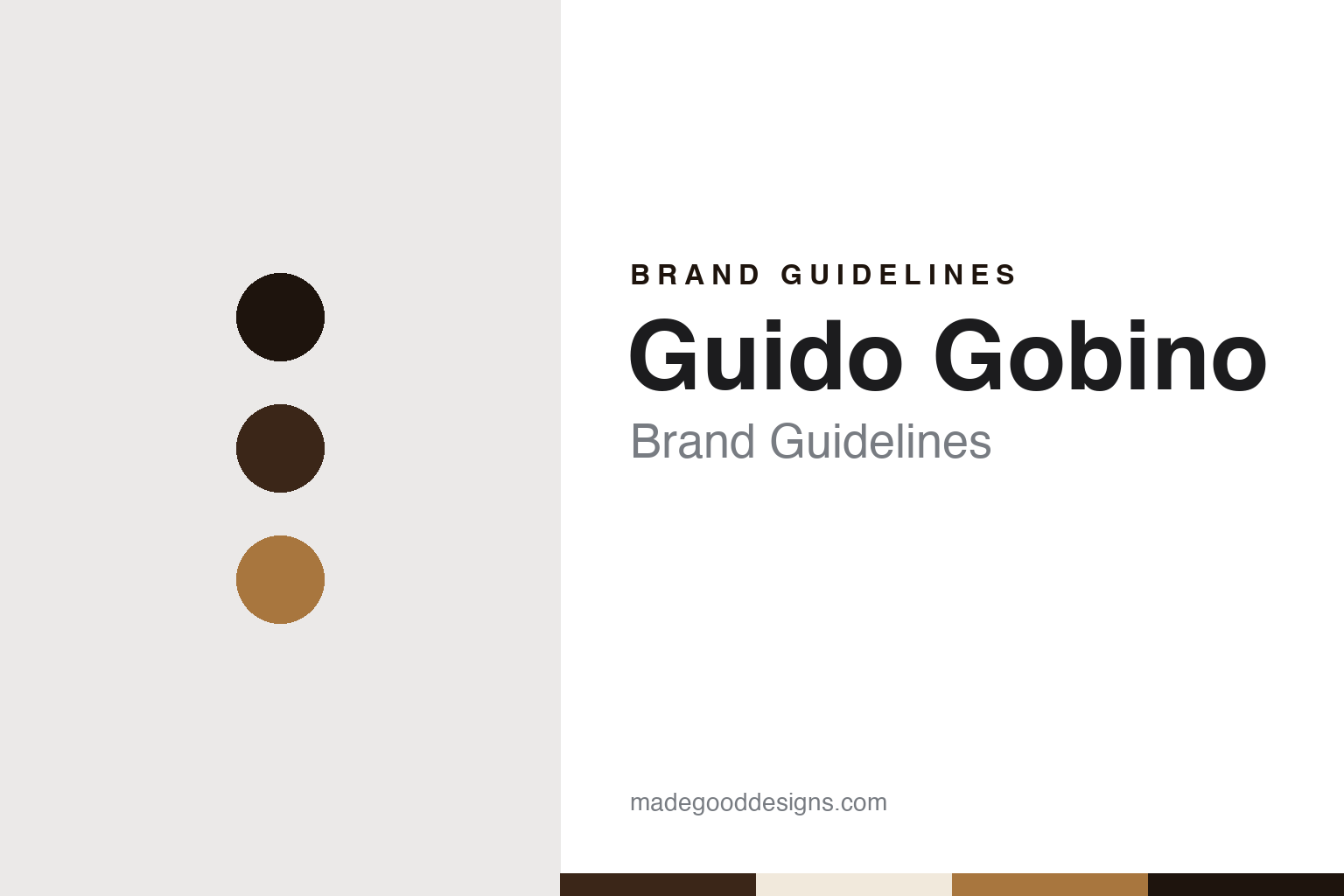
Paul John Brand Guidelines
The Goa single malt from John Distilleries, first released 2012.
Aa
Two constants: a malt amber, deep oak and Konkan green palette and a classical serif register. Abstract homage — not a Paul John product or mark; no label, logo or bottle is reproduced.
A Bengaluru blender goes to Goa
From a mass-market whisky to a single malt of its own.
Paul John is the single malt whisky of John Distilleries, a Bengaluru drinks company founded by Paul P. John. English Wikipedia gives 1992 as the year he set up the company in Bangalore; the company’s whisky site gives 1996, the year English Wikipedia says its blended whisky Original Choice was launched. Original Choice became the company’s flagship, English Wikipedia says, and the Economic Times described John Distilleries in 2019 as a leading Indian liquor maker, with brandy, wine and other whiskies alongside it. The Economic Times, as republished by M&A Critique in January 2019, listed Bangalore Malt, Black Pelican, Mont Castle brandy and Big Banyan wines among its brands.
The company says Paul P. John is a first-generation drinks manufacturer whose father ran liquor stores and a distribution business in Bengaluru, and that he trained as a lawyer before moving into making alcohol. Its account of the single malt project says the work began in earnest in 2006; English Wikipedia says the company decided to make single malt in 2008. Both agree on where it would be made: not in Karnataka but in Goa, on India’s west coast.
The distillery stands at Cuncolim, in South Goa. The company says the site was chosen for its weather and the quality of its water, which it draws from underground sources and nearby streams. In 2009 it appointed Michael John D’Souza, who it says had worked with Paul John since the early 1990s, as master distiller. English Wikipedia describes the distillery as having two sets of copper pot stills, one for wash and one for spirit, with maturation in a climate-controlled underground cellar as well as in warehouses above ground.
The first bottling was a single cask. According to English Wikipedia, citing Drinks International of 5 October 2012, Paul John Single Cask 161 was launched in London on 4 October 2012, at the Capital Hotel in Knightsbridge, by Sanjay Paul of the importer Alcobev Limited. English Wikipedia says the whisky reached Goa in 2013 and Bangalore in 2015, so the brand was introduced abroad before it was sold at home.
Colour
Six-row barley, tropical casks and a named range.
The core range arrived in May 2013, when, English Wikipedia says, the company released three flagship single malts: Brilliance, Edited and Bold, running from unpeated to peated. The same article lists later expressions including Nirvana, a Peated Select Cask, Select Cask Classic, finishes in Oloroso and Pedro Ximénez sherry casks, and a Christmas Edition. The company now counts twelve single malt expressions.
The raw material is part of the story the brand tells. English Wikipedia says Paul John is made from Indian six-row malted barley and, for some variants, peat imported from Islay and Aberdeen, distilled in copper pot stills and matured in charred American oak. The company says the barley comes from Rajasthan, Haryana and the Himalayan foothills, and it says its casks are once-used American oak bourbon barrels, stored in three warehouses at Cuncolim, one of them underground.
Climate is the other theme. The company compares Goa’s tropical heat with Kentucky’s and says whisky matures much faster there than in Scotland, estimating the yearly loss to evaporation, the “angel’s share,” at about 8 per cent against 2 to 3 per cent in Scotland. Those figures are the company’s own.
Limited releases have come in series. The company says its Zodiac series began with Kanya in 2018 and continued with Mithuna; English Wikipedia also lists a Mars Orbiter edition among the variants. In 2018 the company opened the Paul John Visitor Centre at the distillery, which it describes as the first visitor experience centre of its kind in the Indian spirits industry, with a walk through the distillery and warehouses ending in a tasting room.
Typography
Design and documentation.
The seven brands in this group are all whisky distilleries from India, Japan and Australia: Paul John, Rampur, Indri, Chichibu, Kanosuke, Starward and Lark. Whisky distilleries in general sit at many different points in the trade, from small houses that still carry a founder’s name to labels that now belong to much larger drinks groups, and a single brand can be sold everywhere from a corner shop to a bar list.
A whisky brand’s identity is usually carried less by a single bottle than by a label, a name and the place it promises, because the company behind the name may have changed hands, moved its production or grown far beyond the place where it started. That makes the questions behind each name worth asking plainly: who started it, who owns it now, and where its whisky is actually distilled and bottled.
Each guide separates what independent sources record from what the company says about itself — its founding story, its owners over time, where its whisky is made and how its labels have changed — and marks plainly what rests only on the company’s own word.
Aa
A classical serif for a single malt built on Indian craft. (Specimen set in Cormorant Garamond, a serif STAND-IN; NOT the Paul John logo.)
Paul John
A new partner in 2017, and a new look in 2026.
Ownership changed in two steps, beginning in October 2017, when the American spirits company Sazerac, the family-owned owner of Buffalo Trace, bought into John Distilleries, its first move into India. The Economic Times, republished by M&A Critique on 2 January 2019, reported that Sazerac had first bought 23 per cent from the private equity investor Gaja Capital and had then bought Gaja’s remaining 20 per cent, taking its holding to 43 per cent, with Paul John holding the other 57 per cent.
By 2026 the balance had shifted. Reuters reported in April 2026 that Sazerac already held about 60 per cent of the privately held company, and that its founder was open to selling more, and potentially all, of his remaining stake to Sazerac. There was no timeline, Paul John told the agency, but the two sides had agreed in principle to explore changes in the shareholding. “I have taken the company to the level that I could do it on my own,” he said.
The single malt’s look changed in the same year. The Whiskey Wash reported on 5 October 2026 that Paul John had unveiled a new brand identity and packaging built around a narrative titled “A Journey into Indian Craft.” The refresh appears first on Nirvana, Brilliance and Bold, with the Select Casks and the rest of the range following over the coming months. The design draws on Goa, Indian craftsmanship and the character of each expression, and a reimagined elephant, which the report calls a longstanding symbol of the brand, now runs through the range, given its own illustrations and textures on each bottle. The company stressed that the whisky itself was unchanged; “the liquid remains at the heart of everything we do,” Paul P. John said.
The name needs a little care online. Paul John is also the founder’s own name, so searches mix the man and the malt; the whisky’s own site is pauljohnwhisky.com, and John Distilleries is unrelated to the Scotch house of John Dewar.
For a design guide, Paul John shows how a brand from a mass-market whisky company can build a single malt identity on place, using Goa, Indian barley and an elephant emblem to tell a story of Indian craft. Compare Amrut, the Bengaluru single malt distiller, and Rampur, the Uttar Pradesh single malt from Radico Khaitan. For this guide we use malt amber, deep oak and Konkan green with a serif, an unofficial interpretation; no product or logo is reproduced.
Explore & save
Keep Paul John’s identity on hand — save it to a board in the Made Good inspiration library.
Paul John identity set
Pin the Paul John malt amber, deep oak and Konkan green palette and the classical serif register to your own board.