Sipsmith Brand Guidelines
The London copper-pot gin distillery with a swan.
Aa
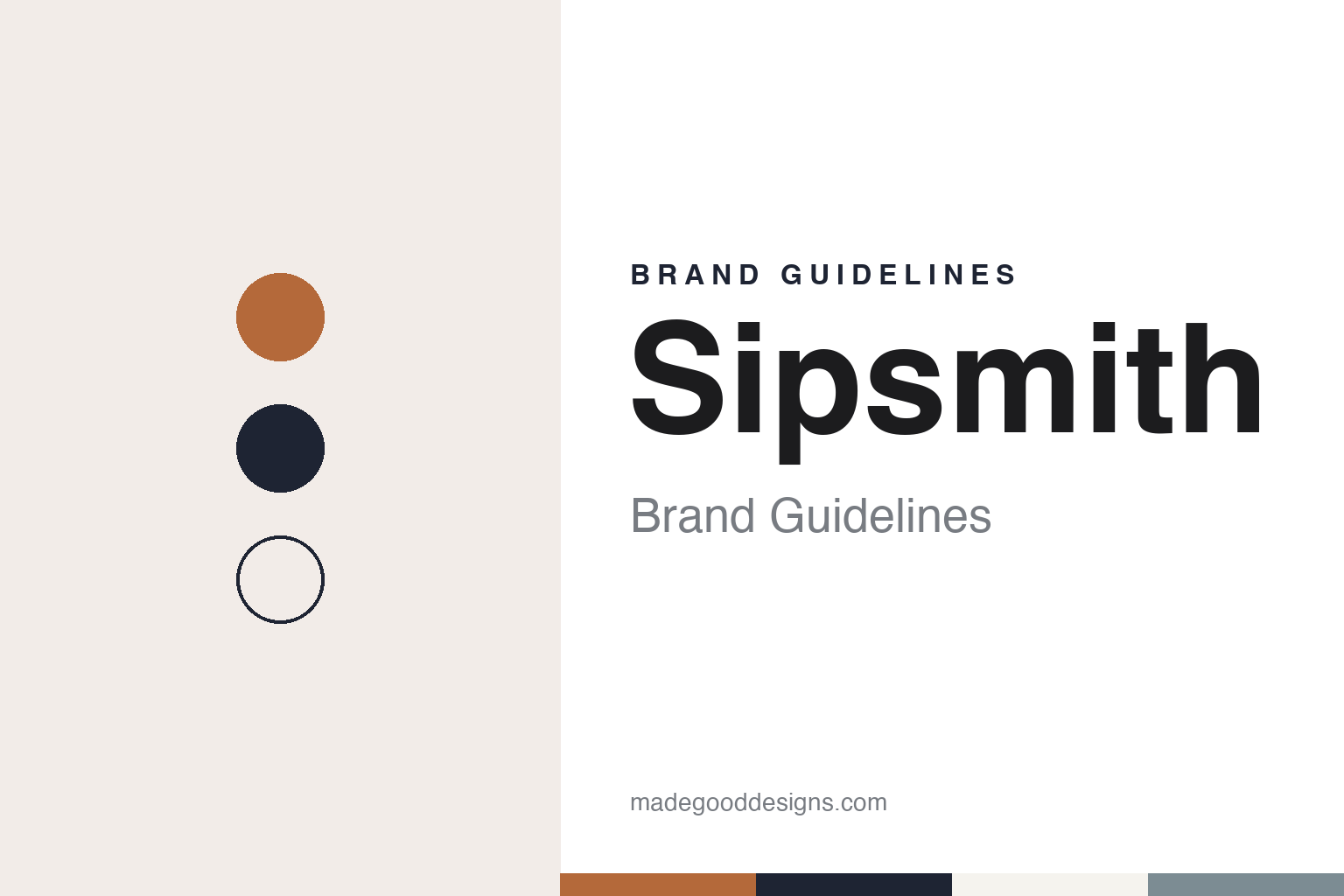
Two constants: a Sipsmith copper, ink and swan white palette and a classical serif register. Abstract homage — not a Sipsmith product or mark; no bottle, swan or logo is reproduced.
Prudence
Two friends, a drinks historian and a 300-litre still.
Sipsmith was started by two childhood friends, Sam Galsworthy and Fairfax Hall, with the drinks historian and distiller Jared Brown. English Wikipedia says Galsworthy had worked for the brewer Fuller’s and Hall for Diageo; Brown, a drinks writer and publisher, became master distiller. The company says the three met in 2007. In July 2009 BBC News reported that Hall and Galsworthy had given up their jobs in the drinks industry two years earlier and sold their houses to fund the venture, inspired by time in the United States, where a change in licensing laws had helped small craft distilleries take off.
Their obstacle was the law. Sipsmith says an excise act still in force from 1823 barred licences for stills smaller than 1,800 litres, while its own still held 300; after the founders petitioned, the company says, the law changed in 2008. The final recipe was made on 14 March 2009 on that first still, named Prudence, which Wikipedia says was built by the German still maker Christian Carl. BBC News described the new copper-pot distillery, on a residential street in west London on the site of a former micro-brewery, as “the first to be established in London for 189 years.” Sipsmith itself calls it London’s first small-batch gin distillery for 200 years.
The first home was on Nasmyth Street in Hammersmith. In 2014 the distillery moved to Chiswick, also in west London, where the company says every drop of its gin is still made. In 2010 Sipsmith won the Best Newcomer prize at the Observer Food Monthly Awards.
The arrival was welcomed by an older London name. In the same 2009 BBC report, Desmond Payne, master distiller at Beefeater, said of the renewed interest in gin: “It really establishes the authenticity of what London gin used to be.”
Colour
A swan neck and “independent spirits.”
The identity came before the business. The London agency big fish, led by Perry Haydn Taylor, says it met Sipsmith before the company started, when Galsworthy and Hall brought it an idea. Its portfolio page says it branded the company “independent spirits” and built a visual identity on Prudence’s swan-neck copper still. Sipsmith still describes a “water-loving swan motif,” inspired by the swan necks of its copper pot stills.
That swan reached television in March 2019, when Sipsmith ran its first TV advertising campaign, a stop-motion film in which the comedian Julian Barratt voiced a character called Mr. Swan, The Drinks Business reported. The same year the company marked its tenth anniversary with a book, SIP, and a pledge not to change the recipe of its London Dry Gin, it says. Earlier, in 2015, it made the Raffles 1915 Gin with Raffles Hotels & Resorts for the centenary of the Singapore Sling, English Wikipedia says, citing The Straits Times.
In 2023 Sipsmith introduced a taller bottle, which it presents in terms of beauty, form and sustainability. According to the company, a ripple pattern on the shoulders reflects the swan motif, the copper stills sit on the label, and the front of the pack carries references to its history, including a scroll standing for the handwritten HMRC certificate behind its first licence and a nod to the scooter the founders first used for deliveries.
Typography
Gin, place and protection.
The seven brands in this group are all gin brands: Tanqueray, Gordon’s, Beefeater, Hendrick’s, Plymouth, Sipsmith and Monkey 47. Gin brands in general sit at many different points in the trade, from small distilleries that still carry a founder’s name to names that now belong to much larger drinks groups, and a single brand can be sold everywhere from a neighbourhood bar to a supermarket shelf.
A gin brand’s identity is usually carried less by a single product than by a bottle, a label and a name, because the company behind the name may have changed hands, moved its production or grown far beyond the place where it started. That makes the questions behind each name worth asking plainly: who started it, who owns it now, and where its gin is actually distilled and bottled.
Each guide separates what independent sources record from what the company says about itself — its founding story, its owners over time, where its gin is made and how its bottles and labels have changed — and marks plainly what rests only on the company’s own word.
Aa
A classical serif — the register of a London distillery label. (Specimen set in Cormorant Garamond, a serif STAND-IN; NOT the Sipsmith logo.)
Sipsmith
A craft distillery with a Japanese owner.
On 16 December 2016 Beam Suntory, the spirits business of Japan’s Suntory group and owner of Jim Beam, Yamazaki, Laphroaig and Courvoisier, took a controlling stake in Sipsmith, The Guardian, Reuters and The Spirits Business reported. The Guardian said Galsworthy, Hall and Brown would all stay on to run the business, which had 35 staff and would continue to be run from its copper-pot distillery in Chiswick. Galsworthy told the paper that Sipsmith already sold about 30% of its gin overseas. Beam Suntory has since been renamed Suntory Global Spirits, which Wikipedia lists as the owner.
The deal came amid a wave of buyouts of small gin makers. The Guardian quoted the Mintel analyst Jonny Forsyth, who pointed to Pernod Ricard’s purchase of Monkey 47 earlier that year as the start of a trend. The paper also noted that Sipsmith claims to have pioneered a gin renaissance in London by opening the city’s first copper distillery for nearly 200 years.
The company lists other milestones: the Sipping Society, a members’ club supplied from its smallest still, Cygnet, in 2015; a deal to become Wimbledon’s first official gin partner from 2021; and certification as a B Corporation in 2021. There is also a separate font article on this site, What Font Does Sipsmith Use?
For a design guide, Sipsmith shows how a single object, a swan-necked copper still, can become a whole identity, from the logo to the bottle shoulders to a television character. Compare Plymouth Gin, an older English gin tied to one distillery, and Beefeater, which BBC News in 2009 called the only premium-brand distiller with its own premises in London. For this guide we use copper, ink blue and swan white with a serif, an unofficial interpretation; no product or logo is reproduced.
Explore & save
Keep Sipsmith’s identity on hand — save it to a board in the Made Good inspiration library.
Sipsmith identity set
Pin the Sipsmith copper, ink and swan white palette and the classical serif register to your own board.