Stone & Wood Brand Guidelines
Byron Bay’s Pacific Ale brewery, founded 2008.
Aa
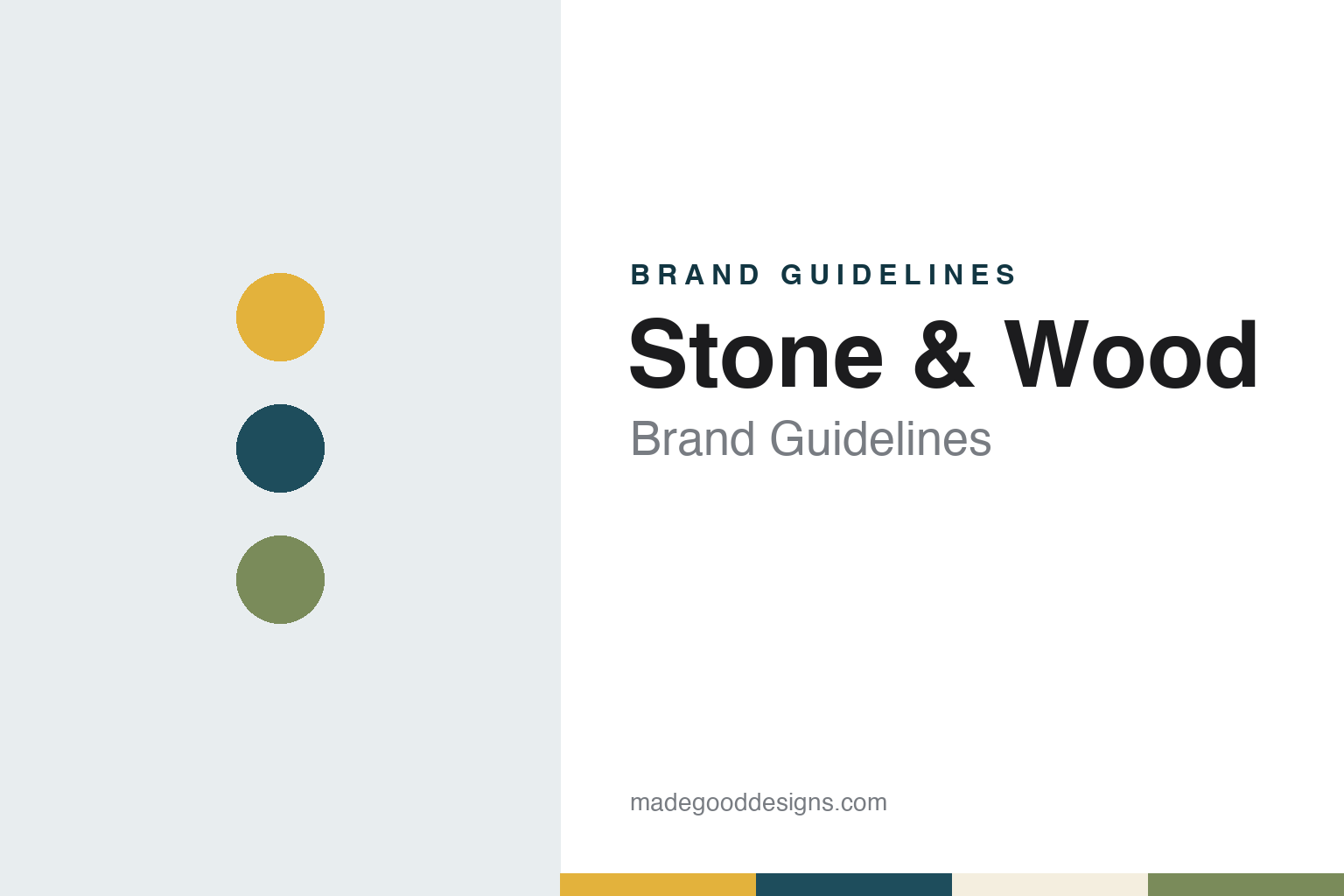
Two constants: a Pacific gold, deep ocean and hinterland green palette and a condensed sans register. Abstract homage — not a Stone & Wood product or mark; no label, logo or can is reproduced.
Three brewers leave the big end of town
An old soft-drink factory in Byron Bay and a cloudy golden ale.
Stone & Wood was founded in Byron Bay, on the far north coast of New South Wales, in 2008. English Wikipedia, citing the trade paper The Shout (2015), names its founders as Jamie Cook, Brad Rogers and Ross Jurisich, all of whom had previously worked at Carlton & United Breweries. The company’s own timeline says the three left CUB early in 2008 and took the keys to an old soft-drink factory in Byron Bay’s industrial estate; brewing tanks arrived from Canada that September, and Brews News carried the brewery’s launch announcement in November 2008.
The company says its first kegs, of a beer then called Draught Ale, went out to local pubs on the back of a ute in November 2008, and that its first bottles, of lager, came off the line in April 2009. In November 2010, the timeline says, Draught Ale was renamed Pacific Ale. English Wikipedia, citing the brewery’s 2016 range, describes Pacific Ale as a cloudy golden ale with a big fruity aroma, and lists alongside it Green Coast Lager, a lightly clouded amber lager, Garden Ale and the red Jasper Ale.
The founders framed the business around an old idea. Stone & Wood says it set out to be a “village brewer”, the local brewery that once sat alongside the butcher and the baker as both supplier and meeting place, and that a business with a conscience has been its focus since the first day. The company also says that in September 2013 it opened an employee ownership plan under which 72 per cent of its staff became shareholders.
One beer carries the ritual side of the brand. The company says the first batch of Stone Beer was brewed in September 2009 by an old method in which burning-hot rocks are added to the kettle to rouse the boil. Today it describes Stone Beer as a porter brewed once a year on a winter Stone Brew Day, with stones heated over a wood fire and lowered into the brew to caramelise the malt, and in May 2011 it started the Festival of the Stone around the beer’s release.
Colour
One flagship, a trade mark fight and a family look.
Pacific Ale is the flagship, and its name became a packaging question. Brews News reported in August 2018 that Stone & Wood had settled a trade mark dispute with the Victorian brewery Thunder Road over “Pacific Ale” after three years of litigation. As part of the change, the report said, the flagship’s packaging would carry a new name, The Original Pacific Ale, with a new look rolled out nationally to emphasise the beer’s originality. Jamie Cook told the paper that the brewery was comfortable with the strength of the Stone & Wood brand in the market.
The rest of the range was later redrawn around the flagship. National Liquor News reported in December 2022 that Stone & Wood had refreshed the packaging of Green Coast Lager, Cloud Catcher and Crisp to give the core range a consistent look, while Pacific Ale stayed as it was. The Stone & Wood logo was made larger and more recognisable and each beer’s style name was enlarged, the report said, and Cloud Catcher moved to an earthier colour so it could be told apart from Pacific Ale’s golden tones in dim light. James Aris, the brand’s national marketing manager, told the magazine that Pacific Ale leads drinkers to the brand as a whole, and that the change lets the other beers stand out under the Stone & Wood name.
Place names supply much of the vocabulary. The company says its Murwillumbah brewery sits at the base of Mount Wollumbin, which it glosses as “Cloud Catcher”, and that it released Cloud Catcher pale ale to mark the brewery’s opening in 2014.
The venues are part of the identity too. In November 2018, the company says, it moved its original Byron Bay brewery around the corner to Centennial Circuit, in the Arts & Industry Estate, which it now calls its “spiritual home”; it describes a 31-tank brewery with a tasting room, canteen and beer garden, where one-off Pilot Batch beers are brewed and poured alongside the core range. The company also says it was the first brewery in Australia to be certified as a B Corp, in 2016.
Typography
Design and documentation.
The seven brands in this group are all Australian craft breweries: Little Creatures, Stone & Wood, 4 Pines, Balter, Pirate Life, Young Henrys and Mountain Goat. All seven began as independent breweries, and six of them have since been bought into one of two large brewing groups: Lion, a subsidiary of Japan’s Kirin, and Carlton & United Breweries, which Asahi bought from AB InBev in a purchase completed on 1 June 2020, BeverageDaily reported.
The sales came over more than a decade. Lion bought Little World Beverages, the Fremantle company behind Little Creatures, in 2012, according to English Wikipedia. Asahi bought Melbourne’s Mountain Goat in September 2015, The Shout reported. AB InBev bought Manly’s 4 Pines in 2017 through its venture arm ZX Ventures, and Adelaide’s Pirate Life the same year, English Wikipedia says; Carlton & United bought Balter of Currumbin in late 2019, Good Beer Hunting reported, and all three passed to Asahi with CUB in 2020. Lion announced on 9 September 2021 that it was buying Fermentum Group, the owner of Byron Bay’s Stone & Wood, Brauwelt reported. Newtown’s Young Henrys took a different route: when it announced a brewing partnership with Tribe in Goulburn in September 2019, Hospitality magazine reported that there would be no change of ownership and that the brewery remained independently owned by its founders, Oscar McMahon and Richard Adamson.
A craft brewery’s identity is usually carried by a name, a label, a can and a tap decal rather than by the building where the beer is made, and after a sale the beer may be brewed somewhere else entirely. Each guide separates what independent sources record from what the company says about itself — its founders, its owners over time, where its beer is brewed and how its packaging has changed — and marks plainly what rests only on the company’s own word.
Aa
A condensed sans for a coastal brewery’s labels and tap decals. (Specimen set in Barlow Condensed, a sans-serif STAND-IN; NOT the Stone & Wood logo.)
Stone & Wood
From Lion’s minority stake to Lion’s ownership.
Lion has been part of the story twice. English Wikipedia, citing The Shout (2012), says that in 2012 the three founders bought back the 20 per cent of the business held by Lion, following Lion’s takeover of Little Creatures’ parent, Little World Beverages.
Production soon moved inland. The Shout reported in June 2014 that Stone & Wood had opened a major new brewery in Murwillumbah, about 40 kilometres from Byron Bay, more than 18 months in the making, and that core-range production would eventually move there while Byron Bay handled small batches. The company now calls Murwillumbah the engine room where it produces most of its beer, and says the site is not open to visitors. In October 2019, the company says, it opened a third brewery in Fortitude Valley, Brisbane, with an eight-hectolitre brewhouse.
By then the brand sat inside a group, Fermentum, whose stable also included Two Birds Brewing and Fixation Brewing Co. Brews News reported on 9 September 2021 that Fermentum had agreed to a 100 per cent sale to Lion, subject to regulatory approvals, and that Lion would also build a new brewery in Murwillumbah and support the inGrained Foundation, the charity Stone & Wood set up in 2018. On 4 November 2021 the trade site inside.beer reported that the Australian Competition and Consumer Commission had cleared the deal; it noted that Lion is owned by Japan’s Kirin. In June 2023 a Lion release said Stone & Wood had bought its Kite Crescent site in Murwillumbah, its home for almost ten years, with a tasting room planned, and that the earlier plan for a new brewery elsewhere in the town was on hold.
The name needs care online. Stone & Wood is unrelated to Stone Brewing of California; the Byron Bay brewery’s site is stoneandwood.com.au.
For a design guide, Stone & Wood shows how one cloudy golden ale, a hot-stone ritual and a coastline’s place names can hold a brewery’s identity together through a trade mark fight and a change of owner. Compare Little Creatures, its Lion stablemate from Fremantle, and Kirin, the Japanese brewer that owns Lion. For this guide we use Pacific gold, deep ocean and hinterland green with a condensed sans, an unofficial interpretation; no product or logo is reproduced.
Explore & save
Keep Stone & Wood’s identity on hand — save it to a board in the Made Good inspiration library.
Stone & Wood identity set
Pin the Stone & Wood Pacific gold, deep ocean and hinterland green palette and the condensed sans register to your own board.