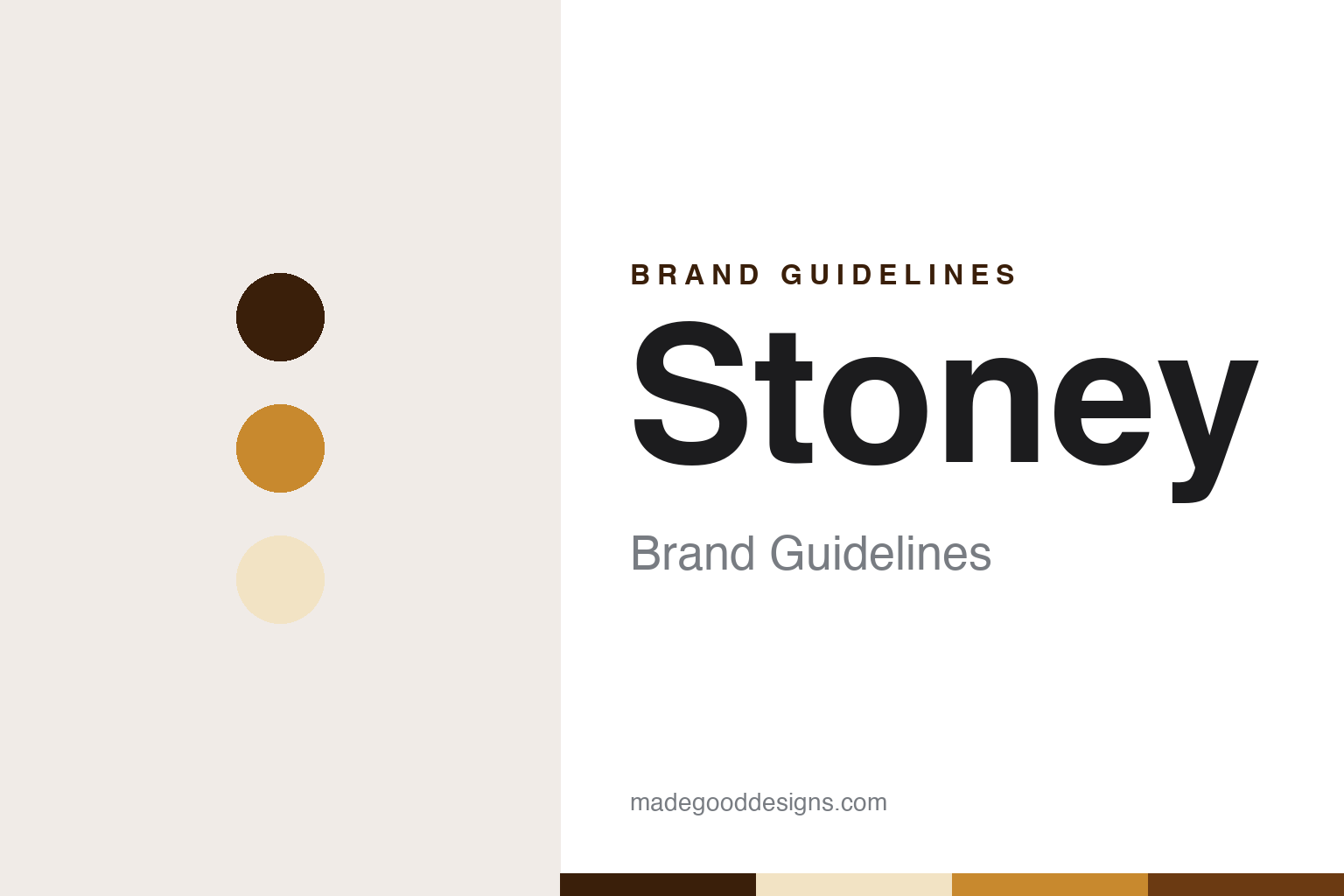
Stoney Brand Guidelines
Coca-Cola’s ginger beer for Southern and East Africa.
Aa
Two constants: a bottle brown, ginger gold and cream palette and a condensed bold sans register. Abstract homage — not a Stoney product or mark; no bottle, can or logo is reproduced.
A ginger beer from the Coca-Cola system
A 1971 South African launch, and a Swahili name further north.
Stoney is a ginger beer, a carbonated ginger soft drink, sold under one name across much of Southern and East Africa. It belongs to The Coca-Cola Company, and English Wikipedia, citing Coca-Cola’s own product listing archived in 2011, says the drink is made and distributed by Coca-Cola and sold in a brown bottle or a can.
The brand’s starting date comes from Coca-Cola itself. Coca-Cola South Africa’s website, in a version archived in 2012, described Stoney Ginger Beer as “a ginger beer carbonated soft drink produced by the Coca-Cola Company” and said it was introduced to South Africa in 1971. On that site Stoney sat among the company’s “other leading brands” in the country, next to Tab, Twist, Schweppes, Sparletta and Iron Brew, and a footer noted that the trademarks shown were owned or used under licence by The Coca-Cola Company and its affiliates. English Wikipedia repeats the 1971 date, citing the same South African page. The name of the person or team who created the drink, and the reasoning behind the name Stoney, do not appear in Coca-Cola’s published material.
Further north the drink carries a second name. In Swahili-speaking Africa it is called Stoney Tangawizi, English Wikipedia says; tangawizi is the Swahili word for ginger, so the label pairs the brand name with a plain description of what is in the bottle. A photograph on the same Wikipedia page shows Stoney Tangawizi on sale in the eastern Democratic Republic of the Congo.
Colour
Strength, “bite” and a Kwetsa kick.
Stoney has been sold on strength for decades. The archived Coca-Cola South Africa page carried the line “Stronger than the strongest thirst” and described a drink with a “strong, full-bodied steam and ‘bite’” and a “distinctive spiciness.” The same page tied that strength to its drinkers, saying consumers tend to like a strong drink that reflects their own strength and their deep roots in their communities and families. The company’s current wording keeps the theme: Coca-Cola South Africa’s brand page today invites drinkers to “trust Stoney Ginger Beer to quench the strongest thirst.”
The present-day copy also gives the brand a local origin story. Coca-Cola South Africa says Stoney is inspired by the traditional recipe for Gemere, and that its “spicy ginger sensation” delivers “the thrill of a refreshing Kwetsa kick as it catches the back of your throat.” The brand page lists Stoney Extra, shown as Stoney Extra Kwetsa, alongside the original ginger beer and Ginger Beer Zero Sugar, which appears on the same page as Stoney No Sugar. The company recommends serving it ice cold. Coca-Cola Beverages Africa, the region’s largest Coca-Cola bottler, uses the same Gemere and Kwetsa wording on its own brands page.
The ginger beer also varies by market. English Wikipedia says recipes differ across Africa even though all versions are bottled within the Coca-Cola system, and it lists several South African variants. Coca-Cola’s country websites present the brand in different ways too: in October 2026 Stoney was listed on Coca-Cola South Africa’s brands page but not on the Kenyan brands page, which carries a shorter list of drinks.
Typography
Design and documentation.
The seven brands in this group are all drink names from Africa and the Middle East: Tusker, Maltina, Stoney, Almaza, Kassatly, Zamzam and Barbican. African and Middle Eastern drink brands in general sit at many different points in the trade, from family firms that still carry a founder’s name to names that now belong to much larger drinks groups, and a single brand can be sold everywhere from a corner shop to a supermarket shelf.
A drink brand’s identity is usually carried less by a single product than by a bottle, a can, a name and the refreshment it promises, because the company behind the name may have changed hands, moved its production or grown far beyond the place where it started. That makes the questions behind each name worth asking plainly: who started it, who owns it now, and where its drinks are actually made and bottled.
Each guide separates what independent sources record from what the company says about itself — its founding story, its owners over time, where its drinks are made and how its packaging has changed — and marks plainly what rests only on the company’s own word.
Aa
A condensed bold sans for a drink sold on strength. (Specimen set in Oswald, a sans STAND-IN; NOT the Stoney logo.)
Stoney
A Coca-Cola brand, bottled by Africa’s largest Coca-Cola bottler.
The trademark belongs to The Coca-Cola Company, but most of the Stoney that reaches shops is bottled by its partners. The biggest is Coca-Cola Beverages Africa (CCBA), which English Wikipedia says was formed through a merger announced on 27 November 2014 by SABMiller, The Coca-Cola Company and Gutsche Family Investments, combining their African soft-drink bottling operations. Before the latest sale, English Wikipedia gave CCBA’s owners as The Coca-Cola Company, with 66.5%, and Gutsche Family Investments, with 33.5%. The deal made CCBA the largest Coca-Cola bottler in Africa, The Grocer reported at the time. English Wikipedia lists Stoney Ginger Beer among the brands CCBA bottles, next to Coca-Cola, Fanta, Sprite, Schweppes, Appletiser and Sparletta.
CCBA’s own website names fourteen markets: South Africa, Botswana, Namibia, Lesotho, Eswatini, Mozambique, Zambia, Malawi, Kenya, Tanzania, Uganda, Ethiopia, the Comoros and Mayotte.
The bottler itself is changing hands. In October 2025 The Coca-Cola Company and Gutsche Family Investments agreed to sell a 75% controlling interest in CCBA to Coca-Cola HBC AG, the Swiss-based bottler, The Coca-Cola Company announced on 21 October 2025, with a further option for Coca-Cola HBC to buy the remaining 25% within six years of closing. The first transaction was expected to close by the end of 2026, the South African site BusinessTech reported in September 2026. The Stoney brand itself remains a Coca-Cola Company trademark.
For a design guide, Stoney shows how a single regional brand can carry two names, an English one and a Swahili one, while selling the same promise of strength and ginger heat for more than fifty years. Compare Bundaberg, the Queensland brewed ginger beer, and Inca Kola, Peru’s golden soda. For this guide we use a bottle brown, a ginger gold and a cream with a condensed sans, an unofficial interpretation; no product or logo is reproduced.
Explore & save
Keep Stoney’s identity on hand — save it to a board in the Made Good inspiration library.
Stoney identity set
Pin the Stoney bottle brown, ginger gold and cream palette and the condensed bold sans register to your own board.