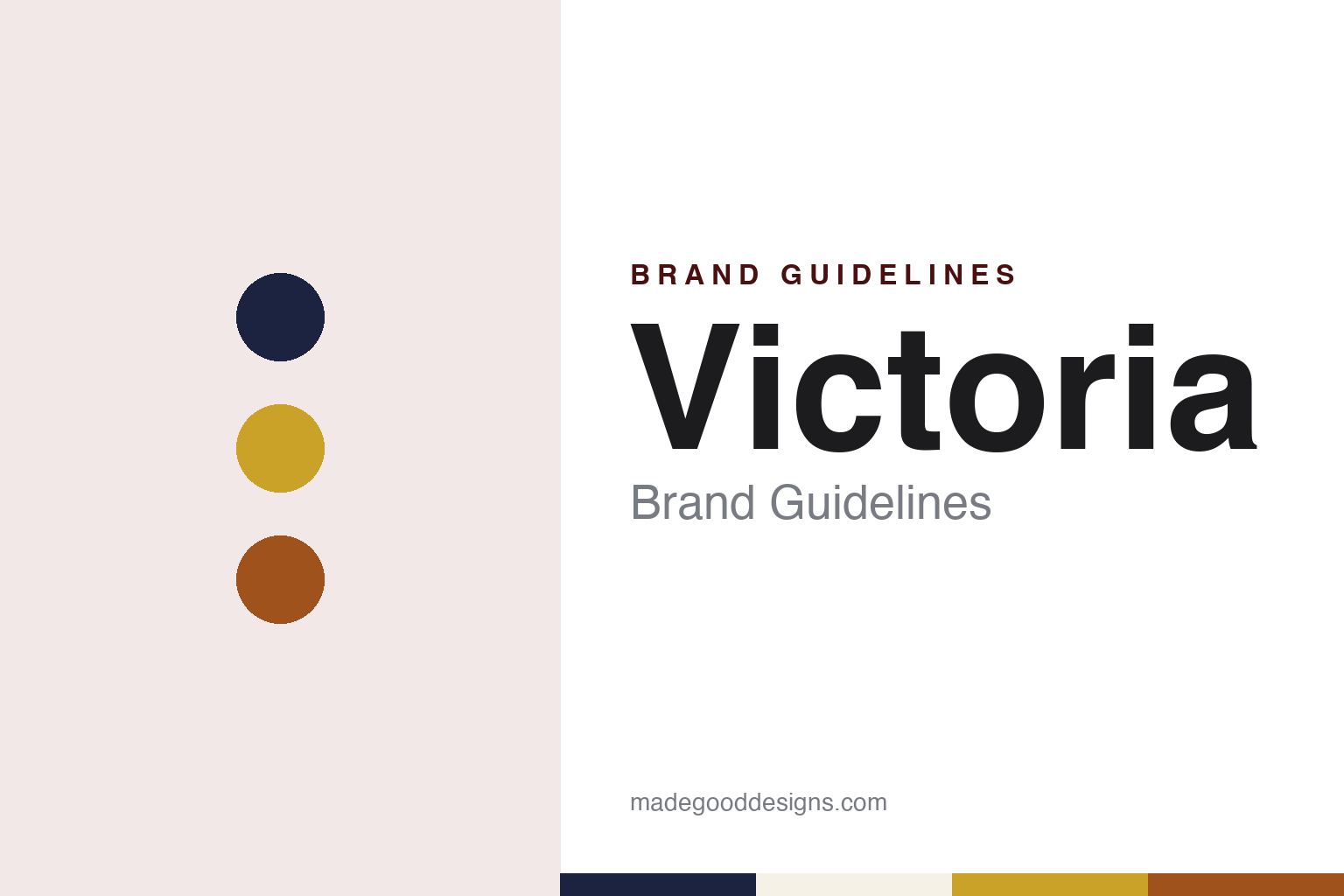
Victoria Brand Guidelines
The Toluca Vienna lager that dates itself to 1865.
Aa
Two constants: a Toluca gold, Vienna amber and deep red palette and a classical display serif register. Abstract homage — not a Victoria product or mark; no bottle, label or logo is reproduced.
A brewery in Toluca
Good water, barley fields and a Swiss brewer.
Victoria’s story starts in Toluca, the capital of the State of Mexico. The brand’s US website says Agustín Marendaz founded a small craft brewery there in 1865, drawn by the quality of the water and the barley fields around the city, and that ten years later Santiago Graf acquired it. The same history page adds that the first records of the Victoria brand itself date from 1906. The website leads with the earlier date — “Orgullosamente Mexicana desde 1865,” proudly Mexican since 1865 — and English Wikipedia says the beer was first brewed in Toluca in 1865.
Graf was the brewer who made Toluca’s name; Spanish Wikipedia calls him the first successful brewer of lager in Mexico. The article, which describes Marendaz as Graf’s fellow Swiss, says Graf bought the business in 1875, citing Dave Carpenter’s 2017 book Lager. It says he brewed ale at first, because controlling fermentation temperatures in Mexico’s warm climate was difficult, and turned to lager after a rail link to the United States let him import large ice-making machines from Germany in 1882. He imported his hops from Europe and most of his malt from the United States, the article says, and raised the share of dark malts in his recipes to counter the alkaline brewing water, producing a smooth, dark Vienna lager. Spanish Wikipedia credits him with a “Graf” style of Vienna lager and counts Victoria among the present-day beers in that style.
By 1890, the company says, the small brewery had become a large industrial complex under the name Compañía Cervecera Toluca y México, handling everything from the selection of grain to brewing and bottling in-house. Its range included Bock Bier Toluca, Märzen Bock, Pilsner and Victoria.
Colour
A purchase, a headline and a survivor.
Victoria joined Grupo Modelo in 1935. Modelo had been founded in Mexico City in 1925 by Spanish businessmen; Spanish Wikipedia names Braulio Iriarte, Pablo Díez and the brothers Martín and Miguel Oyamburu, and says the Oyamburu brothers bought the Toluca company, maker of Victoria and Pilsener, for Cervecería Modelo in 1935. On the day of the purchase, the same article says, Modelo had the phrase “La Victoria es nuestra” — “victory is ours” — printed in newspapers across Mexico, and it calls the line the origin of the brand’s current slogan.
The brand’s own history says Modelo bought all the Toluca brewer’s assets but kept making only its two most popular beers, Pilsner and Victoria. Pilsner was dropped in 1943; Victoria has stayed on the market ever since, which is why, the company says, it is considered the oldest Mexican beer. Its US website calls it “La Primera Cerveza Mexicana,” the first Mexican beer, and “La Primera Lager Mexicana” in its page title. Spanish Wikipedia lists the old Toluca plant as no longer operating.
The makers describe Victoria as a Vienna-style lager, “cerveza lager tipo Viena.” English Wikipedia lists it at 4 per cent alcohol and says it is sold in the United States in standard 12-ounce bottles and in larger 940 ml familiar bottles. Spanish Wikipedia’s entry on Grupo Modelo names Victoria among the group’s leading Mexican brands, alongside Corona Extra, Modelo Especial, Pacífico, Negra Modelo, Montejo and León.
Typography
Design and documentation.
The seven brands in this group are all Mexican beer brands: Modelo, Pacifico, Dos Equis, Victoria, Bohemia, Indio and Carta Blanca. Mexican beer brands in general sit at many different points in the trade, from names that began at a single regional brewery to names that now belong to much larger international brewing groups, and a single brand can be sold everywhere from a corner shop to a supermarket shelf.
A beer brand’s identity is usually carried less by a single product than by a label, a name and the bottle or can it comes in, because the company behind the name may have changed hands, moved its production or grown far beyond the place where it started. That makes the questions behind each name worth asking plainly: who started it, who owns it now, and where its beer is actually brewed and packed.
Each guide separates what independent sources record from what the company says about itself — its founding story, its owners over time, where its beer is brewed and how its labels and packaging have changed — and marks plainly what rests only on the company’s own word.
Aa
A classical display serif for a beer that leads with its age. (Specimen set in Playfair Display, a serif STAND-IN; NOT the Victoria logo.)
Victoria
One beer, two owners, divided by a border.
Who owns Victoria depends on the country. Anheuser-Busch InBev, which held a 50 per cent non-controlling stake in Grupo Modelo, announced on 29 June 2012 that it would buy the rest, English Wikipedia says. The US Department of Justice sued to block the deal in January 2013; the settlement, announced in April 2013, required the sale of Grupo Modelo’s entire US business to Constellation Brands, Spanish Wikipedia says. Grupo Modelo left the Mexican stock exchange that year and is part of AB InBev; its Mexican Victoria website names Cervecería Modelo de México and carries an Anheuser-Busch InBev copyright line.
In the United States the brand sits with Constellation. English Wikipedia says the 2013 deal gave Constellation full ownership of the importer Crown Imports and an exclusive, perpetual US licence for the Corona and Modelo brands, which Constellation brews in Mexico for the US market; it names Constellation’s Mexican breweries as Nava, in Coahuila, and Ciudad Obregón, in Sonora. Constellation’s website names Victoria among the favourites of its imported beer portfolio, and the US Victoria website says the beer is “Elaborado en México,” made in Mexico, and imported by Crown Imports of Chicago.
The name is shared. A separate lager called Victoria was founded in Málaga, Spain, in 1928 and has been owned by Damm since 2001, Spanish Wikipedia says; it has no connection with the Toluca beer.
For a design guide, Victoria shows how a brand can lead with age: its website puts 1865, the brewery’s founding year, front and centre, while the company dates the first records of the brand to 1906. Compare Modelo and Pacífico, its Grupo Modelo stablemates. For this guide we use Toluca gold, Vienna amber and deep red with a classical display serif, an unofficial interpretation; no product or logo is reproduced.
Explore & save
Keep Victoria’s identity on hand — save it to a board in the Made Good inspiration library.
Victoria identity set
Pin the Victoria Toluca gold, Vienna amber and deep red palette and the classical display serif register to your own board.