Vimto Brand Guidelines
The Manchester herbal tonic that became a Ramadan favourite.
Aa
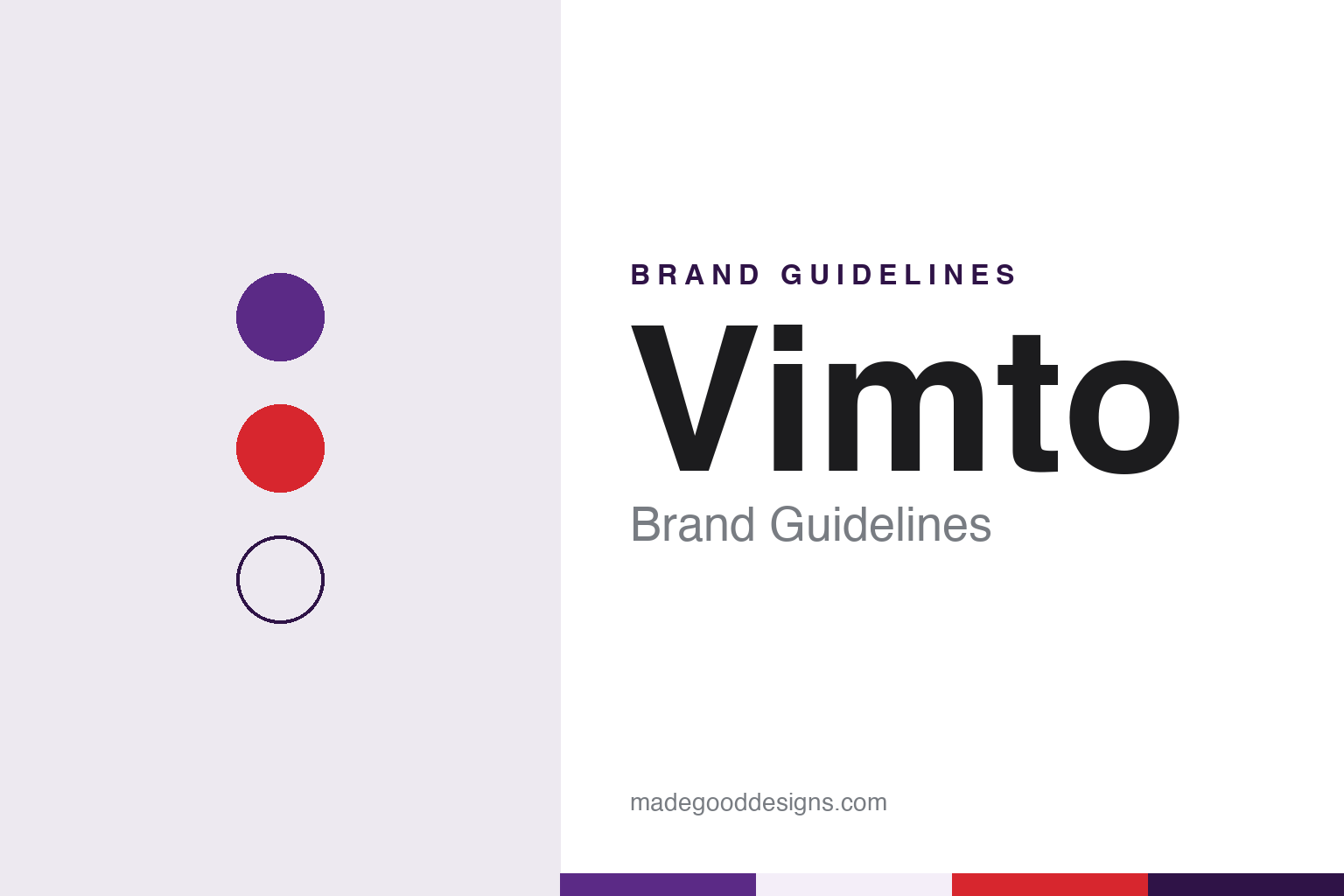
Two constants: a Vimto purple, berry red and white palette and a bold geometric sans register. Abstract homage — not a Vimto product or mark; no bottle, can, logo or label is reproduced.
Vim and vigour
A herb wholesaler, a temperance market and a tonic.
Vimto was created in Manchester in 1908 by John Noel Nichols (1883–1966), a wholesaler of herbs, spices and medicines, the University of Manchester and English Wikipedia say. He saw an opening for soft drinks in the temperance movement and the passage of the Licensing Act 1904, English Wikipedia says, citing the journal Brewery History. The company says the drink began as Vimtonic, a herbal tonic meant to give “vim and vigour,” made from a blend of herbs and spices sourced from around the world; English Wikipedia, citing an earlier version of the company’s history, says the name was shortened to Vimto in 1912. The drink was first registered as a health tonic, then re-registered as a cordial in 1913.
The business moved as it grew. In 1910, the company says, it left the wholesale herbalists’ quarter of central Manchester for larger premises in Salford, on Chapel Street. A move to Old Trafford followed in 1927, and the company says that in 1972 it opened a new plant with its own bottling line at Wythenshawe in south Manchester. A fizzy version, now sold as Fizzy Vimto, arrived in 1920, according to the company, and the original concentrate is still sold as a cordial to be diluted at home.
The city has kept a reminder of the start. In 1992 the sculptor Kerry Morrison made “A Monument to Vimto,” an oak sculpture installed on Granby Row near the site of the original premises, now beside the University of Manchester campus; it was restored and repainted in 2011.
Colour
From British Guiana to the iftar table.
Vimto went abroad early. The company says its trademark was registered in British Guiana in 1919, the start of an international division, and that in 1924 India became the first country to receive Vimto concentrate for local bottling. By 1930, it says, Vimto was sold in more than 30 countries, from Peru to the Gulf states, among them Kuwait, Oman, Qatar, Dubai and Abu Dhabi.
The Gulf became its most remarkable market. In Saudi Arabia and neighbouring countries Vimto is a fixture of the iftar meal that breaks the fast during Ramadan. The Sunday Times reported in October 2007 that some 15 million bottles had been sold in that year’s Ramadan month alone, and the BBC reported in July 2013 that the Saudi licensee, Aujan, was producing more than 20 million bottles a year for Gulf markets. Nichols plc described Ramadan 2024 as its “101st Ramadan in the region” and named its long-standing partner as Aujan Coca-Cola Beverages Company, which has also taken on Vimto sales in Yemen.
Outside Britain, Vimto is largely made by local partners from concentrate. English Wikipedia lists licensed production in Saudi Arabia, Yemen, the Gambia and Ghana, where Coca-Cola’s Ghanaian bottler launched the drink in Kumasi in 2013, according to a report carried by allAfrica; Mehran Bottlers makes it in Pakistan and Kean in Cyprus. In its 2024 results Nichols said it was moving production of red cans for West Africa from contract packers in Spain and Portugal to a partner’s new facility in Senegal, and that Vimto is sold in more than 60 countries. In 2024 the drink officially entered Malaysia, Matt Nichols of Nichols plc told the Malaysian radio station BFM in 2025.
Typography
Design and documentation.
The seven brands in this group all make soft drinks or cordials, and all of them come from Britain: Irn-Bru, Vimto, Ribena, Lucozade, Tango, Fentimans and Belvoir Farm. British soft-drink brands in general sit at many different points in the trade, from family firms that still carry a founder’s name to names that now belong to much larger drinks groups, and a single brand can be sold everywhere from a corner shop to a supermarket shelf.
A soft-drink brand’s identity is usually carried less by a single recipe than by a bottle, a colour, a name and the moment it promises, because the company behind the name may have changed hands, moved its bottling or grown far beyond the town where it started. That makes the questions behind each name worth asking plainly: who started it, who owns it now, and where its drinks are actually made and bottled.
Each guide separates what independent sources record from what the company says about itself — its founding story, its owners over time, where its drinks are made and how its packaging has changed — and marks plainly what rests only on the company’s own word.
Aa
A bold geometric sans for a drink known by one purple letter. (Specimen set in Poppins, a sans STAND-IN; NOT the Vimto logo.)
Vimto
A family-founded brand owner that no longer bottles.
The company behind Vimto still carries the founder’s name. It traded as J N Nichols (Vimto) from 1929 until 2000, when it became Nichols plc, and its shares are quoted on London’s AIM market. In 1999 it moved its head office to Newton-le-Willows, in the borough of St Helens, Merseyside. Nichols stopped manufacturing in-house in 2003, when it closed its last production site at Golborne, near Wigan, Wigan Today reported in 2008; it now describes its business as an asset-light model that relies on contract packers and licensed partners. Alongside Vimto it owns the children’s drink Panda Pops, bought from the Dorset brewer Hall & Woodhouse in 2005, The Independent reported, and Cabana, which English Wikipedia describes as the UK’s largest independent supplier of dispensed soft drinks. In 2024 Nichols reported group revenue of £172.8 million.
Vimto’s look has been reworked many times. The company says the cartoonist Herbert Stanley Terry drew humorous showcards for it in the 1940s, that the brand was redesigned in red, white and blue in 1964, and that a British bulldog called Max joined its packs and television advertising in 1986. Advertising leaned on comedy: the company dates the poems of the cartoon character Purple Ronnie to a seven-year campaign from 1997, followed in 2006 by the “Dad’s Pants” television spot, and in 2014 by the animated Vimtoad.
The current identity arrived in January 2021, when Vimto rolled out a new logo across its whole UK range, The Grocer and Talking Retail reported. It kept the red, white and purple colours, centred on a large “V” and added a “since 1908” line as a nod to the brand’s heritage. “The new modern design stands out on shelf and enables us to highlight more of our product benefits,” said Becky Unwin, then senior brand manager.
For a design guide, Vimto shows how a single colour — purple — and a single letter can carry a brand from a Manchester herbalist’s counter to iftar tables across the Gulf. Compare Ribena, another British fruit cordial built on dark berries, and Irn-Bru, the Scottish soft drink with its own century-old following. For this guide we use a deep purple, a berry red and a lilac white with a bold sans, an unofficial interpretation; no product or logo is reproduced.
Explore & save
Keep Vimto’s identity on hand — save it to a board in the Made Good inspiration library.
Vimto identity set
Pin the Vimto purple, berry red and white palette and the bold geometric sans register to your own board.