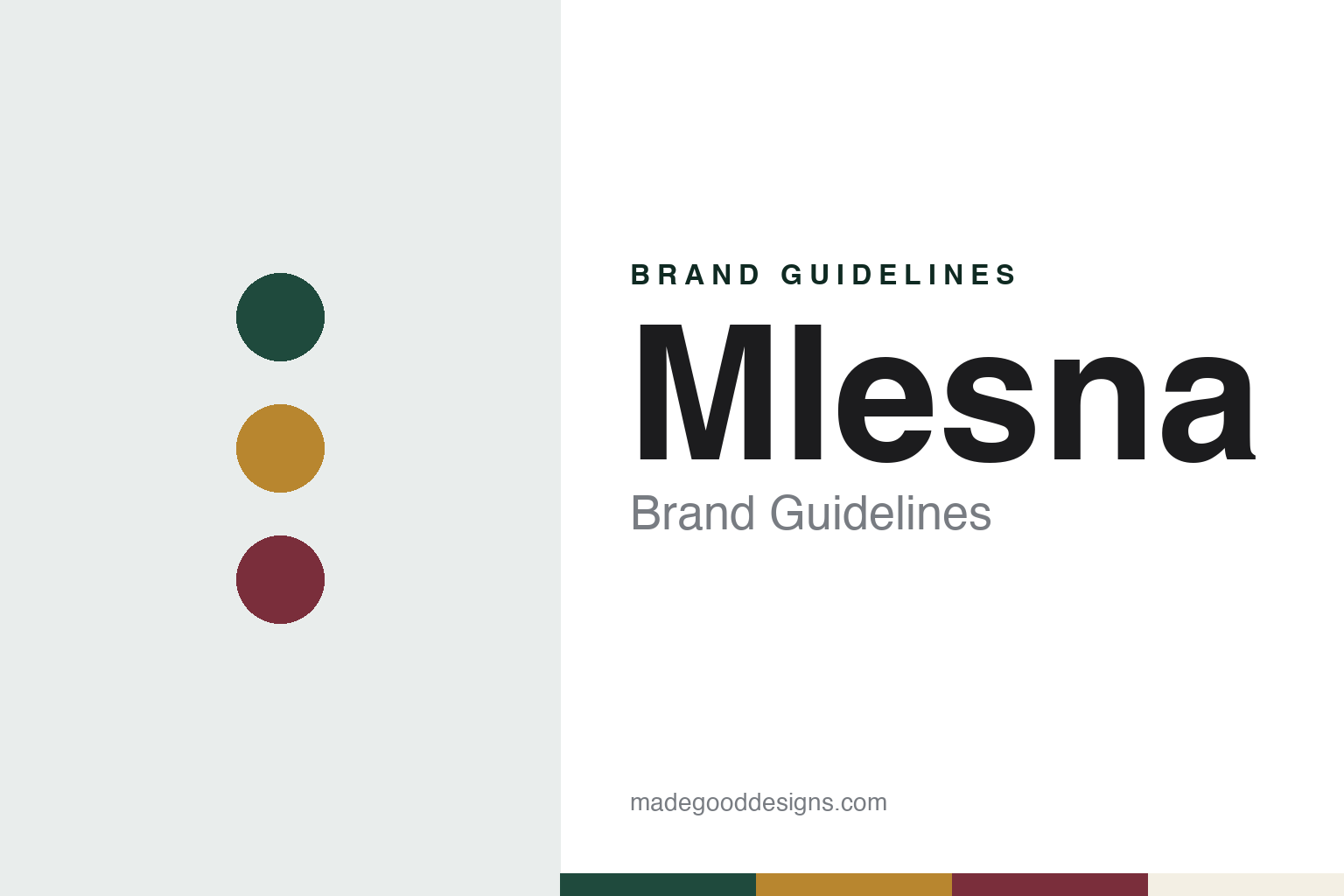
Mlesna Brand Guidelines
The Colombo tea house built on packaging and tea centres.
Aa
Two constants: a Mlesna green, gold and garnet palette and a classical serif register. Abstract homage — not a Mlesna product or mark; no pack, logo or label is reproduced.
A name in a mirror
A tea taster starts his own house.
Mlesna was founded in Sri Lanka in 1983 by Anselm Perera. English Wikipedia, citing the brand’s Superbrands profile, says Perera joined Brooke Bond as a tea taster in 1969 and stayed for ten years, then became tea manager at the trading house Shaw Wallace and Hedges and was promoted to tea director within eighteen months, before leaving to start his own company.
The name is the founder’s own. “Mlesna” is Anselm spelled backwards — a mirror image of his first name, as Wikipedia puts it. The company’s website describes the start in modest terms: in 1983, it says, a young team of tea experts, fewer than ten people, set out to create “the best quality teas in the most selectively designed packages.”
Perera has remained the public face of the business. In July 2010 the Sri Lankan Sunday Times quoted him as chairman and managing director of Mlesna (Ceylon) Ltd, the name that also appears on the brand’s website. English Wikipedia, citing Superbrands, describes Mlesna Tea as owned by Euro-Scan Exports; we could not open that profile, so we give both names as the sources state them.
Colour
Packaging as the product.
From the start Mlesna built its brand on the box as much as the leaf. The company says its ambition was “not just selling packaged teas but giving consumers undisputed quality teas in beautiful packages,” and that it set out “to package teas in new and creative ways” to draw connoisseurs into “the world of exclusive teas,” creating a market for value-added teas. Its slogan is “Naturally the Best.”
That approach is reflected in its awards. On its own awards page Mlesna lists Lanka Star national packaging awards between 1986 and 2002, Asia Star Asian packaging awards between 1990 and 2003, and WorldStar awards between 1990 and 1993, alongside Presidential Export Awards from 1986 to 1995 and National Export Awards in the 1990s. The WorldStar is given by the World Packaging Organisation. Counts differ by source: the company page lists seven WorldStars, while the Sunday Times in 2010 and a 2009 case study cited by Wikipedia give nine.
The range is wide. The company’s website, in text written around its twentieth anniversary, claims more than 3,000 products, a permanent staff of more than 350 and customers in 50 countries, served by tasters, blenders and packaging specialists; a 2004 company release repeated the figure of over 3,000 varieties. The Sunday Times reported in 2010 that the brand had customers in more than 50 countries. Mlesna has not published where its teas are blended and packed beyond Sri Lanka, so we say no more than that.
Mlesna has also published on the subject: Wikipedia cites The Story of Ceylon Tea by Maxwell Fernando, issued by Mlesna (Ceylon) in 2000.
Typography
The Ceylon tea trade.
The seven brands in this group all sell tea, and they come from five countries: Taj Mahal Tea and Society Tea from India, Akbar and Mlesna from Sri Lanka, Betjeman & Barton from France, Hälssen & Lyon from Germany, and Nordqvist from Finland. Two of those countries grow tea on a large scale; the other three do not, so the tea sold under a brand from there was grown somewhere else.
That split makes the usual questions sharper. For a brand from a growing country, the label may promise a garden, a region or a national style of tea; for one from a country that grows none, the promise rests on the blend, the flavouring, the shop and the box. In both cases the name on the front and the place where the tea was grown, blended and packed can be several countries apart.
Each guide separates what independent sources record from what the company says about itself — who started it, who owns it now, where its leaf is bought and where its tea is actually blended and packed — and marks plainly what rests only on the company’s own word.
Aa
A classical serif for a gift-tea house. (Specimen set in Marcellus, a serif STAND-IN; NOT the Mlesna logo.)
Mlesna
From a mall kiosk to a Tea Castle.
Mlesna’s other idea was the shop. Wikipedia, citing the Sunday Observer of October 2003, says the first Mlesna store opened at Liberty Plaza in Colombo in 1985, and, citing a 2009 case study in the Sri Lankan Journal of Management titled “Blue Ocean Branding Strategy: The Case of Mlesna,” credits the brand with bringing the tea centre and tea kiosk concept to Sri Lanka. The company makes the same claim itself.
The centres spread across the island. In July 2010 the Sunday Times reported the opening of Mlesna’s fifteenth Tea Centre, at the Kandy City Centre, with a tea restaurant and more than 102 teas, and listed others at hotels including the Hilton Colombo, at Colombo malls including Majestic City and Liberty Plaza, at the international airport at Katunayake, at a Tea Fortress at Peradeniya and at a Tea Castle at St Clair, Talawakelle, in the hill country. The castle is pictured in Wikipedia’s article on Talawakelle. Others named in the report were at Beruwala on the coast and Bandarawela in the hills. “Since its inception in 1983, whilst exporting our fine quality teas to the international markets, Mlesna Tea has served our connoisseur tea lovers in Sri Lanka,” Perera told the paper.
The concept also travelled. Mlesna says it opened its first Tea Centre in India at Spencer Plaza, Chennai, on 26 February 2004, describing its centres as a concept that had “caught on favourably with tourists, visiting delegates, and the up-market tea drinking community in Sri Lanka.” Wikipedia, citing Superbrands, lists outlets in Russia, Japan, Taiwan, Australia, Greece and India.
The founder has also marked the history of Ceylon tea abroad. Wikipedia says a statue of James Taylor, the Scottish planter credited with starting Ceylon’s commercial tea industry, was unveiled at Auchenblae in Scotland on 29 June 2019; designed by Professor Sarath Chandrajeewa, it was gifted to the local heritage society by Anselm Perera of Mlesna.
One domain note: mlesna.com is a parked domain offered for sale, not the company; the brand’s website is mlesnateas.com.
For a design guide, Mlesna shows how a tea brand can make the gift box and the shop its main message. Compare Dilmah, another Sri Lankan brand built by a former tea taster, and Mariage Frères, a tea house known for its shops and tins. For this guide we use a deep green, gold and garnet with a serif, an unofficial interpretation; no product or logo is reproduced.
Explore & save
Keep Mlesna’s identity on hand — save it to a board in the Made Good inspiration library.
Mlesna identity set
Pin the Mlesna green, gold and garnet palette and the classical serif register to your own board.