Borsec Brand Guidelines
The Transylvanian spring water named queen of mineral waters in 1873.
Aa
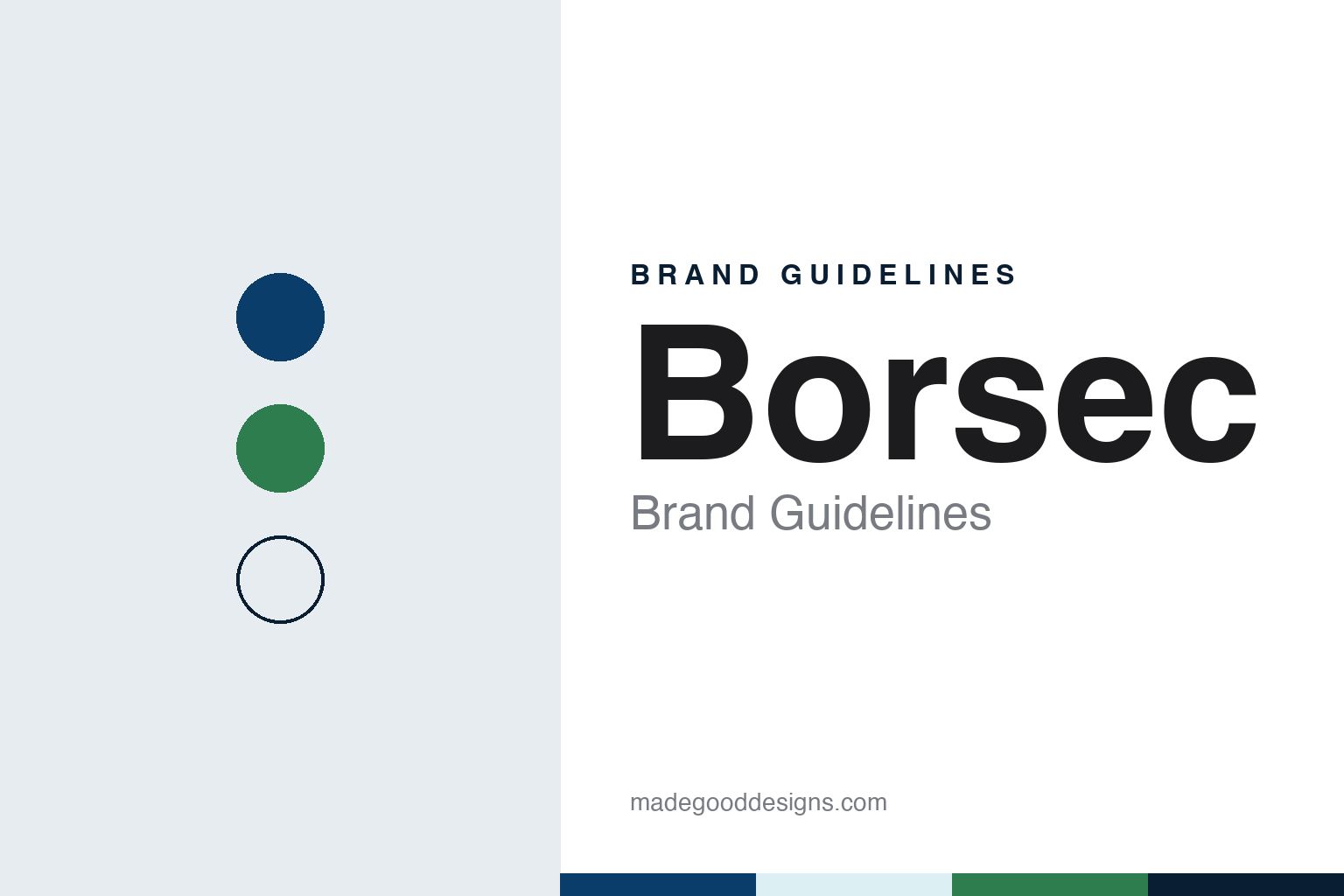
Two constants: a Carpathian blue, glass mist and fir green palette and a spa-town serif register. Abstract homage — not a Borsec product or mark; no bottle, label or logo is reproduced.
The seat of mineral water
A spa town in the Eastern Carpathians and a glassworks in 1806.
Borsec is both a brand and a place. The town of Borsec, Borszék in Hungarian, sits in Harghita County in the historic Székely Land of Transylvania, in a basin of the Eastern Carpathians at about 900 metres, and English Wikipedia describes it as a resort known chiefly for its spas and mineral waters. Most of its people are Hungarian-speaking Székelys. Romaqua Group, which owns the brand today, says the name joins the Hungarian words for mineral water and for seat, so that Borsec means roughly the “seat of mineral water.”
The springs were known long before they were bottled. Romanian Wikipedia says that in 1777 Heinrich Johann Kranz analysed the waters of Borsec and judged them of excellent quality, which drew the attention of the physicians of the day; early investment came from Saxon and Armenian traders, and public baths opened in the town in the nineteenth century.
The figures usually credited with turning the water into a business are Anton Zimmethausen and Valentin Gunther, though the sources describe them differently. Romanian Wikipedia calls Zimmethausen a Viennese geologist and Gunther, his cousin, an Austrian colonel, and says the two leased the springs from the communities of Ditrău and Lăzarea. Romaqua tells the story through Gunther, whom it calls a Viennese businessman who decided to bottle the water in 1803. Both agree on the date that matters: industrial bottling began in 1806, and the company says three million litres were produced in the first year.
According to Romanian Wikipedia, the water first travelled in terracotta vessels, then in glass bottles made at a factory set up for the purpose in 1806, which brought in glassworkers from Austria, Bohemia, Bavaria and Poland. Zimmethausen signed trade agreements with Russian, Moldavian, Italian, Greek and Turkish companies, so Borsec was an export product almost from the start. The partnership did not last. Gunther withdrew because of the costs, Zimmethausen took on two new partners from Mediaș, and in 1816 Count Lázár tried to push him out with the help of villagers from Ditrău and Lăzarea. After his time, his heirs went to court to recover the springs and lost in 1854, Romanian Wikipedia says.
Colour
Vienna, Trieste, Paris and a state bottler.
The phrase that still follows the brand dates from 1873. At the Vienna World Exhibition that year, Borsec received the title “Regina apelor minerale,” the Queen of Mineral Waters; Romanian Wikipedia says the distinction was granted by Emperor Franz Joseph, and Romaqua says it came with a gold medal. Further honours followed at the Trieste exhibition of 1876 and the Paris Exposition Universelle of 1878, which Romanian Wikipedia records as diplomas of honour and the company calls a gold diploma. Romaqua still uses the 1873 title in its own description of the brand.
Between the 1830s and the First World War the springs changed hands several times. Romanian Wikipedia names Fekete Mór as owner from 1903 and says that, after Transylvania became Romanian territory under the Treaty of Trianon, Maurițiu Tischler carried on the business. The town’s own borders moved with history: English Wikipedia notes that Borsec passed to the Kingdom of Romania in 1920, was held by Hungary from 1940 to October 1944 under the Second Vienna Award, and returned to Romanian administration in March 1945.
After the Second World War the communist state nationalised the waters. From 1952 the state company Apemin modernised and enlarged production, Romanian Wikipedia says, and Borsec became known across the whole country. Romaqua’s own timeline adds detail: new bottling facilities were built between 1952 and 1956, along with a narrow-gauge railway linking the plant to Toplița, and two more production halls followed between 1977 and 1989, together with a container facility at Toplița that the company credits with opening up domestic and international sales. The company lists Israel, Germany, Italy and Hungary among the markets the water reached in that period.
English Wikipedia describes the main springs used for bottling as carbonated and bicarbonated, and Romaqua says the brand draws on more than fifteen natural springs. The water is sold both sparkling and still.
Typography
Design and documentation.
The seven brands in this group all make food or drink, and all of them come from Romania or Bulgaria: Ursus, Timișoreana, Borsec, Dorna, Napolact, ROM and Zagorka. Food and drink brands from these two countries in general sit at many different points in the trade, from names that still carry a town or a region to names that now belong to much larger international groups, and a single brand can be sold everywhere from a village shop to a supermarket shelf.
A food or drink brand’s identity is usually carried less by a single product than by a pack, a name and the taste or occasion it promises, because the company behind the name may have changed hands, moved its production or grown far beyond the place where it started. That makes the questions behind each name worth asking plainly: who started it, who owns it now, and where its products are actually made and packed.
Each guide separates what independent sources record from what the company says about itself — its founding story, its owners over time, where its products are made and how its packaging has changed — and marks plainly what rests only on the company’s own word.
Aa
A high-contrast serif for a nineteenth-century spa water. (Specimen set in Playfair Display, a serif STAND-IN; NOT the Borsec logo.)
Romaqua
A Romanian-owned drinks group and a brand built on its date.
Borsec returned to private hands at the end of the 1990s. Romaqua Group says it was founded in 1998 and dates the brand’s return to private enterprise to that year; Romanian Wikipedia says the group has owned the bottling plant at Borsec since 1999. Romanian Wikipedia describes Romaqua as one of the main producers of mineral water and soft drinks in Romania, 98 per cent owned by Romaqua Holdings, whose main shareholder is the businessman Octavian Crețu. The company describes itself as having 100 per cent Romanian shareholding.
Borsec is the flagship of a wider portfolio. Romaqua says it runs seven factories in Borsec, Bucharest, Bușteni, Sebeș and Stânceni, including a brewery at Sebeș built from scratch in 2008. Its other brands include the waters Stânceni and Aquatique, the Giusto soft drinks and the Albacher beers, and in 2006, Romanian Wikipedia says, the group relaunched Brifcor and Cico, two soft-drink names from communist-era Romania.
The brand’s marketing leans on age and rank rather than novelty. Romaqua describes Borsec as the market leader in Romanian natural mineral water and frames it around “tradition and prestige.” The company says Borsec was named the world’s best mineral water at the Berkeley Springs International Water Tasting in 2004, and lists repeated placings in Romanian brand rankings, among them Superbrands recognition and the Trusted Brand title. Those are the company’s own accounts of the awards. Its brand page also records a campaign tied to Romanian sport.
For a design guide, Borsec shows how a single date and a royal-sounding title can carry a mass-market water for more than two centuries, through empire, border changes, state ownership and private ownership again. Compare Dorna, another Romanian mineral water from the Eastern Carpathians, and Ursus, a Romanian beer brand. For this guide we use a Carpathian blue, a pale glass mist and a fir green with a high-contrast serif, an unofficial interpretation; no product or logo is reproduced.
Explore & save
Keep Borsec’s identity on hand — save it to a board in the Made Good inspiration library.
Borsec identity set
Pin the Borsec Carpathian blue, glass mist and fir green palette and the spa-town serif register to your own board.