El Dorado Brand Guidelines
Demerara Distillers’ Guyanese rum from wooden heritage stills.
Aa
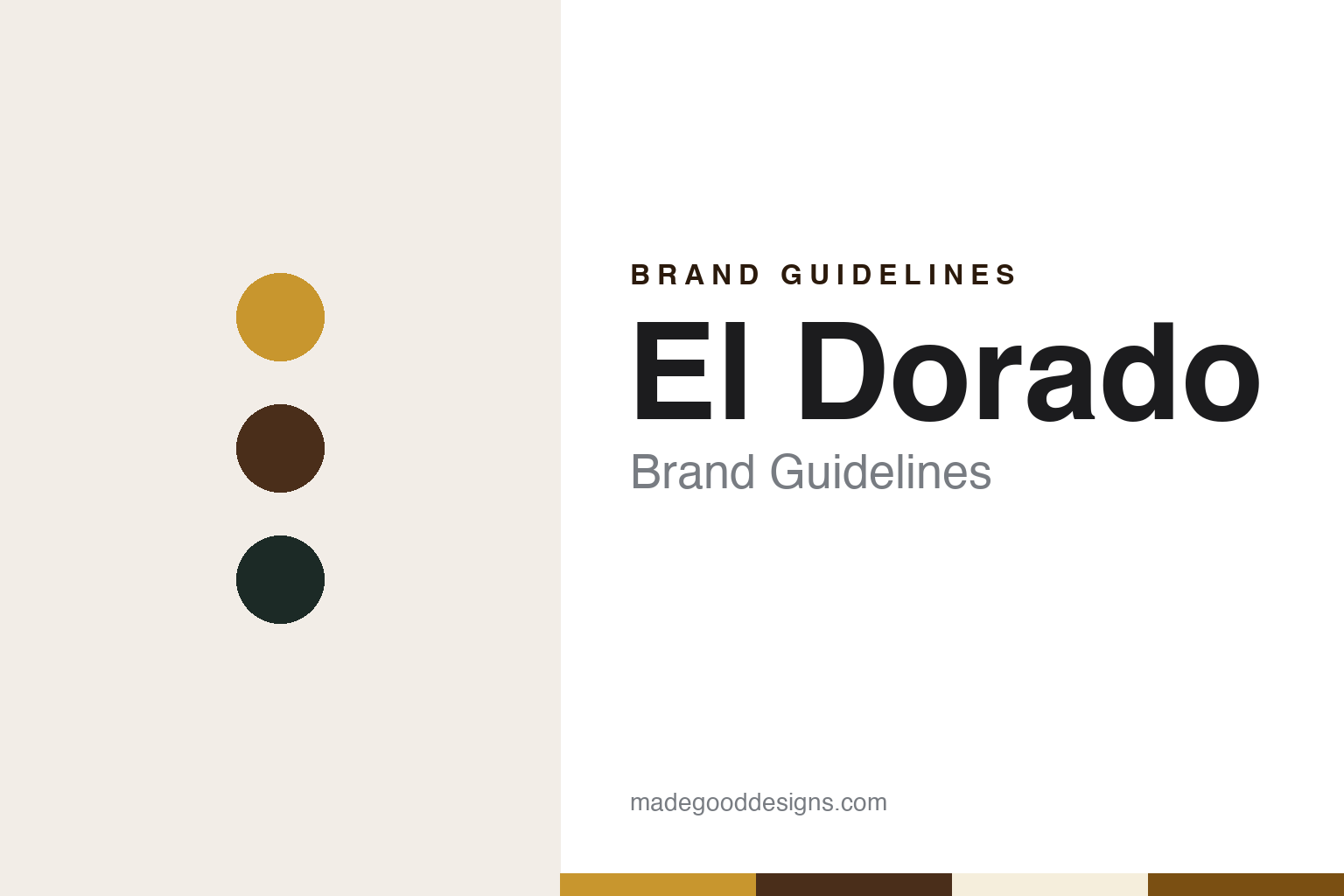
Two constants: a Demerara gold, greenheart brown and river green palette and a classic serif register. Abstract homage — not an El Dorado product or mark; no label, logo or bottle is reproduced.
Rum from the Demerara
Three centuries of estate rum, consolidated at one distillery.
El Dorado is the house rum brand of Demerara Distillers Ltd (DDL), the Guyanese drinks company headquartered in Georgetown. The brand’s own site describes it as a trademark of DDL and gives its home as Plantation Diamond, on the East Bank of the Demerara River. English Wikipedia says DDL released El Dorado in 1992, as its own branded rum.
The company is younger than the rum it makes. English Wikipedia says DDL was formed in 1983 by a merger of Guyana Distilleries Limited and Diamond Liquors Limited, and that in 1988 it became one of the first state-owned manufacturers to be partly privatised under Guyana’s Economic Recovery Programme. The Diamond distillery itself is far older; English Wikipedia dates it to 1753.
El Dorado’s story is one of consolidation. The company says that by 1780 more than 300 distilleries worked along Guyana’s rivers, each identifying its rum by a marque, a set of initials such as PM, EHP or ICBU. Falling sugar prices and new taxes shut most of them; by 1942, the company says, nine remained. DDL completed the last merger of the surviving estates and distilleries in 1999, the company says, moving their stills, equipment and expertise to Diamond.
Leadership has passed through dated handovers. English Wikipedia says Yesu Persaud, executive chairman of Diamond Liquors from 1975, led the company as chairman until 2013, and that Komal Samaroo became chief executive in 2014.
Colour
Greenheart wood, initials and the names of old estates.
What sets El Dorado apart is its equipment. DDL says it operates the last two original wooden pot stills in the world. The Port Mourant still is a double wooden pot still of greenheart wood with copper necks, from an estate the company dates to 1732; it moved to Uitvlugt and then, in 2000, to Diamond. The Versailles still, a single wooden pot still, came to Diamond by the same route, English Wikipedia says; the company traces it to the eighteenth-century Plantation Versailles on the west bank of the Demerara River, then owned by the French L’Amirault family and known, it says, for its golden rum. The Enmore still is a wooden continuous Coffey still that the company says has made rum since 1880, on the estate of Edward Henry Porter, whose initials give its marque, EHP. The company calls it the last fully working example of its kind.
Alongside them stands a French Savalle metal column still from Uitvlugt, which the company says can make nine different marques of rum, among them ICBU. Those initials, the names of estates long since closed, have become a vocabulary of their own: the company has issued single-still rums named Port Mourant, Versailles and Enmore, each a single distillate from one still aged for 12 years in oak, as the company announced on its news page.
The core range is built on age statements. English Wikipedia lists El Dorado blends at 3, 5, 8, 12, 15, 21 and 25 years, alongside the entry-level Diamond Reserve rums. The company’s current lines include “Crafted Richer. Aged Deeper.” and “The Finest Rum from Demerara.”
Packaging has also marked national occasions. Packaging of the World reported in May 2016 on a limited-edition box for El Dorado Grand Special Reserve, made for Guyana’s fiftieth year of independence and wrapped in a nautical map print, with two doors that open to show the full length of the bottle.
Typography
Design and documentation.
The seven brands in this group are all rum and bitters names: Diplomático, Gosling’s, Myers’s, Lamb’s, Wray & Nephew, El Dorado and Angostura. Rum and bitters brands in general sit at many different points in the trade, from family houses that still carry a founder’s name to labels that now belong to much larger drinks groups, and a single brand can be sold everywhere from a corner shop to a cocktail bar.
A rum or bitters brand’s identity is usually carried less by a single bottle than by a label, a name and the place it promises, because the company behind the name may have changed hands, moved its production or grown far beyond the place where it started. That makes the questions behind each name worth asking plainly: who started it, who owns it now, and where its rum or bitters is actually made and bottled.
Each guide separates what independent sources record from what the company says about itself — its founding story, its owners over time, where its rum or bitters is made and how its labels have changed — and marks plainly what rests only on the company’s own word.
Aa
A classic serif for a brand of age statements and estate names. (Specimen set in Cormorant Garamond, a serif STAND-IN; NOT the El Dorado logo.)
El Dorado
A Guyanese company with a reach across the Caribbean.
DDL’s interests run beyond Guyana. English Wikipedia says the company bought a third of the shares in National Rums of Jamaica in 2006, and that its wider business includes Lord Roberts gin, Ivanoff vodka and soft drinks bottled under licence. It also says DDL was an official partner of the first Caribbean Premier League cricket tournament in 2013.
Diamond is a working industrial site, and the company presents its environmental record as part of the brand: its site says the new stills recover and reuse energy and that the distillery captures carbon dioxide from fermentation. The record has not been spotless. English Wikipedia says Guyana’s Environmental Protection Agency shut the distillery’s biogas plant in June 2019 over wastewater leaking onto neighbouring properties, and that the plant restarted in July 2020. It also reports that a fire destroyed DDL’s power station on 27 September 2024.
The name needs care. El Dorado is the legendary city of gold that European explorers sought in South America, including in the Guiana region described by Walter Raleigh in his 1596 account of the voyage; the name is also used by places, the Cadillac Eldorado car and many unrelated businesses. The rum’s own site is theeldoradorum.com, and its maker is Demerara Distillers.
For a design guide, El Dorado shows how a rum brand can turn its machinery into its message, giving wooden stills, estate initials and age statements the weight that other brands give to a mascot or a founder. Compare Diplomático, the Venezuelan aged rum, and Mount Gay, the Barbados rum house. For this guide we use Demerara gold, greenheart brown and river green with a classic serif, an unofficial interpretation; no product or logo is reproduced.
Explore & save
Keep El Dorado’s identity on hand — save it to a board in the Made Good inspiration library.
El Dorado identity set
Pin the El Dorado Demerara gold, greenheart brown and river green palette and the classic serif register to your own board.