San Miguel Brand Guidelines
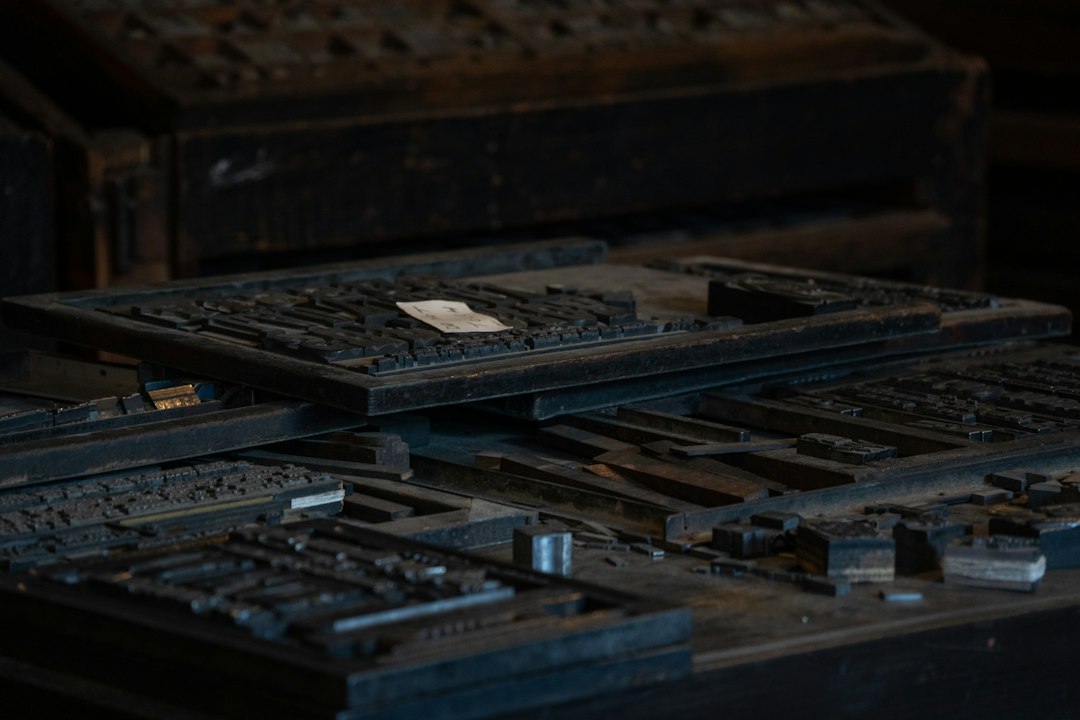
The Manila brewery of 1890 behind Pale Pilsen.
Aa
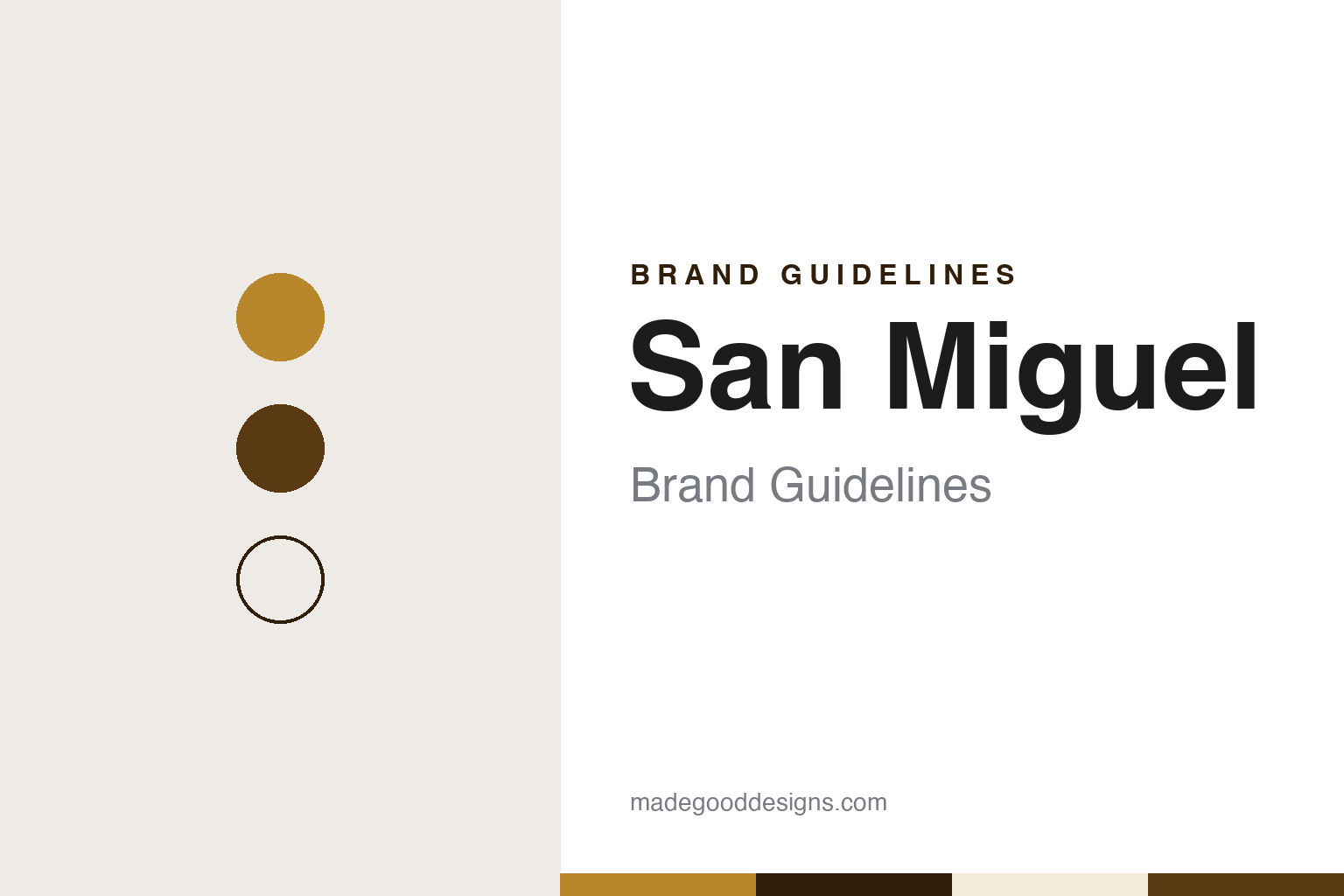
Two constants: a San Miguel escudo gold and malt brown palette and a Heritage serif register. Abstract homage — not a San Miguel product or mark; no label, logo or bottle is reproduced.
A brewery named after a district
A royal grant, an ice plant and a lager in Spanish Manila.
San Miguel began as a brewery in Spanish-ruled Manila. English Wikipedia says the Manila businessman Enrique María Barretto de Ycaza applied in 1889 for a royal grant from Spain to brew beer in the Philippines, and that La Fábrica de Cerveza de San Miguel opened on Calzada de Malacañang — today’s J. P. Laurel Street — taking its name from the district where it stood, San Miguel. Sources give different dates for the start. A marker placed in 1950 by the Philippines Historical Committee, now the National Historical Commission of the Philippines, says the brewery was founded on 4 March 1890 and inaugurated on 4 October 1890; English Wikipedia gives the opening as 29 September 1890, the feast of St Michael the Archangel.
According to English Wikipedia, the brewery had two sections at first, one making ice and one making beer, and soon added other styles, among them Cerveza Negra. Barretto was joined by Pedro Pablo Róxas as managing partner, who brought in a German brewmaster, Ludwig Kiene, as technical director, English Wikipedia says, citing a 2023 paper by the political scientist Julio Teehankee. The 1950 marker lists the men who ran the business in turn, from Barretto until 1893 to members of the Róxas and Brías families, with Andrés Soriano named from 1919.
The business was incorporated as San Miguel Brewery on 21 August 1913, according to a second marker unveiled by the National Historical Commission at the company’s Mandaluyong headquarters on 29 September 2015, the brewery’s 125th anniversary. That marker also records that the brewery closed temporarily during the Second World War, from 1942 to 1945.
Colour
From Manila to Hong Kong, and a namesake in Spain.
The beer travelled early. English Wikipedia says that by 1914 San Miguel was exporting to Hong Kong, Shanghai and Guam, and that after the war the company bought and modernised a second brewery at Polo, now part of Valenzuela, in 1947. In Chinese-speaking markets the beer is known as 生力, Shēng lì, English Wikipedia notes.
The best-known complication is Spain. English Wikipedia says that in the early 1950s the shareholders of La Segarra, a Spanish malt company, approached Andrés Soriano, then president of San Miguel Brewery, for permission to brew under the San Miguel name, and that in 1953 the two sides signed what is known as the “Manila Agreement.” The Spanish company, renamed San Miguel, Fábricas de Cerveza y Malta in 1957, produced its first San Miguel Especial at Lleida that year. English Wikipedia describes it as a separate, independent company with exclusive rights to the San Miguel brand in Europe, and says the Philippine company at first held a 20 per cent stake through its Hong Kong subsidiary, citing The Drinks Business in 2014.
The Spanish company later passed out of that orbit. The French food group Danone began buying control of it in 1992, and in 2000 the Madrid brewer Mahou bought Danone’s 70 per cent, adding to the 30 per cent it already held; the combined business became Grupo Mahou-San Miguel and, from 2014, Mahou San Miguel, English Wikipedia says. So two companies brew beer called San Miguel under their own rights. In May 2014 Mahou San Miguel announced a cooperation agreement with San Miguel Brewing International, the Philippine group’s overseas arm, to position San Miguel jointly as a global brand, a deal also reported by Nikkei Asia.
Typography
Design and documentation.
The seven brands in this group are all beer names from Asia and Europe: San Miguel, Efes, Sapporo, Orion, Cass, Hite and Staropramen. Beer brands in general sit at many different points in the trade, from breweries that still carry the name of a town or a founder to labels that now belong to much larger drinks groups, and a single brand can be sold everywhere from a corner shop to a stadium bar.
A beer brand’s identity is usually carried less by a single bottle than by a label, a name and the place it promises, because the company behind the name may have changed hands, moved its brewing or grown far beyond the place where it started. That makes the questions behind each name worth asking plainly: who started it, who owns it now, and where its beer is actually brewed and packaged.
Each guide separates what independent sources record from what the company says about itself — its founding story, its owners over time, where its beer is brewed and how its labels have changed — and marks plainly what rests only on the company’s own word.
Aa
A heritage serif for a brewery of 1890. (Specimen set in Playfair Display, a serif STAND-IN; NOT the San Miguel logo.)
San Miguel
A corporation, a spin-off and a coat of arms.
The brewery grew into a conglomerate. In 1963 San Miguel Brewery was renamed San Miguel Corporation, according to English Wikipedia, and for more than four decades beer was one division among many. On 1 October 2007 the domestic beer business was spun off into a new San Miguel Brewery Inc., incorporated that July. In 2009 the Japanese brewer Kirin Holdings completed the purchase of a 48.3 per cent stake, Kirin announced in May that year; after a 2017–18 reorganisation, San Miguel Food and Beverage holds the majority, English Wikipedia says. San Miguel Brewery took full ownership of San Miguel Brewing International in 2010, bringing breweries in Hong Kong, mainland China, Indonesia, Thailand and Vietnam under the same company.
The flagship is San Miguel Pale Pilsen, which English Wikipedia describes as the largest-selling beer in the Philippines and Hong Kong. The family around it includes San Miguel Premium All-Malt, San Miguel Super Dry, San Mig Light and the stronger Red Horse, developed at the company’s Mandaue brewery in Cebu. The emblem on San Miguel-branded beers is the escudo, a shield that English Wikipedia says is based on the Spanish-era coat of arms of Manila and also serves as the corporate logo.
The name has been tested in court. In 1988 San Miguel Corporation sued Asia Brewery over a lager sold as “Beer Pale Pilsen,” and on 5 July 1993 the Supreme Court of the Philippines ruled for Asia Brewery, finding the two products’ dominant names distinct, in Asia Brewery v. Court of Appeals.
For a design guide, San Miguel shows how a district name, a saint and a city’s coat of arms can carry a beer for more than a century, and how one name can come to be shared by two unrelated companies. Compare Ginebra San Miguel, the gin from the same Philippine group, and Red Horse, its extra-strong stablemate. For this guide we use escudo gold, malt brown and a cream with a serif, an unofficial interpretation; no product or logo is reproduced.
Explore & save
Keep San Miguel’s identity on hand — save it to a board in the Made Good inspiration library.
San Miguel identity set
Pin the San Miguel escudo gold and malt brown palette and the Heritage serif register to your own board.