Kasapreko Brand Guidelines
The Accra drinks maker behind Alomo Bitters.
Aa
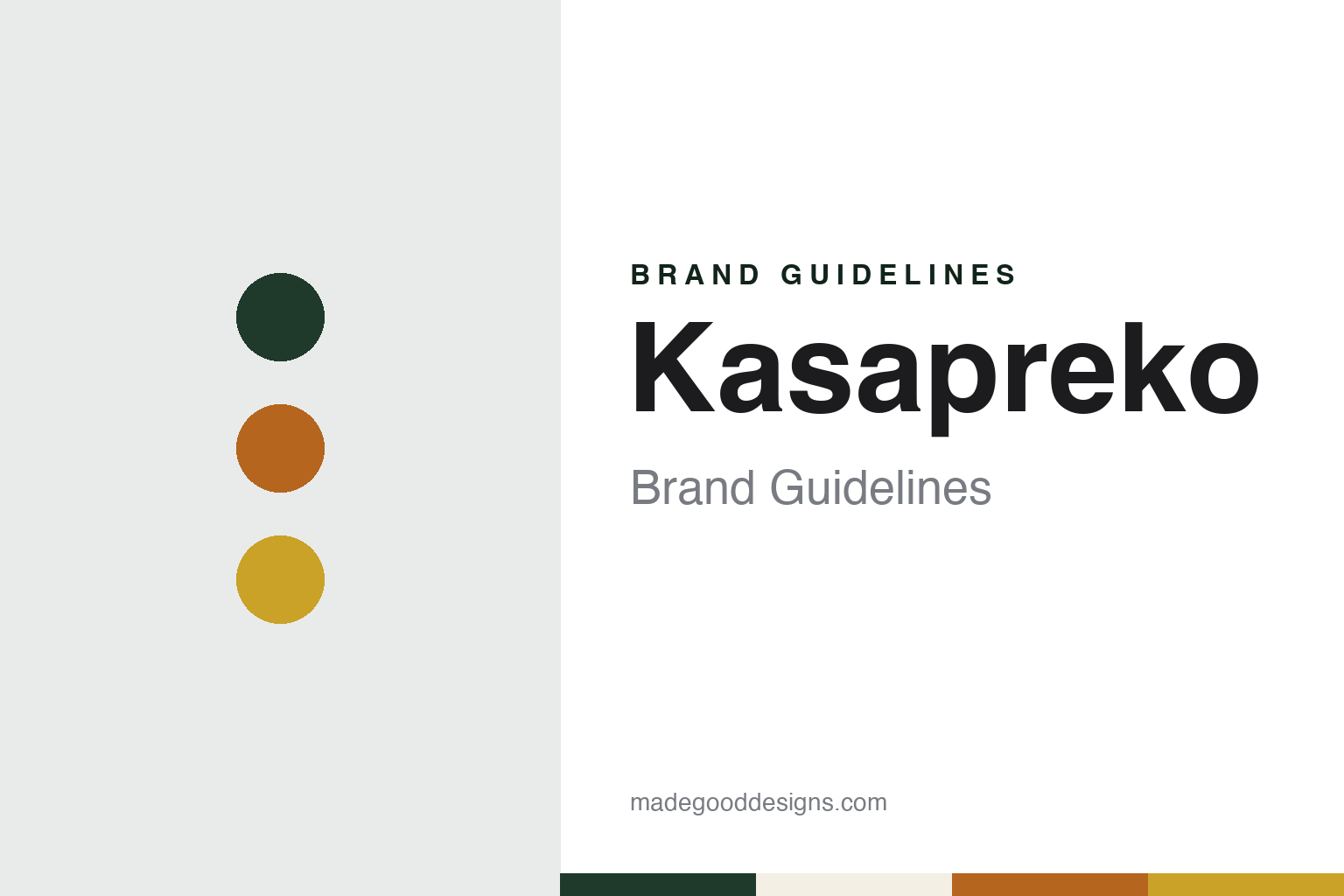
Two constants: a bottle green, bitters amber and gold palette and a sturdy grotesque sans register. Abstract homage — not a Kasapreko product or mark; no bottle, logo or label is reproduced.
A garage in Nungua
Kwabena Adjei’s company.
Kasapreko is an Accra drinks company built around one product. It was founded in 1989 by Kwabena Adjei, a Ghanaian businessman, English Wikipedia and the company both say. The company’s own history puts the start in a garage in Nungua, a suburb of Accra, with five employees, and says Adjei set out to meet growing demand for quality alcoholic drinks. English Wikipedia gives its headquarters as Spintex Road in Accra.
Its approach, the company says, was to make herbal-based drinks using herbs sourced locally in Ghana, and it presents that as the thing that sets it apart. It credits itself with the “conceptualization, research, design and development” of what it calls the first scientifically formulated, herbal-based alcoholic beverage in Ghana: Alomo Bitters, which remains its flagship. Those descriptions are the company’s own.
Adjei has said as much himself. Speaking in 2015, when he was named West African Tourism Personality of the Year at a tourism conference in Accra, he said: “Kasapreko began on a small note of producing Alomo Bitters,” according to MyJoyOnline, which reported the award on 14 July 2015 and described him as the company’s group chairman. In the same report Alomo Bitters was said to have recently been named Tourism Drink of the Year by the Ghana Tourism Authority.
The company has since grown well beyond bitters. It says it now has more than 100 products, or SKUs, across bitters, whisky, gin, liqueur, brandy, wine and carbonated soft drinks, that it exports to 16 countries, and that it employs more than 500 people. It also claims to have been the first local manufacturer in Ghana to set up a modern quality-control and product-development laboratory, and to introduce its own proprietary bottles and caps.
Colour
Alomo Bitters across West Africa.
Alomo Bitters travelled. By 2015 it had become a household name in neighbouring countries including Nigeria, Togo, Ivory Coast and Burkina Faso, MyJoyOnline reported, and Kasapreko today describes Nigeria as the most notable of its export markets. In October 2013 CNNMoney included Alomo Bitters in a short list of “Five global liquors about to go big,” describing it as “distilled in Ghana” and reporting that its sales in Nigeria had risen sharply over the previous few years.
Popularity brought imitation. English Wikipedia says the brand’s success led to counterfeit production, and that Kasapreko responded by introducing new bottles for its 200ml and 750ml sizes and a tamper-proof seal.
The brand’s standing at home has been recognised in rankings. The company reports that at the 16th AAG Gong Awards in December 2022, Brand Africa’s founder Thebe Ikalafeng announced Alomo Bitters as the most admired brand in Ghana in its ranking of the country’s best brands. English Wikipedia records Kasapreko as sixth in the 2012 Ghana Club 100 ranking of companies, and says that in 2017 the Association of Ghana Industries named it the top Ghanaian company in the beverage sector.
Alongside Alomo, the company’s brands include Kalahari Bitters, Storm Energy Drink, the Royal range of soft drinks and Awake drinking water. It has used Ghanaian celebrities to front them. The Business and Financial Times reported in December 2017 that the musician Shatta Wale had become the face of Storm, and that he said he had accepted the role because the drink was made in Ghana. English Wikipedia adds that the actress Nana Ama McBrown became ambassador for Royal Drinks in July 2018, and the company announced the gospel singer Diana Hamilton as ambassador for Awake water in January 2022.
In March 2020, during the COVID-19 pandemic in Ghana, the company turned part of its production over to alcohol-based hand sanitiser, English Wikipedia says, citing MyJoyOnline and GhanaWeb.
Typography
West African food and drink.
The seven brands in this group all make food or drink, and all of them come from Ghana, Ethiopia or Nigeria: Nkulenu, Kasapreko, Dashen, Star, Hollandia, Chivita and Gala. Food and drink brands in general sit at many different points in the trade, from family firms that still carry a founder’s surname to names that now belong to much larger groups, and a single brand can be sold everywhere from a roadside kiosk to a supermarket shelf.
A food or drink brand’s identity is usually carried less by a single product than by a pack, a name and the meal or moment it promises, because the company behind the name may have changed hands, moved its factory or grown far beyond the town where it started. That makes the questions behind each name worth asking plainly: who started it, who owns it now, and where its products are actually made and packed.
Each guide separates what independent sources record from what the company says about itself — its founding story, its owners over time, where its products are made and how its packaging has changed — and marks plainly what rests only on the company’s own word.
Aa
A sturdy grotesque sans — “A Step Beyond Excellence.” (Specimen set in Archivo, a sans STAND-IN; NOT the Kasapreko logo.)
Kasapreko
“A Step Beyond Excellence.”
For most of its life Kasapreko was privately held. That changed in 2026. The company ran an initial public offering from 4 May to 1 June 2026, and the Ghana Stock Exchange lists Kasapreko PLC, under the ticker KASA, as listed on 15 June 2026. In its own announcement the company described the move as its evolution “from a family-founded enterprise into a publicly listed company,” and named Adjei as its group chairman and founder. It says the money raised will mainly fund a new production facility at Adeiso for bottled water and carbonated soft drinks.
Its manufacturing reaches beyond the bottle. Kasapreko says it produces carbon dioxide, ethanol and PET preforms and caps, supplying other beverage makers in West Africa, and runs three carbon-dioxide plants. Those are the company’s own descriptions of its operations.
Its corporate line, carried as a trademark on its website, is “A Step Beyond Excellence.” The site opens with an age check asking visitors to confirm they are over 18, and its pages are addressed to people of legal purchase age. The company also lists export honours on its website: a gold award for export achievement in 2010 and Exporter of the Year in 2012.
For a design guide, Kasapreko shows how a single local product — a herbal bitters — can carry a whole company, from a Nungua garage to a stock-exchange listing. Compare Nkulenu, another Accra manufacturer built by its founder, and Star, another West African drinks brand. For this guide we use a bottle green, an amber and a gold with a sans, an unofficial interpretation; no product or logo is reproduced.
Explore & save
Keep Kasapreko’s identity on hand — save it to a board in the Made Good inspiration library.
Kasapreko identity set
Pin the Kasapreko bottle green, bitters amber and gold palette and the sturdy grotesque sans register to your own board.