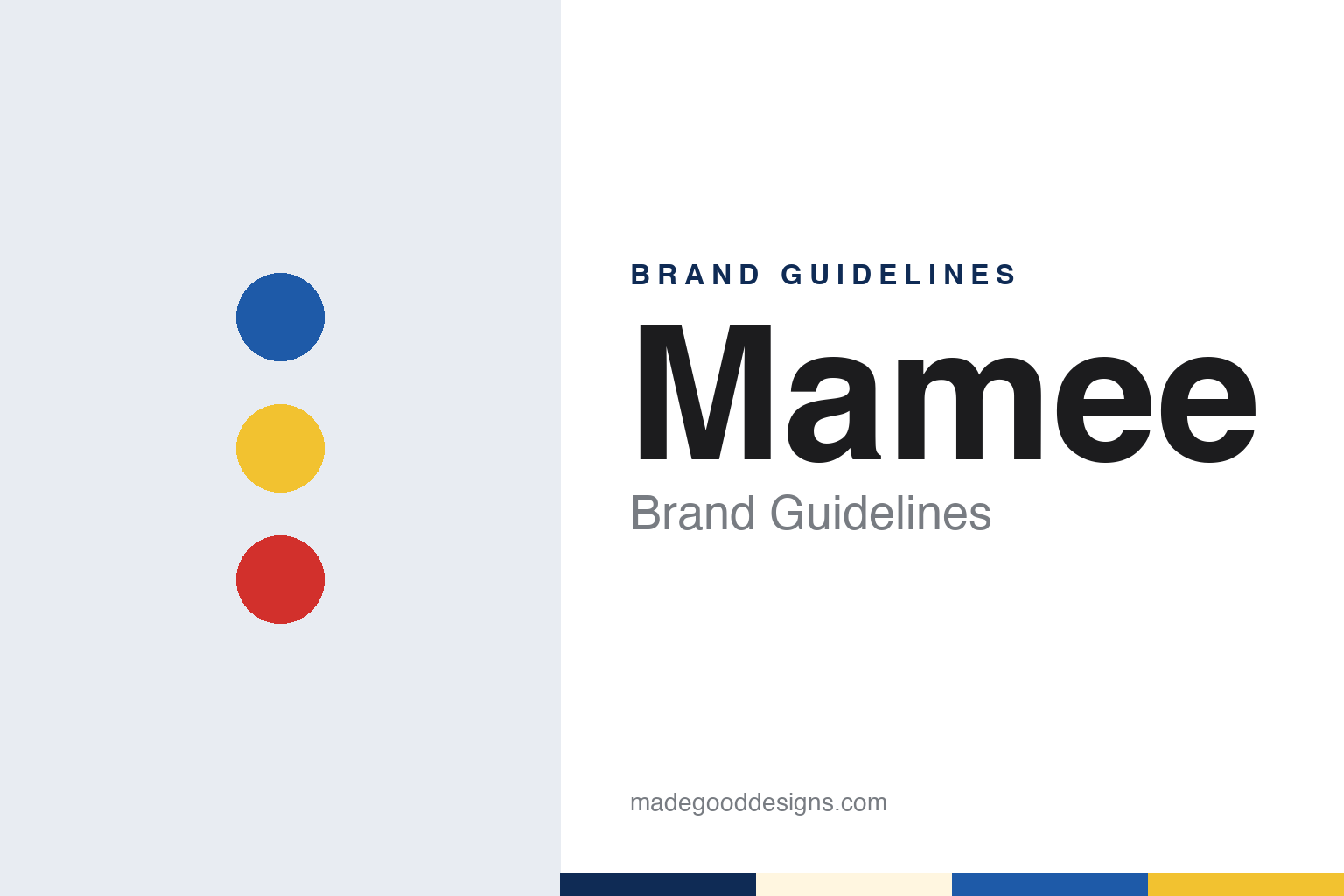
Mamee Brand Guidelines
The Malacca noodle snack with a blue monster.
Aa
Two constants: a monster blue, noodle yellow and chilli red palette and a chunky rounded sans register. Abstract homage — not a Mamee product or mark; no pack, logo or mascot is reproduced.
Lucky noodles
A new factory in Malacca and a slow start.
Mamee began in Malacca, on Malaysia’s west coast, in 1971. The company says its story started that year, when its founder Pang Chin Hin and a partner set up a small factory in the city. The Straits Times reported on 7 July 1971 that the first plant on the new Ayer Keroh industrial estate outside Malacca would produce instant noodles, and the company, its head office still on the estate, is recorded by English Wikipedia as the estate’s first tenant. The business was then called Pacific Food Products, the South China Morning Post reported in 2019.
Its first product was an instant noodle called Lucky. The Post dates its launch to 1971; the company’s own timeline puts its first product, Lucky instant noodles and vermicelli, in 1972. Either way, Lucky did not take off. It was the fourth brand of instant noodles on the Malaysian market, the Post reported, and it met a lukewarm response, leaving Pang and his son Pang Tee Chew looking for a way to turn the business round.
The answer came from watching how people actually ate the product. On a trip to a rural village, the Post reported, Tee Chew saw farm workers eating the dry noodles straight from the packet; the company’s account says they were rubber tappers. “I came up with the noodle snack idea,” Tee Chew told the paper. “My father is a very savvy person, so he worked out a way to season the noodles, while I marketed the finished product, aiming it at kids.” The idea turned a struggling instant noodle into a packet snack, and in doing so gave the company the name it still carries.
Colour
A name for children and a monster to remember.
The new product was launched in 1974 as Mamee, sold today as Mamee Monster. The company says the name comes from “mummy,” chosen for its warm, maternal associations. Tee Chew gave the South China Morning Post a more practical reason: “The Mamee name and the blue monster mascot were chosen because they are easy to remember.” The noodles were sold in small packets to keep them affordable, he said, and production of Lucky stopped as soon as the new snack became a hit.
The mascot did much of the work. The Post described a large, furry blue monster, far from frightening, that appeared in the brand’s television commercials during the 1980s and 1990s and won over a generation of Malaysian children. The snack also appealed to adults, and by the 1980s it had become the best-selling noodle snack in Malaysia, the paper reported. It created what the Post called a new way of snacking, eating dry noodles straight out of the packet, and it went on to sell in markets such as China, where it was not officially distributed.
The family has kept working on the character and the brand’s experience. In 2019 the Post described an in-house research team called Monster Lab, working alongside the company’s research and development department and running focus groups with consumers. One of its products was Mamee Daebak Ghost Pepper noodles, made with a South Korean partner and sold in limited numbers with little promotion beyond a #GhostPepperChallenge hashtag that spread on social media. In 2015 the company opened Mamee Jonker House, a concept store and café on a street in Malacca’s UNESCO-listed old town, as a place where fans could meet the brand directly. Pierre Pang, the founder’s grandson and then director of sales and marketing, told the Post that the old television commercial would not have the same impact on today’s consumers, who needed to engage with a brand both digitally and in person.
Typography
Design and documentation.
The seven brands in this group make malted drinks, snacks and sauces, and they come from Switzerland, Britain, India, Malaysia and China: Ovaltine, Horlicks, Bournvita, Mamee, Julie’s, Munchy’s and Pearl River Bridge. Brands like these sit at many different points in the trade, from family firms that still carry a founder’s name to labels that now belong to much larger food groups, and a single brand can be sold everywhere from a corner shop to a supermarket shelf far from home.
A food brand’s identity is usually carried less by a single product than by a jar, a packet, a bottle and the name on it, because the company behind the name may have changed hands, moved its factory or grown far beyond the place where it started. That makes the questions behind each name worth asking plainly: who started it, who owns it now, and where its products are actually made and packed.
Each guide separates what independent sources record from what the company says about itself — its founding story, its owners over time, where its products are made and how its packaging has changed — and marks plainly what rests only on the company’s own word.
Aa
A chunky rounded sans for a snack sold with a monster. (Specimen set in Baloo 2, a sans STAND-IN; NOT the Mamee logo.)
Mamee-Double Decker
Crackers, crisps, a listing and a family company again.
Mamee grew into a group of snack brands. The company dates its Double Decker crackers, which gave the business the second half of its name, to 1980, and its Mister Potato crisps to 1992; the South China Morning Post called Mister Potato the best-selling potato crisp brand in Malaysia in 2019, and the company’s biggest seller. The company says its range now runs from snacks such as Mamee Monster, Mister Potato and Corntoz to noodles, bakery products and drinks, and that it manufactures in Melaka and in Subang Jaya, Selangor. The Post reported in 2019 that the main factory in Malacca had automated much of its manual work with robots.
The company went public and then private again. The New Straits Times reported that Mamee-Double Decker was incorporated on 3 August 1991 and listed on the main board of the Kuala Lumpur Stock Exchange on 18 March 1992; The Edge Malaysia reported that the name changed from Pacific Food to Mamee-Double Decker at the listing. It was delisted from Bursa Malaysia on 9 January 2012, Bloomberg reported; The Edge Malaysia says the Pang family took the company private that year. English Wikipedia gives its trading name as MAMEE, with the slogan “A World of Good Taste,” and says it exports to around 100 countries.
The business remains in family hands. Pang Chin Hin, its founder and executive chairman, died in Melaka in November 2022 at the age of 96, The Edge Malaysia reported; his son Pang Tee Chew is chief executive and managing director and Datuk Seri Pang Tee Nam chief operating officer. In 2019, the paper added, the company invested in the struggling Malaysian food maker Khee San.
For a design guide, Mamee shows how a product that failed as one thing can succeed as another once it is given a short name and a memorable character. Compare Julie’s, the Malaysian biscuit maker, and Munchy’s, another Malaysian snack brand. For this guide we use a monster blue, a noodle yellow and a chilli red with a rounded sans, an unofficial interpretation; no product or logo is reproduced.
Explore & save
Keep Mamee’s identity on hand — save it to a board in the Made Good inspiration library.
Mamee identity set
Pin the Mamee monster blue, noodle yellow and chilli red palette and the chunky rounded sans register to your own board.