New York Yankees Brand Guidelines
The Highlanders who became the Yankees, in navy, white and pinstripes.
Aa
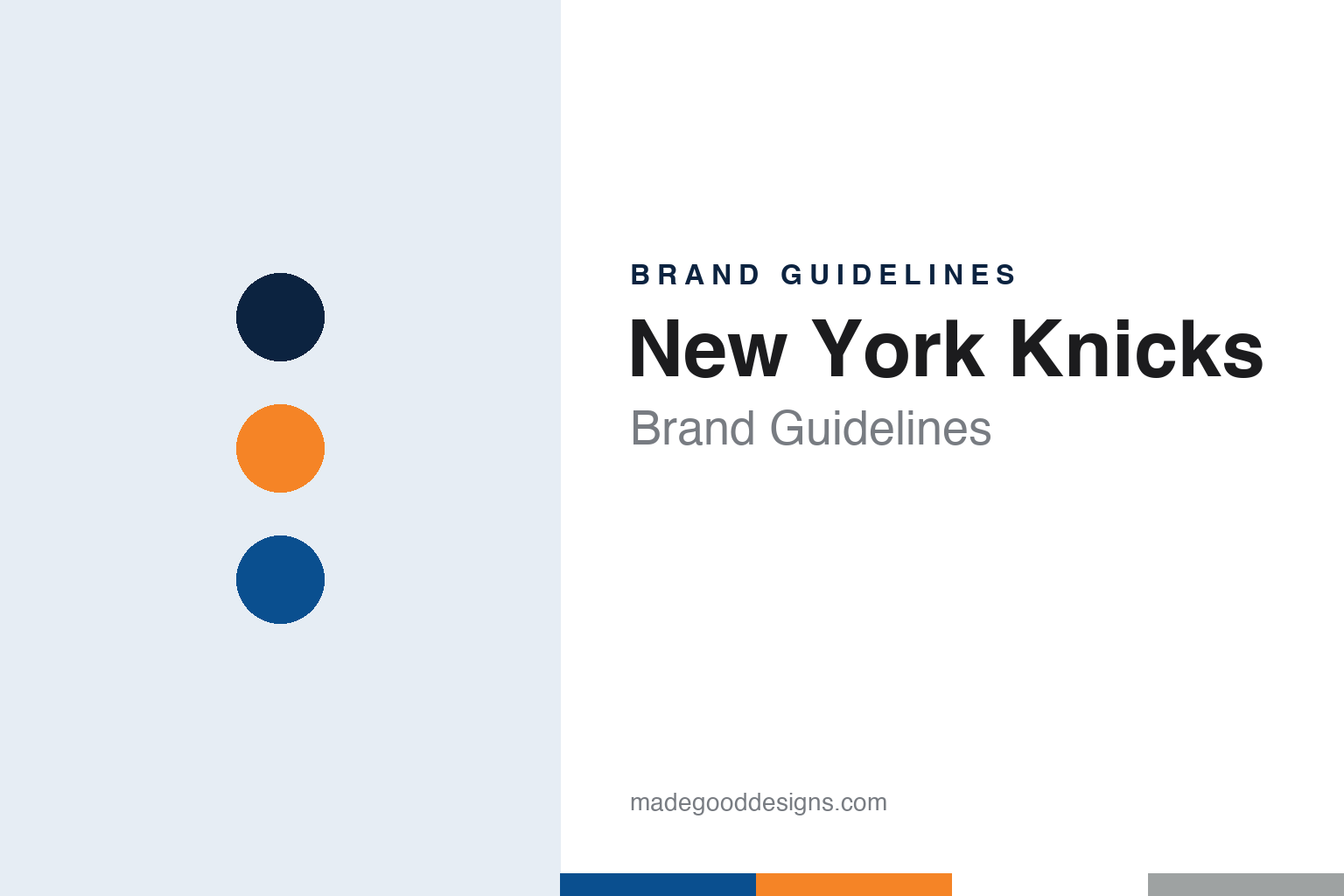
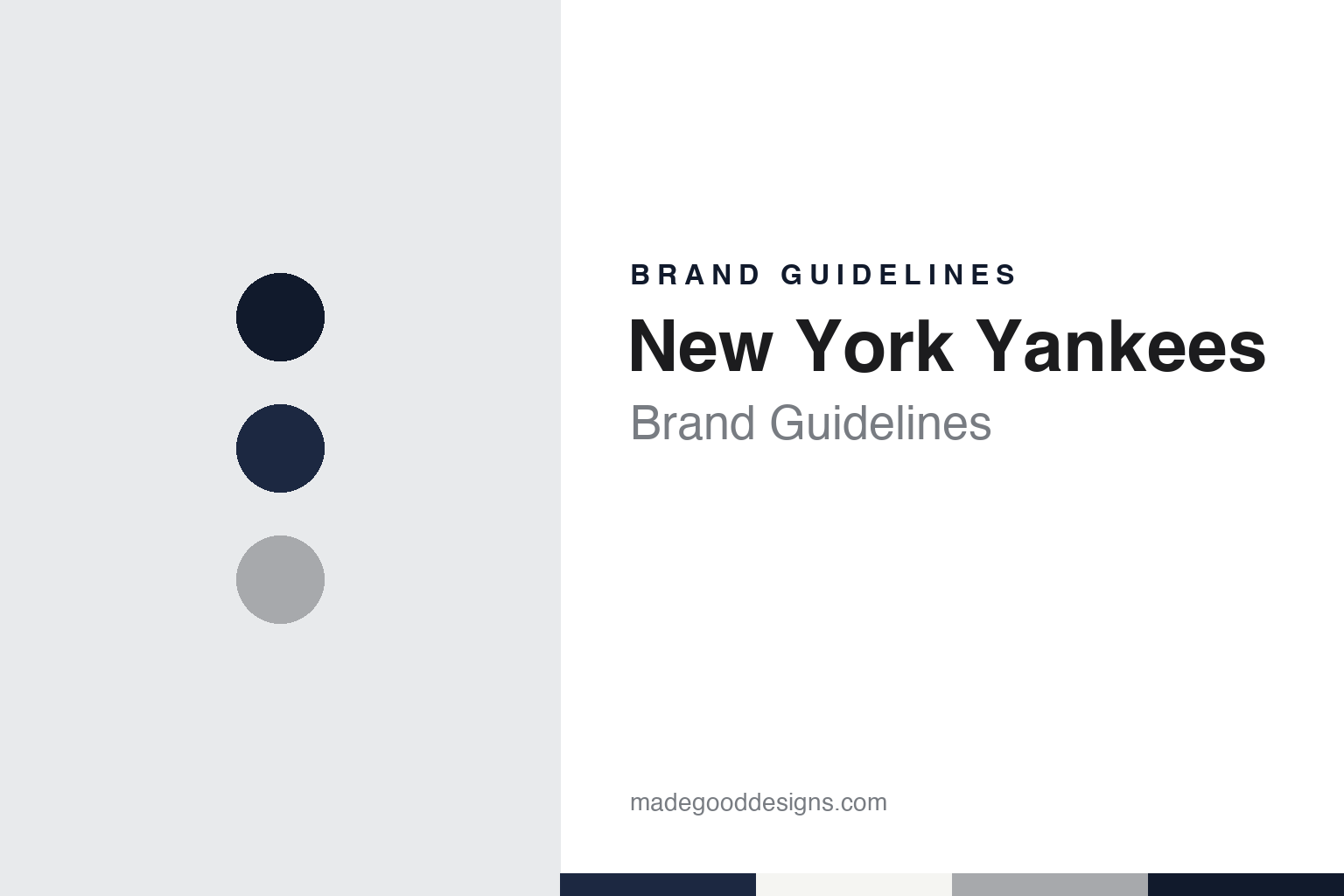
Two constants: a cap navy, road grey and home white palette and an ornate athletic serif register. Abstract homage — not a New York Yankees product or mark; no cap, uniform or logo is reproduced.
Hilltop Park
Americans, Highlanders, then Yankees.
The New York Yankees began in 1903, when the American League placed a franchise in New York to play alongside the National League’s Giants. English Wikipedia says the franchise was awarded to Frank J. Farrell and William S. Devery, and that the club’s original ballpark was built on one of the highest points in Upper Manhattan, between 165th and 168th Streets in Washington Heights. The ground was formally called American League Park, but it became known as Hilltop Park.
The team carried several names in those years. It was commonly called the New York Americans, after its league, and it was named the Highlanders. Writing for NBC Sports on 10 April 2020, Craig Calcaterra said that for years it was widely believed the name referred simply to the high ground the team played on, but that later research showed it was at least in part a play on the surname of the club’s president, Joseph Gordon, combined with a reference to the British regiment the Gordon Highlanders. Wikipedia gives the same two explanations, the elevated ballpark and Gordon’s heritage, and cites the Society for American Baseball Research.
A third name ran alongside the other two. Wikipedia says the New York Press sports editor Jim Price was using “Yankees” or “Yanks” for the club as early as 1904, because the shorter word was easier to fit into headlines. When the Polo Grounds burned in 1911, the Highlanders let the Giants share Hilltop Park, and in 1913 the Giants returned the favour by taking the club in at the rebuilt Polo Grounds. Calcaterra wrote that, having left the high ground, the club decided to adopt the Yankees name formally, and that its game of 10 April 1913 was its debut as the New York Yankees.
The Polo Grounds was a stopgap. Wikipedia records that the club broke ground on its own ballpark in the Bronx, across the Harlem River from the Polo Grounds, and that the original Yankee Stadium opened in 1923. The present Yankee Stadium opened in 2009, a block north on River Avenue from the old site, and Wikipedia says the nickname “Bronx Bombers” refers to that home borough.
Colour
Brewers, builders, a broadcaster and a family.
Ownership has changed hands a handful of times, and Wikipedia sets out each step. At the start of 1915 Farrell and Devery sold the club to Jacob Ruppert, a brewer, and Tillinghast L’Hommedieu Huston, a contractor and engineer. Ruppert’s heirs held the team from 1939 until 1945, when the real-estate developer Del Webb, Dan Topping and Larry MacPhail bought it from the Ruppert estate; MacPhail was bought out after the 1947 season.
After the 1964 season the broadcaster CBS bought a controlling stake from Topping and Webb, making the club part of a television company for close to a decade. On 3 January 1973 CBS announced that it was selling the team to a group of investors led by the Cleveland shipbuilder George Steinbrenner. Wikipedia says Steinbrenner introduced a personal appearance policy for players the same year, requiring them to be clean-shaven with hair kept trimmed, a rule that became part of the club’s public image as much as any uniform detail.
The Steinbrenner family has controlled the club since 1973. Today the team is owned by Yankee Global Enterprises, a holding company in which the family holds the majority, and which also holds a majority stake in the YES Network, the team’s main television channel. Wikipedia says George Steinbrenner stepped back from day-to-day operations in 2005; his son Hal Steinbrenner became chairman of Yankee Global Enterprises and managing partner of the team in 2007, and the formal handover of control to Hal and his brother Hank followed in October 2007.
The uniform took shape over the same decades. Wikipedia says the 1903 Highlanders wore a large “N” and a separate “Y” on the breast, and that in 1909 the two letters were combined into the monogram worn on the left breast and on caps. MLB.com’s Bobbie Dittmeier, writing on 10 April 2012, dated the club’s pinstripes to 11 April 1912, the opening day of that season at Hilltop Park, when the Highlanders took the field against the Boston Red Sox in a new pinstriped look. Dittmeier noted that the club had altered its uniforms nearly every year since arriving in 1903, and that the pinstripes went on to define its home look. Wikipedia describes the home and road uniforms as having been relatively unchanged since the 1920s and 1940s respectively, with the grey road uniform carrying “NEW YORK” across the chest.
Typography
Design and documentation.
A sports team’s visual identity works across surfaces that rarely sit still. The crest or primary mark has to hold up on a jersey chest, a cap front, a centre-court decal and a phone-sized app icon, so designers tend to favour bold silhouettes, a limited set of flat colours and outlines that survive embroidery, screen printing and paint. Secondary marks and monograms carry the identity where the full crest would be too busy, such as a sleeve, a helmet side or a social-media avatar.
Wordmarks do a different job. A team name set in custom lettering has to read from the upper deck and on a television graphic at once, which is why many wordmarks use condensed or slab-serif letterforms, generous tracking and a consistent arch or baseline. Uniform numbers follow league rules on size and contrast, and teams often commission a dedicated numeral set so that a 6 and an 8 stay distinct at a distance. Arena and stadium signage then repeats the same palette and letterforms on scoreboards, concourse wayfinding and court or field markings, turning the venue itself into part of the brand system.
Aa
An ornate athletic serif — the register of a jersey monogram and a ballpark façade. (Specimen set in Playfair Display, a serif STAND-IN; NOT the New York Yankees logo.)
The interlocking NY
A police medal, a cap and a pinstripe.
The interlocking NY is older than the team. In a 4 February 2021 article for MLB.com, Bryan Hoch traced the monogram to the New York City Police Department’s Medal of Valor, citing a New York Times account of a January 1877 robbery in which patrolman John McDowell was shot while arresting a suspect. McDowell recovered and received the medal, which carried the interlocking “NY” above a silver shield showing a woman placing a laurel wreath on a policeman’s head. Hoch wrote that the medal was designed by Tiffany & Co., that it survives at the New York City Police Museum, and that its engraved back is dated 12 January 1877.
Hoch also described how the letters moved onto the club’s clothing. He wrote that the interlocking NY appeared on the Highlanders’ caps and left sleeves in 1909, and that it is believed to have been adopted by William “Big Bill” Devery, one of the owners and a former chief of the NYPD. The monogram moved from the sleeve to the left breast of the home uniform between 1912 and 1915, in a larger version than the one worn now. In 1916 the club removed it from the jersey for a plain, pinstripes-only home shirt, and Hoch wrote that it stayed off the uniform until 1936, though it remained on caps. He dated the solid navy cap with the white NY to 1922; Wikipedia dates the current cap look to 1932.
The cap has travelled far from the ballpark. Wikipedia, citing a 2023 New York Times report, says Yankees caps, many of them counterfeit, are widely worn in Brazil by people who see the monogram as a piece of Americana or a general emblem of the West rather than as a baseball logo.
For a design guide, the New York Yankees show how a monogram borrowed from civic metalwork, a pinstripe added to a home shirt in 1912 and a plain navy cap can be held steady for more than a century while owners, ballparks and broadcasters change around them. Compare it with MLB, the league whose batter silhouette sits on the same uniforms, and Green Bay Packers, another club whose single-letter mark has stayed on its helmets since 1961. For this guide we use cap navy, road grey and home white with a serif, an unofficial interpretation; no product or logo is reproduced.
Explore & save
Keep New York Yankees’s identity on hand — save it to a board in the Made Good inspiration library.
New York Yankees identity set
Pin the New York Yankees cap navy, road grey and home white palette and the ornate athletic serif register to your own board.