Ülker Brand Guidelines
The Istanbul biscuit maker behind Yıldız Holding and pladis.
Aa
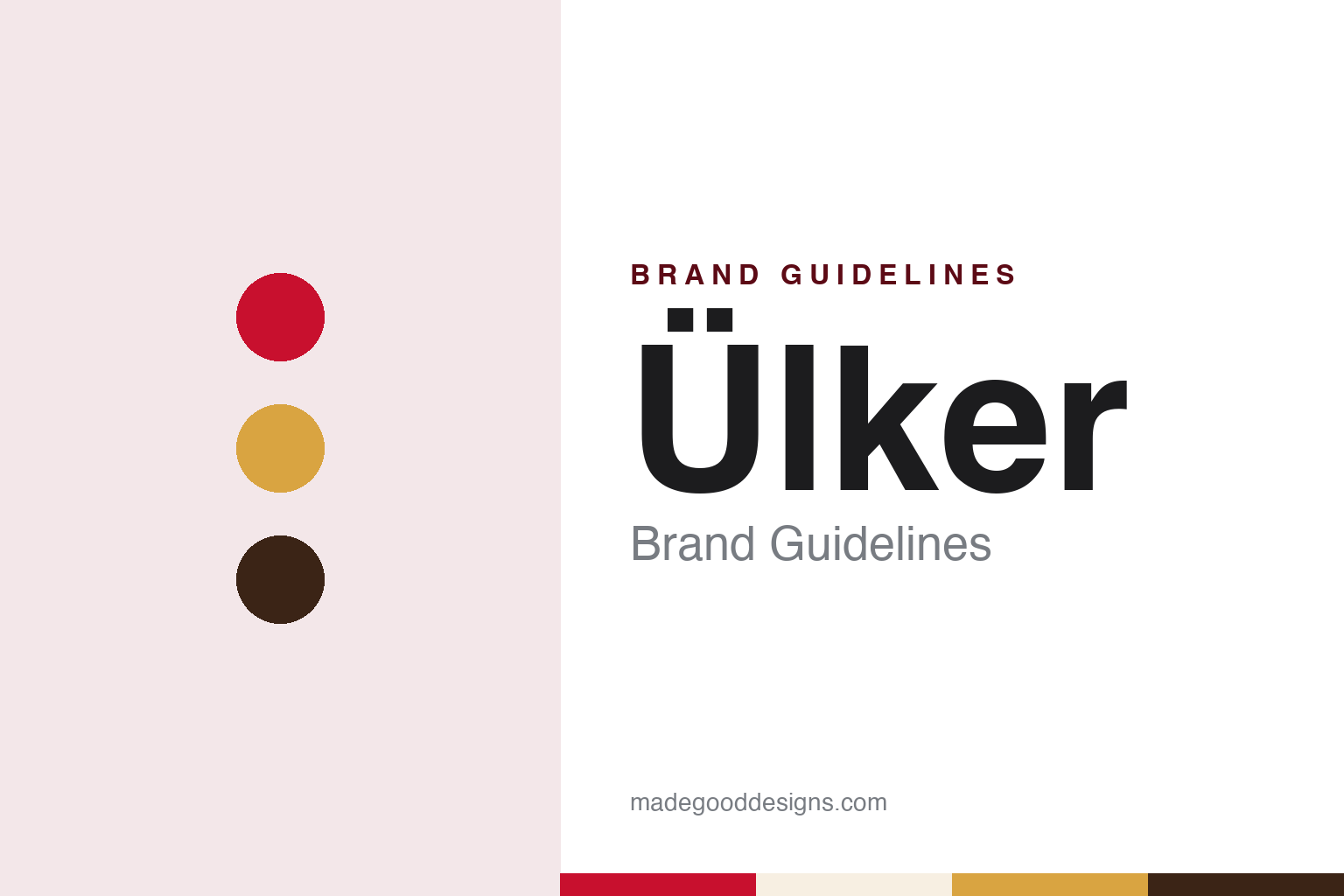
Two constants: an Ülker red, biscuit gold and cocoa palette and a warm bakery serif register. Abstract homage — not an Ülker product or mark; no pack, logo or biscuit is reproduced.
Nohutçu Han
Two brothers, one biscuit and a workshop in Eminönü.
Ülker began in Istanbul in 1944. Turkish Wikipedia dates the start to 22 February 1944 and places it in Nohutçu Han, a commercial building in the old market district of Eminönü, where the brothers Sabri Ülker and Asım Ülker set up a small biscuit workshop. Turkish Wikipedia says the family were Crimean Tatars who had settled in Istanbul, returning there from Crimea in 1929. A company history published by Yıldız Holding, the group that grew out of the business, says the first product was a petit-beurre biscuit, made by Sabri with his elder brother and three colleagues, and in 2012 it still called petit-beurre one of its most popular products.
The same history traces a steady climb out of the workshop. In 1948 production moved to a plant in Sağmacılar, in the Topkapı area of Istanbul; in 1965 a new and more modern biscuit factory opened at Davutpaşa, also in Topkapı. In 1970 the group began making biscuits in Ankara through a company called Anadolu Gıda, its first production outside Istanbul. In 1972 one line of the Istanbul biscuit factory started making chocolate, and in 1974 a dedicated Ülker chocolate plant opened beside it. That year the company says it made its first exports, to Middle Eastern markets, and set up a research and development department.
Through the late 1970s and 1980s Ülker invested backwards into its own supply chain. The holding’s history lists its own flour production from 1978, cellophane packaging from 1979, and a machinery company, Topkapı Makine, from 1984. On 13 November 1989 the companies built up under the Ülker name were brought together as Yıldız Holding.
Colour
Chocolate, dairy, cola and a basketball team.
English Wikipedia describes Ülker’s core business as biscuits, cookies, crackers and chocolate, and says the brand has been stretched into baby food, breakfast cereals, coffee, dairy, ice cream and soft drinks. The Yıldız history fills in the dates. It says Ülker made the first cake bars and filled cakes produced in Turkey in 1995, and entered dairy in 1996 with an Ak Gıda plant and the Ülker İçim brand. In 1999 it bought a biscuit factory in Karaman, in central Anatolia, and a chocolate factory in Jeddah, its first production abroad.
The 2000s brought the widest stretch of the name. English Wikipedia says the company moved into carbonated drinks in 2002, and in 2003 into Turkish coffee, ice cream and baby food, the year it introduced Cola Turka; it adds that the drinks business was disposed of in 2015. A joint venture with Kellogg’s followed in 2005, which the holding says was the first time the Kellogg’s name had shared a pack with another brand. Turkish Wikipedia counts Ülker as the first Turkish company to make filled chocolate.
Sport has been part of the brand’s public face. The holding says it founded the Ülkerspor basketball club in 1993 and in 2006 moved its basketball sponsorship to Fenerbahçe, whose team played as Fenerbahçe Ülker. In 2021 it signed a five-year agreement with the Turkish Football Federation to sponsor the national football teams until 2026. For the brand’s 65th year in 2009, the holding says, the anniversary motto was “A Happy Moment.”
Production today is spread well beyond Topkapı. Turkish Wikipedia lists ten factories in Turkey, Kazakhstan, Egypt and Saudi Arabia, and English Wikipedia says the company exports to about 110 countries. In 2004 the European Candy Kettle Club named Ülker its Candy Company of the Year in Europe, English Wikipedia says.
Typography
Design and documentation.
The seven brands in this group all make food or drink, and all of them come from Türkiye: Ülker, Torku, Pınar, Tat, Tukaş, Dimes and Uludağ. Turkish food and drink brands in general sit at many different points in the trade, from family firms that still carry a founder’s surname to names that now belong to much larger groups, and a single brand can be sold everywhere from a corner grocer to a supermarket shelf.
A food or drink brand’s identity is usually carried less by a single product than by a pack, a name and the meal or refreshment it promises, because the company behind the name may have changed hands, moved its factory or grown far beyond the town where it started. That makes the questions behind each name worth asking plainly: who started it, who owns it now, and where its products are actually made and packed.
Each guide separates what independent sources record from what the company says about itself — its founding story, its owners over time, where its products are made and how its packaging has changed — and marks plainly what rests only on the company’s own word.
Aa
A warm bakery serif for a brand that began with a single biscuit. (Specimen set in DM Serif Display, a serif STAND-IN; NOT the Ülker logo.)
Ülker
A family holding, Godiva, McVitie’s and pladis.
Ülker has stayed under the control of the family that founded it while becoming one piece of a much larger group. In 2000, the holding says, Sabri Ülker handed over management to the next generation and became honorary chairman, with Murat Ülker taking the lead. In 2003 the biscuit company, merged with the already-listed Anadolu Gıda, began trading under its own name; it is listed on Borsa Istanbul as Ülker Bisküvi.
Yıldız then bought abroad. It agreed in 2007 to buy the Belgian chocolatier Godiva from the Campbell Soup Company, a deal English Wikipedia says was completed in March 2008. In November 2014, Turkish Wikipedia says, Yıldız acquired United Biscuits, the British owner of McVitie’s, and the same year bought the American confectioner DeMet’s.
In January 2016 Yıldız gathered its biscuit and confectionery businesses into a new London-based company, pladis. English Wikipedia says pladis holds about 47.2 percent of the listed Ülker Bisküvi, and Turkish Wikipedia gives 47.23 percent at June 2020, with the rest held by public shareholders. In November 2023 United Biscuits (UK) Limited was renamed Pladis (UK) Limited, English Wikipedia says. The holding says that in 2020 Murat Ülker handed the Yıldız chairmanship to Ali Ülker.
For a design guide, Ülker shows how a single Istanbul biscuit name can carry chocolate, dairy, cakes and sponsorship without losing its home-market familiarity, while the group behind it collects foreign brands that keep their own identities. Compare its Eskişehir rival Eti, and the British biscuit house McVitie’s that now shares its parent. For this guide we use Ülker red, biscuit gold and cocoa with a serif, an unofficial interpretation; no product or logo is reproduced.
Explore & save
Keep Ülker’s identity on hand — save it to a board in the Made Good inspiration library.
Ülker identity set
Pin the Ülker red, biscuit gold and cocoa palette and the warm bakery serif register to your own board.