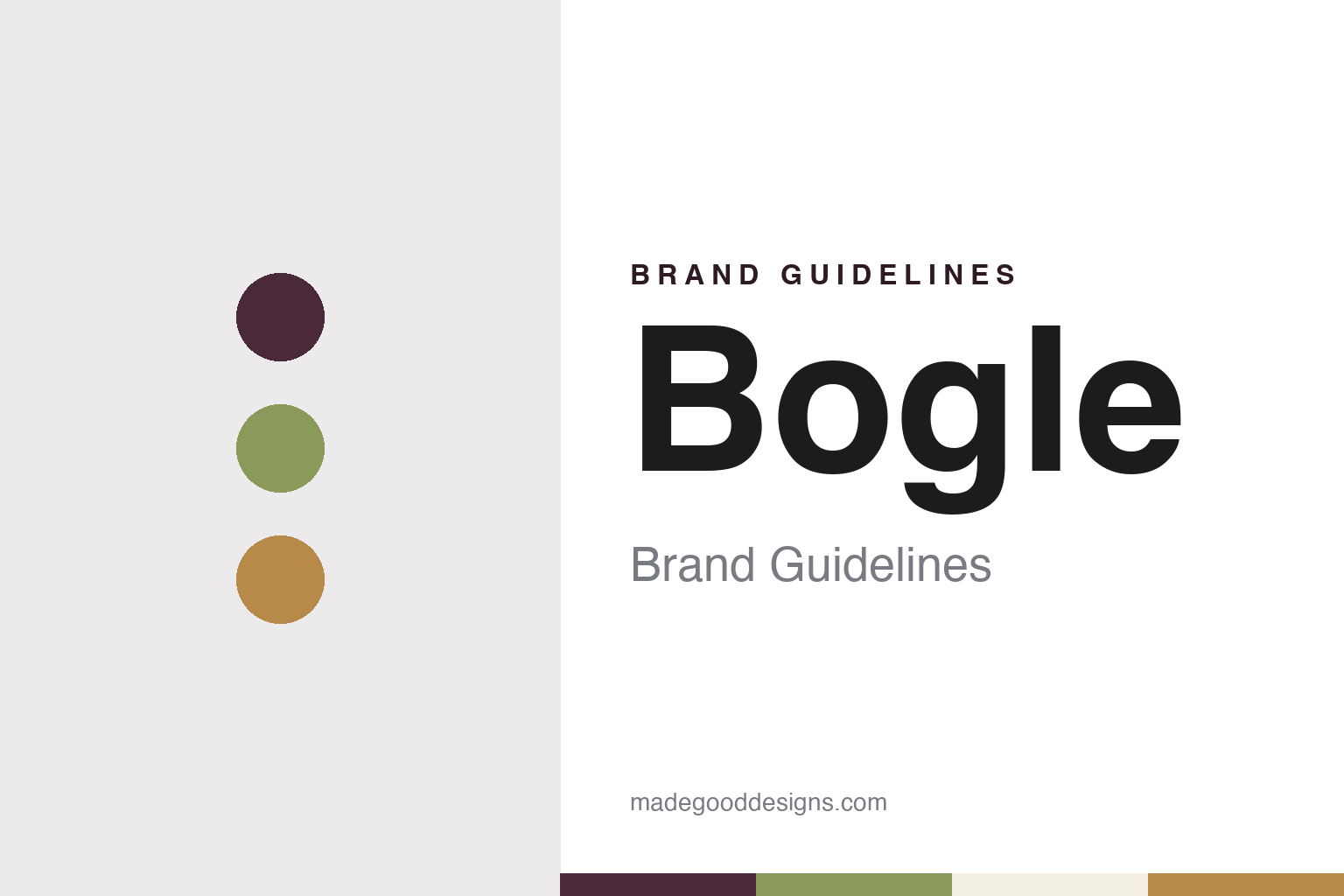
Bogle Brand Guidelines
The Clarksburg family winery, first vines 1968.
Aa
Two constants: a petite sirah, Delta sage and clay ochre palette and a bookish serif register. Abstract homage — not a Bogle product or mark; no label, logo or bottle is reproduced.
Six generations in the Delta
From orchards and row crops to the first wine grapes in Clarksburg.
Bogle is a family winery in Clarksburg, a farming town in the Sacramento River Delta south of Sacramento, and its history runs back well before its first wine. The family says Captain A. J. Bogle, a Civil War infantryman, came west from Tennessee in the late 1870s with his nephew Samuel, and that they farmed cherries, peaches and pears in the Delta before Samuel expanded onto Grand Island. In the Great Depression, the family says, it lost that land and became tenant farmers on nearby Merritt Island.
The vineyard era began with Warren Bogle, the fourth generation. The San Francisco Chronicle reported in 2016 that he bought the first 8 acres of what became the home ranch and farmed corn before turning to grapes. In 1968, the family says, Warren and his son Chris planted their first 20 acres of wine grapes on the Home Ranch; the Chronicle described them as reportedly the first wine grapes in Clarksburg.
For a decade the Bogles were growers, not winemakers. The Chronicle reported that they sold fruit to wineries including Charles Krug, Wente and Sebastiani until a 1978 letter from August Sebastiani ended that arrangement, which pushed the family to bottle wine under its own name. The company says the first Bogle wine was released in 1978 and that the original winery, built in 1979, still stands; English Wikipedia also gives 1979 as the founding year.
Colour
A family name on the label and growth by word of mouth.
The brand is the family. The label carries the surname, and the company presents its range as the Bogle Family Wine Collection, which on its website also includes the labels Twenty Acres by Bogle, Phantom and Juggernaut.
Place is part of the pitch. The company describes the Delta around Clarksburg as a landscape of dense clay soils cooled by breezes off the Sacramento River, and it presents the Home Ranch, where the first vines went in, as the centre of the business and the place where visitors are received. The family’s story of losing its land in the Depression and then farming its way back is told on the winery’s own site as part of the brand.
The wines are the Californian staples. English Wikipedia lists chardonnay, zinfandel, cabernet sauvignon, petite sirah, sauvignon blanc, merlot and pinot noir, along with a Port-style dessert wine made from petite sirah. The San Francisco Chronicle reported in 2016 that the winemaker Chris Smith had been with Bogle since 1992 and Eric Aafedt had been director of winemaking since 1994, and that Wall Street Journal wine critics Dorothy Gaiter and John Brecher had praised the Chardonnay in 2003.
The same Chronicle article described a brand built largely on word of mouth rather than heavy advertising. It reported sales of 234,000 cases in 2000, more than a million by 2010 and more than 2 million cases a year by 2016, and said all of the family’s 1,600 acres were then certified sustainable. Bogle’s own newsletter later put the share of grapes crushed at the winery certified under the California Sustainable Winegrowing programme at 96 percent.
Recognition followed. Wine Enthusiast named Bogle its American Winery of the Year in its 2019 Wine Star Awards, the winery’s newsletter and the American Chamber of Commerce in Norway reported, and the California Association of Winegrape Growers named Bogle its Grower of the Year in 2022, the trade site Growing Produce reported.
Typography
Design and documentation.
The seven brands in this group are all wine names: Chateau Ste. Michelle, Bogle, 14 Hands, Dark Horse, Cupcake, Ménage à Trois and Chandon. Wine brands in general sit at many different points in the trade, from family houses that still carry a founder’s name to labels that now belong to much larger drinks groups, and a single brand can be sold everywhere from a corner shop to a restaurant list.
A wine brand’s identity is usually carried less by a single bottle than by a label, a name and the place it promises, because the company behind the name may have changed hands, moved its production or grown far beyond the place where it started. That makes the questions behind each name worth asking plainly: who started it, who owns it now, and where its wine is actually made and bottled.
Each guide separates what independent sources record from what the company says about itself — its founding story, its owners over time, where its wine is made and how its labels have changed — and marks plainly what rests only on the company’s own word.
Aa
A bookish serif for a family surname on a label. (Specimen set in Libre Caslon Text, a serif STAND-IN; NOT the Bogle logo.)
Bogle
One family, handed from generation to generation.
Bogle has stayed in the family through each handover. The San Francisco Chronicle reported in 2016 that after the elder Warren Bogle’s death in 1989, Chris ran the farming and his wife Patty Bogle ran the winery; the company says 1989 was the year the couple took up the winery project in earnest. After Chris Bogle’s death in 1997, the Chronicle and the company say, Patty took over management of the winery, and the sixth generation came home: the company says Warren returned that year to manage the vineyards, Jody came back full-time in 1999 to run the tasting room and customer relations, and Ryan joined in 2007 to look after the finances.
The three siblings run the business today. The company names Warren as president and vineyard director, overseeing about 2,000 acres of estate vineyards, Jody as vice president of consumer relations, responsible among other things for sales in some 40 countries, and Ryan as vice president and chief financial officer. In 2019, the company says, the family started a giving programme called Bogle Gives Back. The Chronicle described the company as family-owned in 2016.
The name needs a little care online. Bogle is also a surname found in other fields, including finance; the winery’s site is boglewinery.com.
For a design guide, Bogle shows how far a plain family surname can carry a wine brand when it is backed by a farm, a place and a story told across six generations. Compare Barefoot, another Californian wine brand, and Cupcake Vineyards. For this guide we use petite sirah, Delta sage and clay ochre with a serif, an unofficial interpretation; no product or logo is reproduced.
Explore & save
Keep Bogle’s identity on hand — save it to a board in the Made Good inspiration library.
Bogle identity set
Pin the Bogle petite sirah, Delta sage and clay ochre palette and the bookish serif register to your own board.