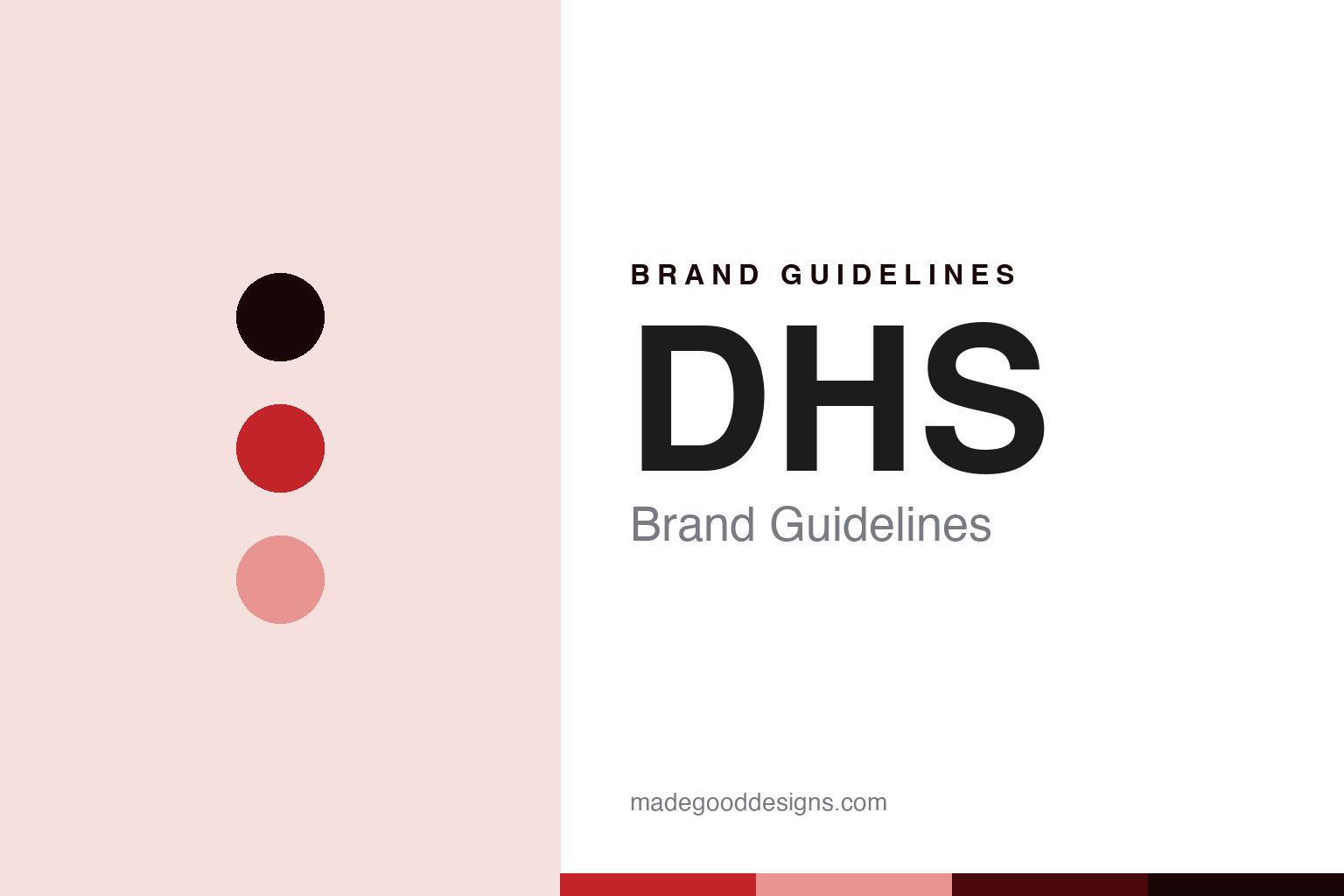
DHS Brand Guidelines
The Chinese house born from a double victory.
Aa
Two constants: a China-red palette and a champion-sans register. Abstract homage — not a DHS product or mark.
The Chinese house born from a double victory
DHS is the Shanghai table-tennis house made in China — named for a 1959 double happiness.
DHS brings the round its Chinese powerhouse — the Shanghai maker whose name, Double Happiness, was born from a double event in 1959, and whose Hurricane rubber and equipment sit at the top of the sport, all made in China. DHS makes balls, blades, rubbers and tables, and its answer to a round about the equipment houses is national scale and a made-in-China story: a house named for a moment of double joy. A brand, of double happiness.
Its identity is the Chinese house born from a double victory. DHS’s Chinese making, its 1959 origin and its championship equipment are the story here. A brand, Chinese. The Chinese house born from a double victory.
(Honest notes, so the story stays precise. DHS — Double Happiness, Chinese name Red Double Happiness, from Shanghai; its official domain could not be reached in our checks from outside China, which we treat as a geographic block rather than a closure, and its activity is well evidenced at major retailers — makes balls, blades, rubbers such as the Hurricane and Hurricane 3 Neo, and tables. Its name commemorates a double event of 1959: Rong Guotuan winning China’s first world table-tennis title, and the tenth anniversary of the People’s Republic, so we frame 1959 as the year the DHS ball was created and named, in Shanghai. On where it is made — the theme of this round — DHS is genuinely made in China, in Shanghai, a deliberate contrast to the Japanese and European makers. On its official-supplier heritage, the evidence points to DHS as an official table and equipment supplier at the 2008 and 2012 Olympic Games and multiple World Championships, so we say official table and equipment supplier, not official ball, which we could not confirm, and we treat these as documented supplier claims. On ownership, it is historically a Shanghai, state-linked enterprise; a later reported outside investment we could not confirm, so we do not assert a current structure. Its double-happiness character is both its IP and a culturally significant traditional Chinese wedding symbol, which we describe respectfully and do not reproduce. Ma Long’s use of its W968 and Hurricane 3 Neo is a public fact; there is no official brand hex; these tones are an unofficial interpretation. This is design commentary.)
Colour
DHS lives in a China red. Click a swatch to copy the hex.
DHS’s identity is Chinese, national and red — a China red, an ink, a blush, a deep red, and a paper. The palette leans China red and blush: a strong, celebratory register that nods to a red double-happiness and a rubber sheet rather than a quiet palette. It signals a national champion’s equipment. The honest caveat: with no published brand hex, these values are an original, unofficial interpretation, not first-party colours.
The lesson is a China red signals a Chinese, national identity. DHS’s world is a national, made object. For designers, it is a reminder that a strong red and a soft blush can carry a sports brand — the tone of a celebration. Because these tones can fail as small text, keep type dark and let the colour live in the accents, palette and band. The takeaways: own a national story; be honest where it is made; handle a cultural symbol with care; and treat any single hex as unofficial.
Typography
The register is a champion sans — Chinese, national, plain.
DHS’s identity carries a Chinese, national, plain spirit — a champion’s equipment house, not a fashion. A champion sans captures the mood: strong, clean and confident, the register of a national maker. Set in a China-red palette, the champion sans feels Chinese and national — exactly the personality DHS carries. It is a national story rather than a logo, mirroring rubber and sponge. (DHS’s real double-happiness mark is a thing we describe but do not reproduce, and the exact typeface is not ours to use.) Because it is not ours to use, the honest description is “a champion-sans spirit,” shown here in a stand-in. The type behaves like the brand: Chinese, national and plain.
Aa
A champion-sans spirit — Chinese and national. (Specimen set in Libre Franklin, a champion-sans STAND-IN; NOT the DHS logo.)
The equipment houses
DHS stands for the Chinese house born from a double victory.
DHS brings the round its Chinese powerhouse. A China-red palette, a champion sans and a 1959 origin make one thing — the Chinese house born from a double victory — the whole identity: Chinese, national and red. The made-in-China fact is the differentiator, and the double-happiness origin is the meaning. The point is a Shanghai maker named for a double event, whose equipment sits at the top of the sport.
Put to work, the identity is a national story told straight, as design. A maker in this spirit would own a national story, be honest where it is made, and handle a cultural symbol with care. A reader in this spirit would keep the facts right: DHS, Red Double Happiness, dates its ball to 1959, named for Rong Guotuan’s first world title and the tenth anniversary of the People’s Republic, in Shanghai; it makes balls, blades, Hurricane rubbers and tables; it is genuinely made in China; it was an official table and equipment supplier at the 2008 and 2012 Olympics and multiple World Championships, not an official ball; and it is historically Shanghai state-linked, with later reported investment we do not assert. DHS sits in the round’s official-supplier thread with Nittaku, and its where-made thread is the round’s made-in-China anchor, against the Swedish, French and Japanese makers. The honest editorial moves are to frame 1959 as the ball’s naming, to say made in China, to say table and equipment supplier not ball, to leave ownership general, and to treat the double-happiness symbol respectfully. The lesson DHS teaches is that a national story can be a whole identity, and honesty about the making and the symbol keeps it credible.
For designers and brand-builders, DHS continues the equipment houses: own a national story — and handle a cultural symbol with care. The lessons: build a brand from a national moment; be plain about made-in-China as a strength; frame a supplier claim precisely; treat a cultural symbol respectfully rather than reproducing a logo; and leave an unverified ownership detail unstated. It is also a reminder to stay precise: DHS is the Shanghai table-tennis house made in China, named for a 1959 double happiness — with the palette here an unofficial interpretation. Read that way, DHS is less a rubber than a story: a house born from a double victory. The lesson for a brand is that a national story and honest making reinforce each other, and framing 1959 keeps the heritage earned. DHS made the-Chinese-house-born-from-a-double-victory the identity — proof that a story can define a brand.
Explore & save
Keep DHS’s identity on hand — save it to a board in the Made Good inspiration library.
DHS identity set
Pin the China-red palette and the champion-sans register to your own board.