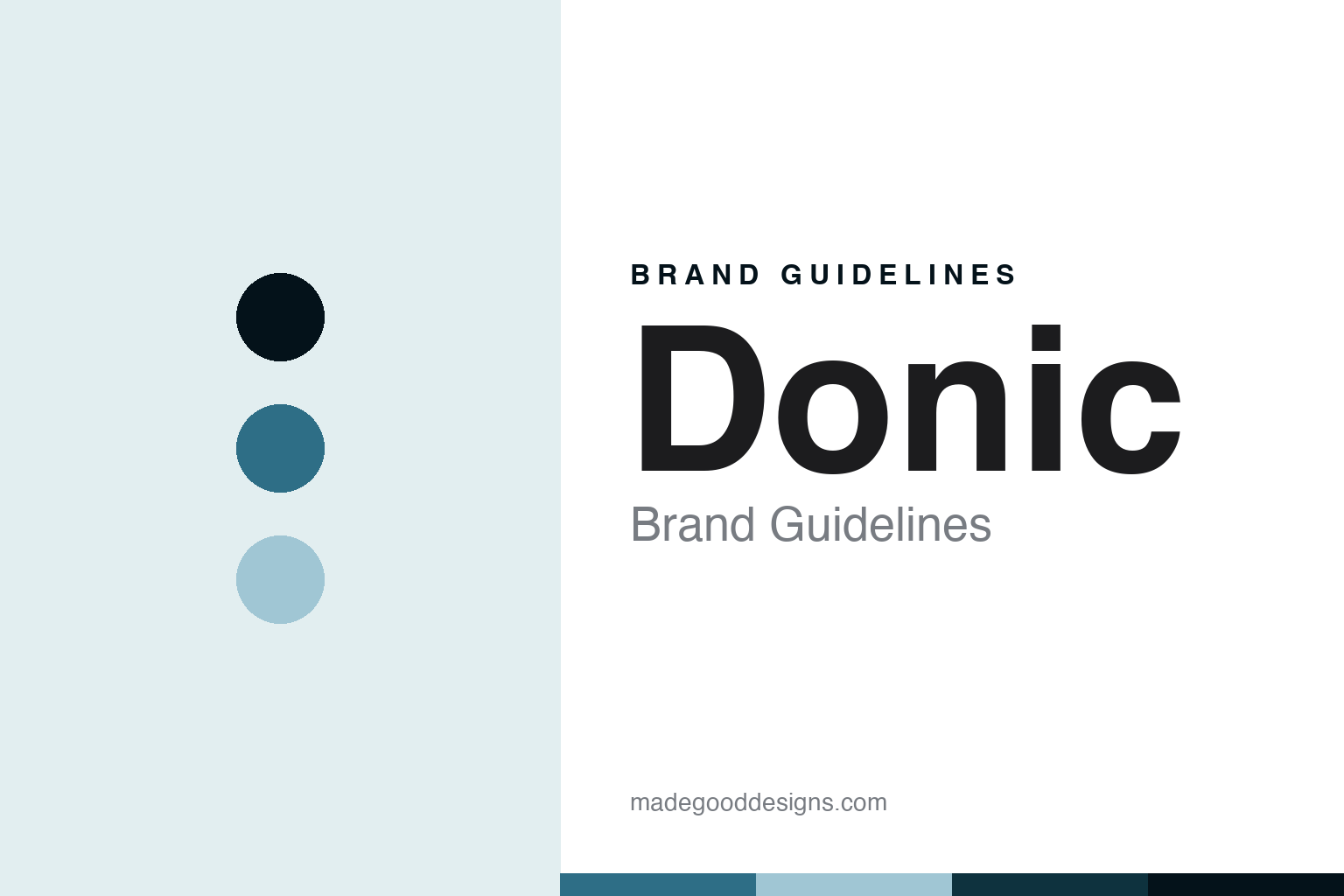
Donic Brand Guidelines
The German house of the Waldner blade.
Aa
Two constants: a steel-teal palette and a blade-sans register. Abstract homage — not a Donic product or mark.
The German house of the Waldner blade
Donic is the German table-tennis house best known for its Waldner signature blades — part of the Schildkröt-Sport group.
Donic brings the round its player’s blade — the German table-tennis house most associated with the Swedish legend Jan-Ove Waldner, whose name has graced Donic’s signature blades for years, and which sits today alongside the historic Schildkröt brand. Donic makes blades, rubbers, balls, tables and training robots, and its answer to a round about the equipment houses is a player-led identity: a German maker whose blades carry a legend’s name. A brand, of the blade.
Its identity is the German house of the Waldner blade. Donic’s Waldner blades, its German roots and its group home are the story here. A brand, German. The German house of the Waldner blade.
(Honest notes, so the story stays precise. Donic — at donic.com, with a current collection and a German, Saarland head office — is a dedicated table-tennis brand making blades, rubbers, balls, tables, apparel and training robots. Its founding year and founder we could not verify, with a nineteen-seventies date commonly cited elsewhere, so we do not assert a specific year and describe it simply as a German table-tennis brand. An important distinction: Donic and Schildkröt are two separate brands that joined forces in 2000 to form the combined Donic-Schildkröt, where Schildkröt is the much older company, established in 1896 in Mannheim, a celluloid table-tennis ball pioneer with a turtle logo, so we do not treat Schildkröt’s 1896 heritage as Donic’s own. On where it is made — the theme of this round — the company is German-headquartered, but its manufacturing location is not stated, and the industry norm involves Asian production, so we do not claim German-made. On ownership, Donic and Schildkröt sit under the same family-owned German group, operating under the Schildkröt-Sport name, alongside sister brands, and we do not over-specify the legal entity. On its players, Donic prominently features Jan-Ove Waldner on its own site, with Waldner signature blades, and names players such as Zhang Jike, Anders Lind and Flavien Coton, which we state as public facts without inventing endorsements. Its wordmark and the turtle mark are IP we describe but do not reproduce; there is no official brand hex; these tones are an unofficial interpretation. This is design commentary.)
Colour
Donic lives in a steel teal. Click a swatch to copy the hex.
Donic’s identity is German, player-led and blade-focused — a steel teal, an ink, a sky, a deep teal, and a paper. The palette leans steel teal and sky: a cool, technical register that nods to a blade’s ply and a German workshop rather than a loud palette. It signals a player’s blade house. The honest caveat: with no published brand hex, these values are an original, unofficial interpretation, not first-party colours.
The lesson is a steel teal signals a German, blade-focused identity. Donic’s world is a technical, made object. For designers, it is a reminder that a steel teal and a soft sky can carry a sports brand — the tone of a blade. Because these tones can fail as small text, keep type dark and let the colour live in the accents, palette and band. The takeaways: build around a signature blade; be exact about two brands; be honest where a blade is made; and treat any single hex as unofficial.
Typography
The register is a blade sans — technical, German, plain.
Donic’s identity carries a technical, German, plain spirit — a blade house, not a fashion. A blade sans captures the mood: clean, engineered and confident, the register of a player’s equipment maker. Set in a steel-teal palette, the blade sans feels technical and German — exactly the personality Donic carries. It is a blade focus rather than a logo, mirroring veneer and ply. (Donic’s real wordmark and the turtle mark are things we describe but do not reproduce, and the exact typeface is not ours to use.) Because it is not ours to use, the honest description is “a blade-sans spirit,” shown here in a stand-in. The type behaves like the brand: technical, German and plain.
Aa
A blade-sans spirit — technical and German. (Specimen set in Space Grotesk, a blade-sans STAND-IN; NOT the Donic logo.)
The equipment houses
Donic stands for the German house of the Waldner blade.
Donic brings the round its player’s blade. A steel-teal palette, a blade sans and a signature blade make one thing — the German house of the Waldner blade — the whole identity: German, player-led and blade-focused. The Waldner blade is the differentiator, and a legend’s name is the meaning. The point is a German maker whose blades carry the name of one of the sport’s greatest players, sitting today alongside the historic Schildkröt brand.
Put to work, the identity is a signature-blade heritage told straight, as design. A maker in this spirit would build around a signature blade, be exact about two brands, and be honest where a blade is made. A reader in this spirit would keep the facts right: Donic is a German table-tennis brand whose founding year we do not assert; it makes blades, rubbers, balls and tables; it joined with Schildkröt, the 1896 celluloid-ball pioneer, in 2000 as Donic-Schildkröt, without inheriting Schildkröt’s heritage as its own; its manufacturing location is unconfirmed, so we do not claim German-made; it sits under a family-owned German group; and its Waldner signature blades and named players are public facts. Donic sits in the round’s player-blade thread with DHS and Stiga, and its trademark care matches Stiga’s, keeping two brands distinct. The honest editorial moves are to omit the unverified year, to keep Donic and Schildkröt distinct, to not claim German-made, and to state the Waldner association as an on-site public fact. The lesson Donic teaches is that a signature blade can be a whole identity, and honesty about the two brands keeps it credible.
For designers and brand-builders, Donic continues the equipment houses: build around a signature blade — and be exact about two brands. The lessons: anchor a brand to a signature product and a legend’s name; keep a partner brand’s heritage distinct from your own; omit a year you cannot verify; do not claim a making geography you cannot confirm; and never reproduce a logo. It is also a reminder to stay precise: Donic is the German table-tennis house of the Waldner signature blades, part of the Schildkröt-Sport group — with the palette here an unofficial interpretation. Read that way, Donic is less a blade than a name: a German house carrying a legend’s. The lesson for a brand is that a signature blade and honest distinctions reinforce each other, and keeping Schildkröt distinct keeps the heritage earned. Donic made the-German-house-of-the-Waldner-blade the identity — proof that a signature can define a brand.
Explore & save
Keep Donic’s identity on hand — save it to a board in the Made Good inspiration library.
Donic identity set
Pin the steel-teal palette and the blade-sans register to your own board.