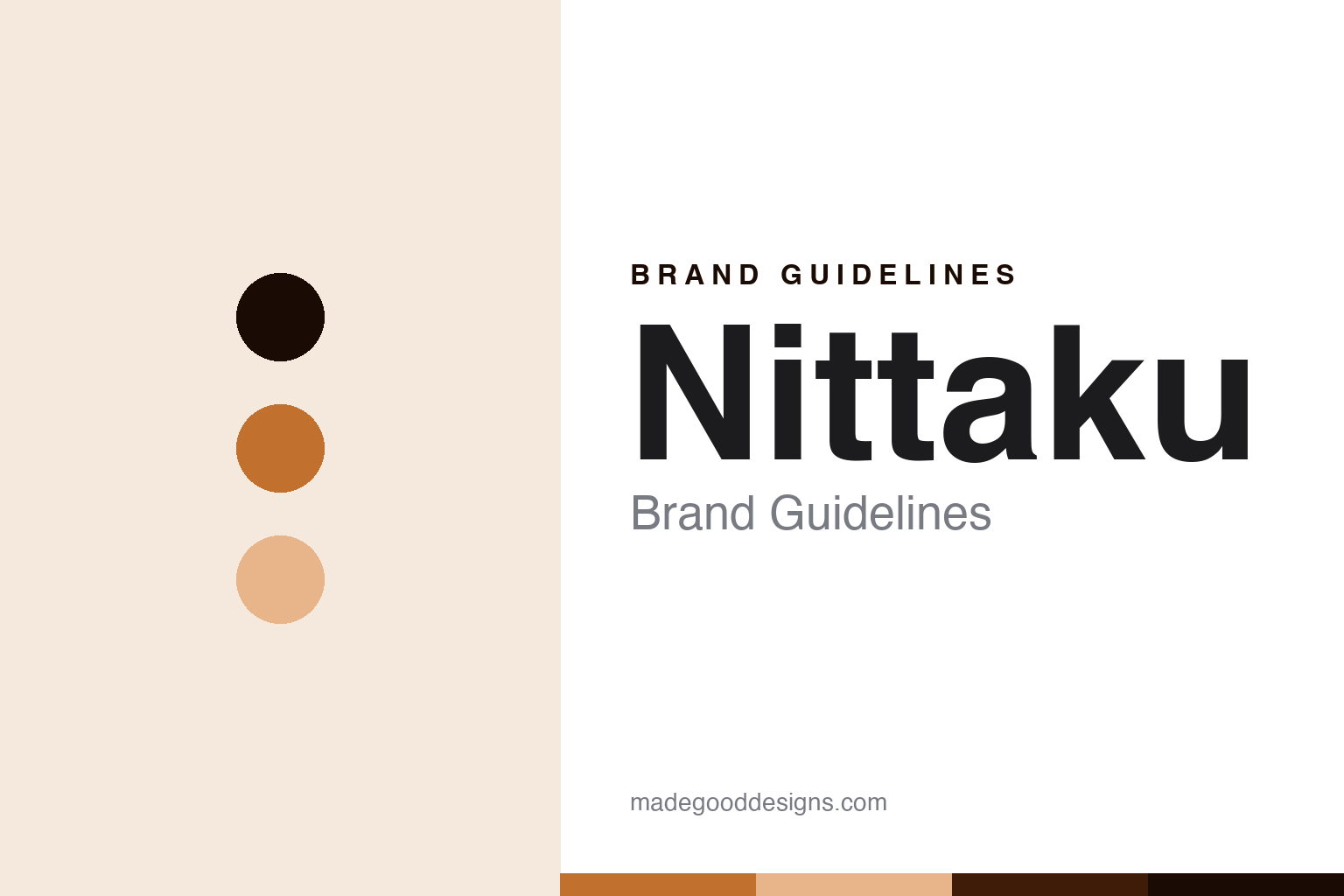
Nittaku Brand Guidelines
The house that makes the ball.
Aa
Two constants: a ball-amber palette and a ball-sans register. Abstract homage — not a Nittaku product or mark.
The house that makes the ball
Nittaku is the Japanese house whose premium three-star balls are made in Japan — a longtime official ball supplier.
Nittaku brings the round the ball itself — the Japanese company Nippon Takkyu, whose name means Japan table tennis, and whose premium three-star balls, made in Japan, are a longtime official ball at major events. Nittaku makes balls, blades, rubbers, tables and apparel, and its answer to a round about the equipment houses is the object at the centre of the game: the ball, made at home. A brand, of the ball.
Its identity is the house that makes the ball. Nittaku’s premium balls, its Japanese making and its official-supplier heritage are the story here. A brand, of the ball. The house that makes the ball.
(Honest notes, so the story stays precise. Nittaku — at nittaku.com, the company Nippon Takkyu Co., Ltd., which means Japan table tennis — makes balls as its flagship, plus blades, rubbers, tables, shoes and apparel. Its origins date to 1920, as a predecessor firm, and the Nippon Takkyu company proper was incorporated in 1947, with its head office in Chiyoda, Tokyo, so we frame 1920 as the origin and 1947 as the company. On where it is made — the theme of this round — Nittaku is precise: its premium three-star balls are made in Japan, at its Koga factory, which it advertises as the only Japanese-manufactured internationally approved ball, while its broader range and some production involve a partner in China, so we say the premium balls are made in Japan and do not imply the whole catalogue is. On its official-supplier heritage, Nittaku is a longtime official ball supplier at major international events, including World Championships, which we frame in general terms and do not tie to a specific championship year unless separately sourced. On ownership, it is a private Japanese company, well supported though not confirmed to filing level. Its wordmark and logo are IP we describe but do not reproduce; there is no official brand hex; these tones are an unofficial interpretation. This is design commentary.)
Colour
Nittaku lives in a ball amber. Click a swatch to copy the hex.
Nittaku’s identity is Japanese, precise and ball-centred — a ball amber, an ink, a sand, a deep amber, and a paper. The palette leans ball amber and sand: a warm, focused register that nods to a table-tennis ball and a Japanese factory rather than a loud palette. It signals the house that makes the ball. The honest caveat: with no published brand hex, these values are an original, unofficial interpretation, not first-party colours.
The lesson is a ball amber signals a Japanese, ball-centred identity. Nittaku’s world is a precise, made object. For designers, it is a reminder that a warm amber and a soft sand can carry a sports brand — the tone of the ball. Because these tones can fail as small text, keep type dark and let the colour live in the accents, palette and band. The takeaways: own the core object; keep home production; frame an official-supplier heritage carefully; and treat any single hex as unofficial.
Typography
The register is a ball sans — precise, Japanese, plain.
Nittaku’s identity carries a precise, Japanese, plain spirit — a ball house, not a fashion. A ball sans captures the mood: clean, focused and confident, the register of the maker of the core object. Set in a ball-amber palette, the ball sans feels precise and Japanese — exactly the personality Nittaku carries. It is precision rather than a logo, mirroring a ball and a seam. (Nittaku’s real wordmark is a thing we describe but do not reproduce, and the exact typeface is not ours to use.) Because it is not ours to use, the honest description is “a ball-sans spirit,” shown here in a stand-in. The type behaves like the brand: precise, Japanese and plain.
Aa
A ball-sans spirit — precise and Japanese. (Specimen set in Work Sans, a ball-sans STAND-IN; NOT the Nittaku logo.)
The equipment houses
Nittaku stands for the house that makes the ball.
Nittaku brings the round the ball itself. A ball-amber palette, a ball sans and a Japan-made ball make one thing — the house that makes the ball — the whole identity: Japanese, precise and ball-centred. The Japan-made premium ball is the differentiator, and the official-supplier heritage is the meaning. The point is the company Nippon Takkyu, whose premium three-star balls are made at home and used at the top of the sport.
Put to work, the identity is a core-object heritage told straight, as design. A maker in this spirit would own the core object, keep home production, and frame an official-supplier heritage carefully. A reader in this spirit would keep the facts right: Nittaku traces to a 1920 predecessor and was incorporated as Nippon Takkyu in 1947, with its head office in Tokyo; it makes balls as its flagship plus blades, rubbers and tables; its premium three-star balls are made in Japan, at Koga, while broader production involves a China partner; it is a longtime official ball supplier at major events, framed in general terms; and it is a private Japanese company. Nittaku sits in the round’s ball-and-official-supplier thread with DHS, the two houses tied to the sport’s official equipment, and its where-made thread is genuine Japan-made balls, alongside Butterfly and Stiga. The honest editorial moves are to frame 1920 and 1947, to say premium balls made in Japan not the whole range, to keep the official-supplier line general, and to treat ownership as well supported. The lesson Nittaku teaches is that owning the core object can be a whole identity, and honesty about the mixed making keeps it credible.
For designers and brand-builders, Nittaku continues the equipment houses: own the core object — and keep home production. The lessons: build a brand on the essential object; make the premium version at home; frame an official-supplier heritage without inventing specifics; state ownership carefully; and never reproduce a logo. It is also a reminder to stay precise: Nittaku is the Japanese house whose premium three-star balls are made in Japan, a longtime official ball supplier — with the palette here an unofficial interpretation. Read that way, Nittaku is less a brand than a ball: the house that makes the object at the centre of the game. The lesson for a brand is that the core object and honest making reinforce each other, and saying balls-in-Japan keeps the heritage earned. Nittaku made the-house-that-makes-the-ball the identity — proof that a ball can define a brand.
Explore & save
Keep Nittaku’s identity on hand — save it to a board in the Made Good inspiration library.
Nittaku identity set
Pin the ball-amber palette and the ball-sans register to your own board.


