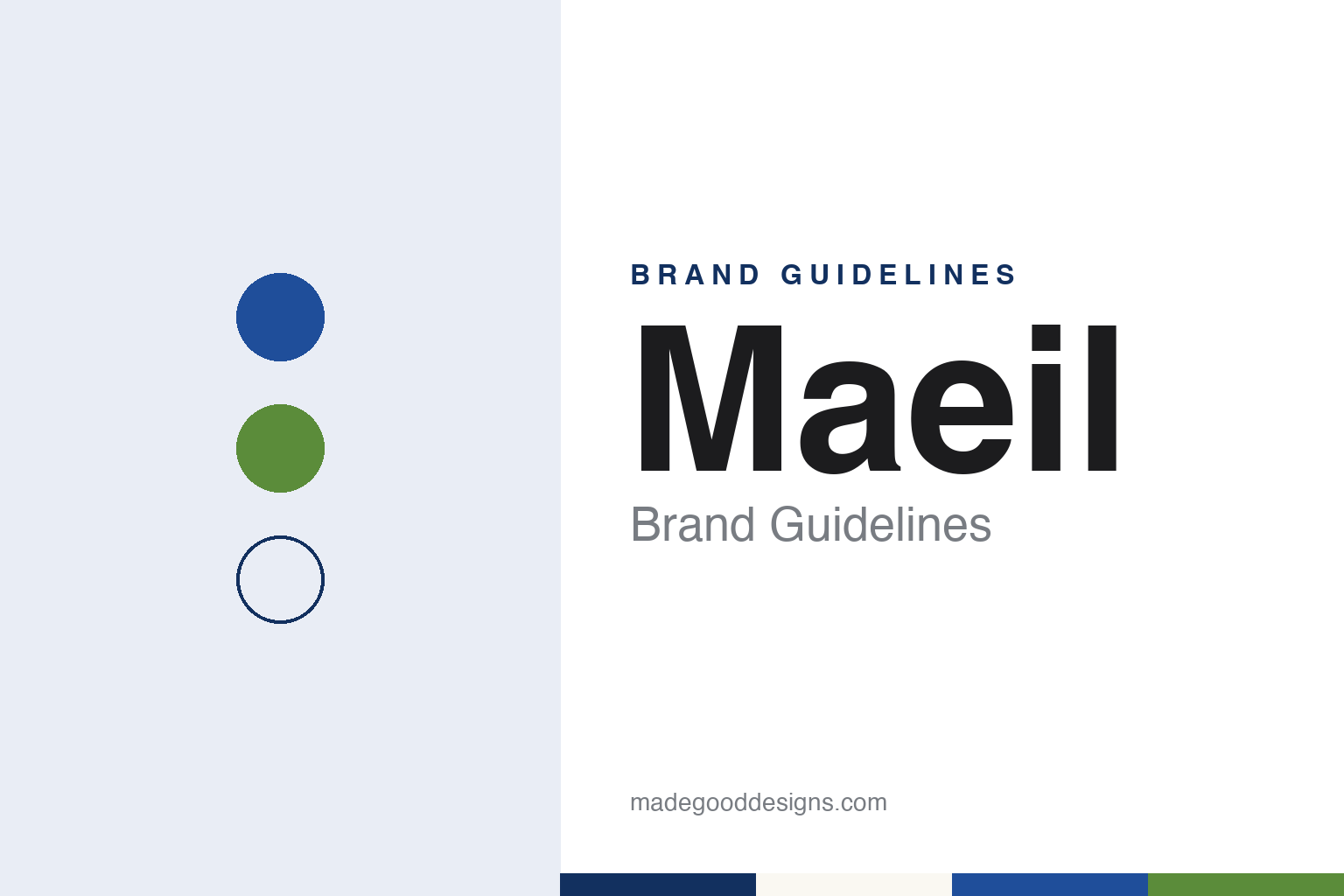
Maeil Brand Guidelines
The 1969 Korean dairy behind Sangha Farm and Maeil Bio.
Aa
Two constants: a dairy blue, milk white and pasture green palette and a clean modern sans register. Abstract homage — not a Maeil product or mark; no pack, carton or logo is reproduced.
Korea Dairy Processing
A state dairy project, a private partner and imported cows.
Maeil began in February 1969 as Korea Dairy Processing. Korean Wikipedia places its founding within the dairy development programme of the Park Chung-hee government, and the company’s own history says it started as a joint investment, split evenly between the government and a private shareholder, Kim Bok-yong, who later became its chairman. The company says Kim became president in 1971, when its dairy development work began in earnest.
The early years, as the company tells them, were about building a dairy industry from the herd up. Its timeline records shipments of 850 heifers from the United States and 850 in-calf cows from Australia in 1972, imported cows flown in by air in 1973, and a technical agreement with Japan’s Morinaga on infant formula in 1972. Its first factory, in Gwangju in the south-west, was completed in December 1973, followed by a plant at Pyeongtaek in 1974, the year the company says it first produced infant formula.
The name changed twice. Korean Wikipedia gives Korea Dairy Industry from March 1973 and Maeil Dairies from March 1980; maeil is the Korean word for “every day.” In May 1995 the company adopted “Maeil” as its English corporate identity, Korean Wikipedia says, and it listed on KOSDAQ in 1999, which its own history calls the completion of its privatisation.
Between those dates the business spread across the country. The company’s timeline records a technical agreement with the Japanese firm L.B. and a factory at Gyeongsan, near Daegu, in 1977; a loan from Hong Kong in 1978 to set up dairy-farming districts in North Jeolla, including Gochang; and its first exports of infant formula to the Middle East in 1981. By its own account it introduced extended-shelf-life (ESL) milk in 2001 and, in 2002, bought a plant at Cheongyang from Nonghyup Mokwoochon, which it brought into production in February 2003.
Colour
Formula, yoghurt, organic milk and a farm park.
Maeil’s range grew in layers. Infant formula came first, and the company traces its Absolute parenting classes to a “mothers’ class” it first held in 1975. In 1988, its timeline says, it licensed yoghurt-making know-how from the German firm Strohmann, and in September 1989 it launched Biogurt, a spoonable yoghurt; the Maeil Bio name now covers its yoghurt line. The company also lists a German technical tie-up with Milupa in 1987, a Hershey chocolate drink in 1990, and Sunup, which it calls Korea’s first chilled juice, in 1992.
Cheese brought a partner. Korean Wikipedia records a joint venture with the New Zealand Dairy Board in November 1989, Maeil-New Zealand Cheese, renamed Sangha in 2004 and absorbed by Maeil in 2010. The company says that venture’s plant in Sangha-myeon, Gochang, in North Jeolla, began production in November 2003; Maeil now describes it as Korea’s first and largest specialist cheese plant and its largest organic dairy plant. The Sangha Mokjang organic milk and yoghurt range followed in June 2008, the company says, and in 2016 it opened Sangha Farm, a rural theme park near the plant where visitors can also tour the factory.
Beyond dairy, the company opened the first Paul Bassett coffee bar in 2009; English Wikipedia notes that the coffeehouse business was spun off in 2013 into M’s Seed, which remains a Maeil subsidiary.
Typography
Design and documentation.
The seven brands in this group all make food or drink, and they come from five countries: Alicorp, Noel, Postobón, Guaraná Antarctica, La Costeña, Crown and Maeil, from Peru, Colombia, Brazil, Mexico and South Korea. Food and drink brands in general sit at many different points in the trade, from family firms that still carry a founder’s name to names that now belong to much larger groups, and a single brand can be sold everywhere from a corner shop to a supermarket shelf.
A food or drink brand’s identity is usually carried less by a single product than by a pack, a name and the everyday meal or treat it promises, because the company behind the name may have changed hands, moved its factory or grown far beyond the town where it started. That makes the questions behind each name worth asking plainly: who started it, who owns it now, and where its products are actually made and packed.
Each guide separates what independent sources record from what the company says about itself — its founding story, its owners over time, where its products are made and how its packaging has changed — and marks plainly what rests only on the company’s own word.
Aa
A clean modern sans for a dairy whose name means “every day.” (Specimen set in Inter Tight, a sans STAND-IN; NOT the Maeil logo.)
Maeil
Seven plants, a holding company and three identity changes.
In May 2017 the original company was split into a holding company, Maeil Holdings, and a new dairy operating company, Maeil Dairies, which Korean Wikipedia says listed on 5 June 2017; the holding company is based in Jongno-gu, Seoul. Korean Wikipedia also records a health-supplement business split off as Maeil Health Nutrition in October 2021 and folded back into Maeil Dairies in May 2026.
On where its products are made, the company lists seven factories in South Korea: Pyeongtaek, Gwangju, Gyeongsan, Cheongyang, Yeongdong, Asan and Sangha. By its own account Pyeongtaek makes formula, baby food, milk and coffee drinks; Gwangju, its first plant, makes long-life cartons, juices and soy milk; Gyeongsan makes fermented milk; Asan makes powdered products; and Sangha makes cheese and organic dairy from Korean milk. The company says all its plants hold ISO 22000 certification, gained in 2008.
The identity has been redrawn more than once. Korean Wikipedia dates the English “Maeil” identity to 1995, and both it and the company record new corporate identities in February 2008 and October 2014. Packaging has been recognised along the way: the company says its Mamma formula can won a good-design award from the Korea Design Packaging Center in 1990, that its Sunup Beauty pack won a package design award in 2004, and that its company history book, Maeil 50, won an iF Design Award in the publication category in 2020.
For a design guide, Maeil shows how a dairy can carry several brand families — Maeil milk, Absolute, Maeil Bio and Sangha Mokjang — under one everyday name. Compare the Binggrae guide, another Korean dairy, and the Vinamilk guide. For this guide we use dairy blue, milk white and pasture green with a clean modern sans, an unofficial interpretation; no product or logo is reproduced.
Explore & save
Keep Maeil’s identity on hand — save it to a board in the Made Good inspiration library.
Maeil identity set
Pin the Maeil dairy blue, milk white and pasture green palette and the clean modern sans register to your own board.