Wolf Blass Brand Guidelines
The Barossa eagle label, founded in 1966.
Aa
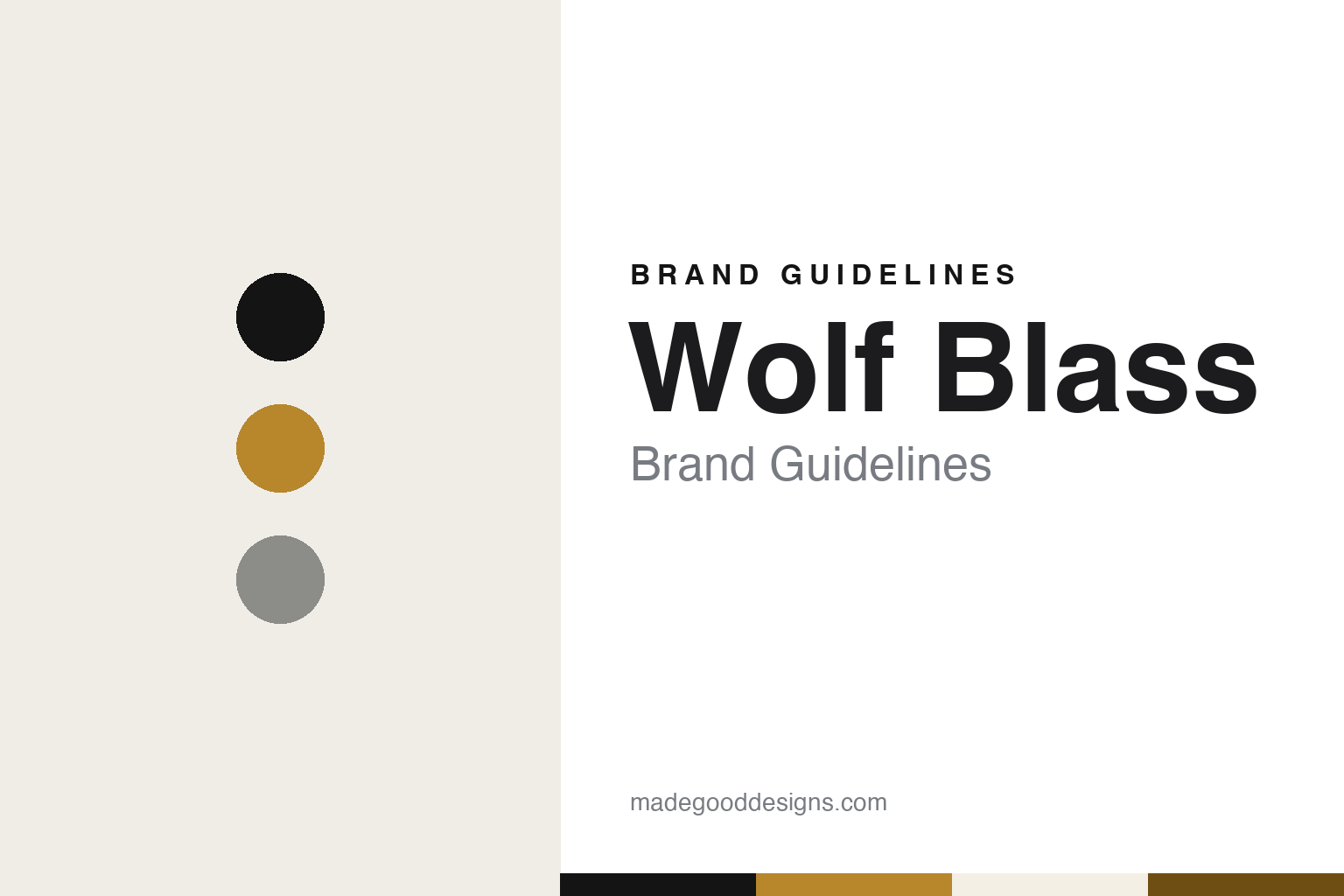
Two constants: a label black, eagle gold and grey palette and a high-contrast display serif register. Abstract homage — not a Wolf Blass product or mark; no label, logo or bottle is reproduced.
A sparkling-wine specialist in Nuriootpa
From Bavarian wine school to a Barossa label of his own.
Wolf Blass is an Australian wine brand based at Nuriootpa in South Australia’s Barossa Valley, and it is named after the man who started it. English Wikipedia, citing James Halliday’s Wine Companion (2004), says the business was established in 1966 by Wolfgang Blass, a German immigrant who had arrived in Australia in 1961 with little money but a diploma in winemaking.
German Wikipedia, citing an archived company biography, fills in the earlier chapters. Blass trained as an oenologist at the Bavarian state institute for viticulture and horticulture at Veitshöchheim, worked as a cellar master in Germany and then in London and Bristol, and was offered work as a sparkling-wine specialist in either Australia or Venezuela. He chose Australia, settled in Nuriootpa and first ran sparkling-wine production at the Kaiser Stuhl winery. English Wikipedia adds that one of his early jobs was as a winemaker with Tolley, Scott and Tolley; German Wikipedia places his time at Tolley’s between 1969 and 1973, when he was also building wines under his own name.
The red that made his reputation came quickly. The winemaker John Glaetzer worked alongside him from the early years, and Wolf Blass Wines won the Jimmy Watson Memorial Trophy, Australia’s best-known prize for a young red, three years running in 1974, 1975 and 1976, according to the trophy’s record as listed on English Wikipedia. Blass told the Canberra wine writer Chris Shanahan in 2006 that the 1974 winner, first intended for his existing Grey Label blend, became the first Black Label, and that the run of wins helped establish it. German Wikipedia says the International Wine and Spirit Competition named Blass its international winemaker of the year in 1992. White wine was part of the story too: the same article says the first Wolf Blass Riesling vintage was released in 1975, and English Wikipedia lists Riesling and Chardonnay among the house’s grapes alongside Shiraz and Cabernet Sauvignon.
Colour
An eagle on top and “sporting colours for a sporting nation.”
Two ideas carry the Wolf Blass look: a bird and a colour code. German Wikipedia, citing the archived company biography, says Blass first traded under the name Bilyara, an Aboriginal word for the wedge-tailed eagle, and took the eagle as his company symbol, a nod to the heraldic eagle of his native Germany. Shanahan described Black Label in 2006 as topped by Blass’s “famous soaring eagle.”
The colour code came from sport. Blass called his label colours “sporting colours for a sporting nation,” Shanahan wrote, likening them to the strong colours of football teams and racehorses. The tiers carry colour names — Black Label, Grey Label and, at the top, the Platinum Label Medlands Vineyard Shiraz, which English Wikipedia lists alongside Black Label Cabernet Shiraz as the house’s signature wines.
The eagle has not always been an easy fit abroad. When Beringer Blass Wine Estates relaunched the range in the United Kingdom in 2002, the Morning Advertiser reported that consumer research had led to less elaborate packaging with more Australian cues. The company’s UK marketing manager, Chris Thompson, told the paper that drinkers found the eagle a bit masculine and thought it looked German, and that awareness of Wolf Blass as a brand had been very low.
The name has also been put in front of new audiences through sport. Mumbrella reported in February 2017 that Wolf Blass would sponsor the new AFL Women’s league, a deal English Wikipedia also records. For the brand’s wordmark and typography in more detail, see our guide to the Wolf Blass font.
Typography
Design and documentation.
The seven brands in this group are all Australian and New Zealand wine names: Wolf Blass, Lindeman’s, Hardys, Banrock Station, Oyster Bay, Cloudy Bay and Kim Crawford. Wine brands in general sit at many different points in the trade, from family houses that still carry a founder’s name to labels that now belong to much larger drinks groups, and a single brand can be sold everywhere from a corner shop to a restaurant list.
A wine brand’s identity is usually carried less by a single bottle than by a label, a name and the place it promises, because the company behind the name may have changed hands, moved its production or grown far beyond the place where it started. That makes the questions behind each name worth asking plainly: who started it, who owns it now, and where its wine is actually made and bottled.
Each guide separates what independent sources record from what the company says about itself — its founding story, its owners over time, where its wine is made and how its labels have changed — and marks plainly what rests only on the company’s own word.
Aa
A high-contrast display serif for a winemaker’s name above an eagle. (Specimen set in Playfair Display, a serif STAND-IN; NOT the Wolf Blass logo.)
Wolf Blass
From a founder’s label to a brewer’s wine arm and Treasury.
The company did not stay independent. English Wikipedia says Wolf Blass Wines was bought by Mildara in 1991 to form Mildara Blass, and that the combined business was taken over by the brewer Foster’s in the mid-1990s. When Foster’s bought the Californian group Beringer Wine Estates in 2000, CNN Money reported, it planned to combine it with Mildara Blass, and the company history published by FundingUniverse says the merged wine arm adopted the name Beringer Blass Wine Estates in 2001; it later traded as Foster’s Wine Estates. Foster’s later spun its wine division off as Treasury Wine Estates, which became a separately listed company in Melbourne in May 2011, Just Drinks reported. Chris Hatcher is listed by English Wikipedia as chief winemaker.
Inside Treasury, Wolf Blass sits among the company’s larger-volume labels rather than its luxury flagship, Penfolds. That position was tested recently. Treasury announced in August 2024 that it would look to sell its commercial brands, including Wolf Blass, Lindeman’s, Yellowglen and Blossom Hill, but in February 2025 it kept them, saying the offers “did not represent compelling value,” WBM reported. From July 2025 Wolf Blass has been part of a Treasury division called Treasury Collective, alongside Lindeman’s and Yellowglen, trade reports said.
For a design guide, Wolf Blass shows how a single emblem and a colour code borrowed from the sports field can turn a winemaker’s name into a ladder of labels named by colour. Compare Jacob’s Creek, another Barossa label founded by an immigrant family, and Penfolds, Treasury’s South Australian house behind Grange. For this guide we use label black, eagle gold and grey with a high-contrast serif, an unofficial interpretation; no product or logo is reproduced.
Explore & save
Keep Wolf Blass’s identity on hand — save it to a board in the Made Good inspiration library.
Wolf Blass identity set
Pin the Wolf Blass label black, eagle gold and grey palette and the high-contrast display serif register to your own board.