Colún Brand Guidelines
The farmers’ dairy cooperative of La Unión.
Aa
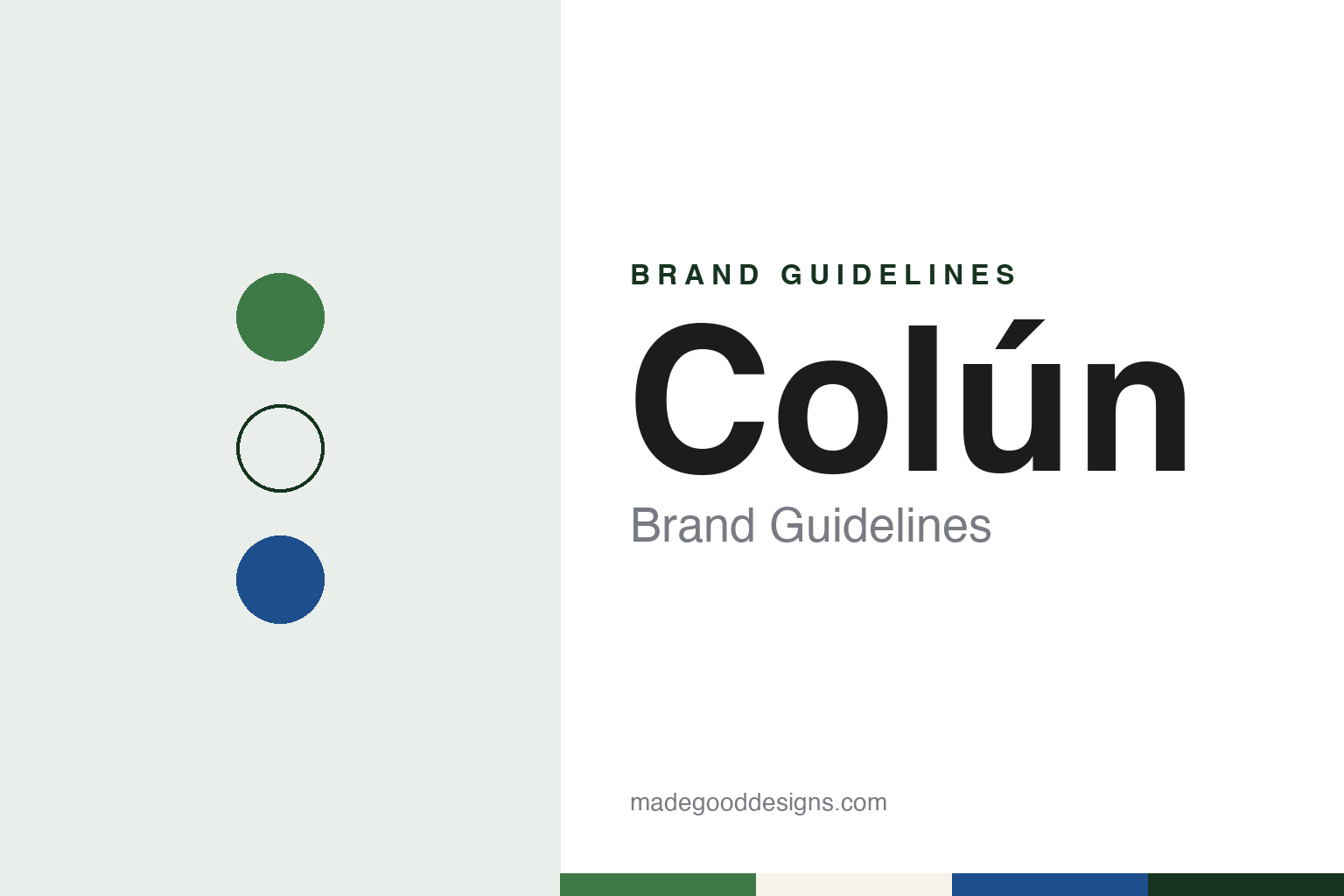
Two constants: a Colún green, cream and blue palette and a country serif register. Abstract homage — not a Colún product or mark; no pack, logo or label is reproduced.
Cooperativa Agrícola y Lechera de La Unión
Seventy farmers, one plant and quarter-kilo butter.
Colún is a cooperative, and its full name says so: the Cooperativa Agrícola y Lechera de La Unión Limitada, the agricultural and dairy cooperative of La Unión, a town in southern Chile now in the Los Ríos region. It was founded on 24 June 1949, a date given both by the cooperative and by the economic historian Paulina Rytkönen in a 2004 study in the Lund Studies in Economic History series. The cooperative says it began with 70 farmers in the heart of the country’s dairy zone, who joined to collect the milk they produced, process it together in one industrial plant and sell the products across Chile, while the cooperative supplied them with what they needed for their farms. Spanish and English Wikipedia name its founders as Francisco Hoch and Juan Fischer.
Its first important product was butter. The cooperative says the market then sold butter in 18-kilo blocks and Colún chose to pack it in quarter-kilo packets, which won it a strong position in Santiago and Valparaíso, far to the north. Milk powder followed, in tins sent to bakeries, pastry makers and chocolate factories and in bags distributed through dealers and the child-nutrition programmes of Chile’s national health service. Then came cheese, which the cooperative says became its principal product, under names such as Ranco and Fundo Los Alerces and in varieties such as Gouda and Chanco. In 1954, Wikipedia says, it set up a commercial department to help members manage their farms and herds, and in the 1960s, the cooperative says, it began processing whey from its cheesemaking.
Later decades brought new categories and the first exports. The cooperative says it began making manjar, Chile’s milk caramel, in 1984. In 1986 it made its first export, of cheese to Brazil, and opened a head office facing La Unión’s Plaza de la Concordia, Wikipedia says; in 1988, according to both Wikipedia and the cooperative, it became the first company in Chile to sell sliced cheese. In 2002, it says, it added a full range of quesillo and fresh cheeses.
Colour
Owned by its members, made in the south.
Unlike its large rivals, Colún has no outside owner. The cooperative says it has more than 700 members. Producers who deliver milk can, after a set procedure, become members by buying participation shares in proportion to the milk they supply, and each member has one vote in the assembly that elects the board of directors, regardless of how many shares he or she holds or how much milk is delivered. The cooperative describes itself as the largest dairy producer built entirely on Chilean capital, contributed by local farmers. English Wikipedia, citing the Revista Campo supplement of El Mercurio in January 2011, calls it Chile’s second-largest dairy company after Soprole.
On where its products are made, the cooperative is specific. It says trucks collect milk every day from its members’ farms and take it straight to its plants in La Unión and Río Bueno, where it is tested, pasteurised and standardised before being made into finished products, and it describes its milk as “elaborada en origen, el sur” — made at source, in the south. Its members’ farms, it says, lie around Futrono, Paillaco, Río Bueno and La Unión. The cooperative says its plants turn out around 300 products, from cheese, butter and manjar to yogurt, cream, desserts, juices and water, which leave its distribution centre for the whole of Chile, and that it exports to several countries.
The cooperative also runs an agricultural, veterinary and technical assistance programme for its members and other producers, it says, which it presents as a way of giving small farmers access to up-to-date technology and knowledge. In 1998, it says, it installed a new milk-powder drying tower at the La Unión plant, and in 2011 it was certified to the ISO 14001 environmental standard, according to an archived version of its website.
Its awards are mostly for reputation rather than design. The cooperative lists first place in the food category of the MERCO corporate-responsibility ranking in March 2026, the Premio Imagen de Chile from Chile’s country-brand agency in 2020 and the ICARE business award in 2019.
Typography
Design and documentation.
The seven brands in this group all make food or drink, and all of them come from Colombia or Chile: Alpina, Zenú, Corona, Águila, Soprole, Colún and Watt’s. Colombian and Chilean food and drink brands in general sit at many different points in the trade, from family firms that still carry a founder’s surname to names that now belong to much larger food groups, and a single brand can be sold everywhere from a corner shop to a supermarket shelf.
A food or drink brand’s identity is usually carried less by a single product than by a pack, a name and the meal or moment it promises, because the company behind the name may have changed hands, moved its factory or grown far beyond the town where it started. That makes the questions behind each name worth asking plainly: who started it, who owns it now, and where its products are actually made and packed.
Each guide separates what independent sources record from what the company says about itself — its founding story, its owners over time, where its products are made and how its packaging has changed — and marks plainly what rests only on the company’s own word.
Aa
A sturdy serif with a rural, southern feel. (Specimen set in Bitter, a serif STAND-IN; NOT the Colún logo.)
Colún
Toda la magia del sur.
Colún’s advertising has long been built on its southern origin. Its slogan since 2002 has been “Toda la magia del sur” — all the magic of the south — Spanish Wikipedia says, and the line still closes the commercials and heads the website. Earlier lines, as listed by Spanish Wikipedia, included “¡Cómo Usted los quiere!” from 1979, “El sabor de su cariño, a toda hora” from 1986 — the line under which, the cooperative says, its manjar quickly became a market leader — and “Naturalmente de verdad” from 1995.
Two pieces of advertising stand out in Chilean memory, Spanish Wikipedia says: a manjar commercial starring two children, and the 2002 institutional film that introduced the current slogan. In 2015 the news site Página 7 reported that the manjar spot, in which two young brothers compete over who enjoys their manjar more, was filmed around 1989 and 1990 and stayed on air for about ten years; Spanish Wikipedia dates it to 1988. The cooperative’s archived history also names a mascot, Mimún, “la Vaquita de COLUN” — Colún’s little cow — which it says became known in the 1980s through advertising and promotions as a symbol of where its products come from.
More recent campaigns on its website include a film for its 75th anniversary, spots for Yoghurt Origen and the Río Bueno cheese brand, a series about its milk route called “Hecho con Cariño,” and yearly support for the Teletón charity telethon. Its brand family today includes Colun, Colun Light, Fundo Los Alerces and Río Bueno, with separate food-service and export lines, according to its website. The name appears in two forms: Wikipedia gives both COLUN and Colún, and the cooperative’s own website mostly writes COLUN or Colun.
For a design guide, Colún shows how a place — rain, pasture and a small southern town — can carry a whole brand, and how a cooperative can sell its ownership as part of the story. Compare Soprole, its Santiago rival now owned from Peru, and Alpina, a dairy brand from Colombia. For this guide we use a pasture green, butter cream and a lake blue with a serif, an unofficial interpretation; no product or logo is reproduced.
Explore & save
Keep Colún’s identity on hand — save it to a board in the Made Good inspiration library.
Colún identity set
Pin the Colún green, cream and blue palette and the country serif register to your own board.