Shloer Brand Guidelines
The sparkling grape drink Britain saves for Christmas.
Aa
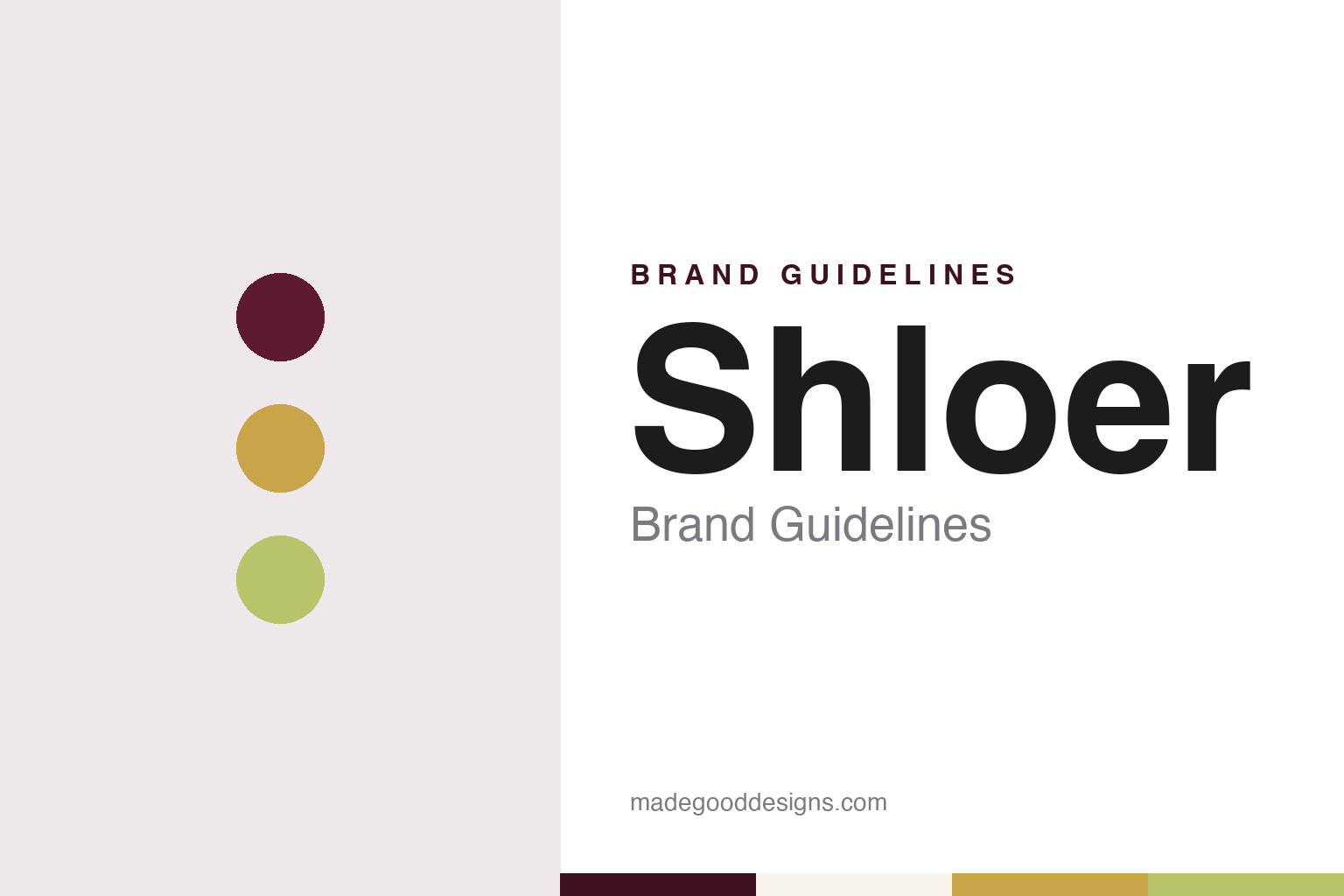
Two constants: a red grape, foil gold and white grape palette and a celebration serif register. Abstract homage — not a Shloer product or mark; no bottle, label or logo is reproduced.
A Swiss recipe
A grape drink with a Swiss name and a British owner.
Shloer is a sparkling soft drink made from grape juice, sold in the United Kingdom and Ireland. Its owner tells its story from 1935. The timeline of SHS Drinks, the company that makes it today, says the brand was developed that year in Switzerland by Dr Jules Shloer; the Shloer website calls him a professor and says he created the original recipe “over 80 years ago,” and that the drink has been blended since 1935. English Wikipedia spells his name Jules Schlör and says the brand name comes from him.
Shloer later became part of a British pharmaceutical group. The International Directory of Company Histories, in its history of SmithKline Beecham, lists Shloer apple and grape drinks among the health drinks that Beecham bought as it built up its consumer business after the war, alongside Ribena and, in 1969, Horlicks. Beecham merged with the American group SmithKline Beckman in 1989 to form SmithKline Beecham.
In 1993 Shloer was sold to Merrydown, the East Sussex cider maker, the SHS Drinks timeline says; the trade site FoodNavigator reported in 2003 that Merrydown had bought it from the pharmaceutical group now known as GlaxoSmithKline. Merrydown had been founded in 1946 by three friends, Jack Ward, John Kelland-Knight and Ian Howie, who turned Ward’s home winemaking into a business named after his house, English Wikipedia says. The company made apple wine and cider, and BeverageDaily later described it as brought “back from the brink” in the years after 1998. FoodNavigator said Merrydown had been 70% cider and 30% soft drinks in 1998, and that Shloer, despite years without investment, had kept a premium image with shoppers and retailers.
Colour
Grown-up sparkle, foil labels and the festive table.
Merrydown rebuilt itself around Shloer. FoodNavigator reported in December 2003 that Shloer’s sales had risen 29% to £6.15 million in the first half of that year, and that the drink was not yet sold in pubs, food service or abroad. In 2004 Merrydown closed its own cider press, ending its making of its own cider, and by then Shloer’s sales had more than tripled since 1998 to £13.96 million, BeverageDaily reported in February 2005.
Shloer has long been sold as a grown-up drink. English Wikipedia records slogans including “Get your sparkle!” and “Shloer, The Grown-Up Soft Drink.” In May 2006 the trade paper The Grocery Trader reported a new pack by Bloom Design, a London agency based in Clapham, which used foil in the main label to signal the drink’s sparkle and was rolled out from the end of April that year. A campaign called “It’s Your Sparkle,” directed by Michael Gracey, was backed by £5 million of media spending, £4 million of it on television, and ran through the summer and again before Christmas.
Christmas is the brand’s biggest season. In the same 2006 interview Shloer’s managing director, Mike Coppard, said that 40% of sales came in November and December and half between October and January, with smaller peaks at Easter and in summer. He said December 2005 sales had topped 7 million units and that annual sales were above £23 million. SHS Group today describes Shloer as the number one brand of the festive season, selling about 8,100 bottles every hour over Christmas.
The range has widened beyond red and white grape. English Wikipedia lists flavours such as white grape and elderflower, rosé and raspberry, and in March 2019 The Grocer reported two new ranges, Spritzed in glass bottles and Pressed in cans, pitched against gin and tonic and flavoured cider respectively. The current Shloer website uses the line “Share the moment with Shloer.”
Typography
Design and documentation.
The seven brands in this group all make juices, squashes or soft drinks, and all of them are sold in Britain: Robinsons, Copella, Cawston Press, Rubicon, J2O, Shloer and Old Jamaica. British drinks brands in general sit at many different points in the trade, from names that still recall a founder or a farm to names that now belong to much larger drinks groups, and a single brand can be sold everywhere from a corner shop to a pub bar to a supermarket shelf.
A soft-drink brand’s identity is usually carried less by a single recipe than by a bottle or can, a name and the moment it promises, because the company behind the name may have changed hands, moved its production or grown far beyond the place where it started. That makes the questions behind each name worth asking plainly: who started it, who owns it now, and where its drinks are actually made and packed.
Each guide separates what independent sources record from what the company says about itself — its founding story, its owners over time, where its drinks are made and how its packaging has changed — and marks plainly what rests only on the company’s own word.
Aa
A celebration serif for a grape drink poured at Christmas. (Specimen set in Playfair Display, a serif STAND-IN; NOT the Shloer logo.)
Shloer
A Belfast family group and contract makers.
Merrydown, and Shloer with it, was sold in 2005. In February that year the SHS Group, which already owned Beverage Brands, the company behind the WKD drinks, agreed to buy Merrydown for 170 pence a share, valuing it at about £36.7 million, BeverageDaily reported. SHS said it was pleased to be adding Shloer and Merrydown Cider to its portfolio. The SHS Drinks timeline says Beverage Brands had been founded in 1992 by Joe Woods and that SHS took a controlling interest in it in 1993; in 2012 SHS grouped Beverage Brands, Merrydown, the cordial maker bottlegreen and Caledonian Bottlers into a single SHS Drinks division.
SHS Group says it was established in 1975. It is based in Belfast and owned by the Salters and Sloan families, the Irish News reported in October 2018, when it called SHS Northern Ireland’s largest family-owned food and household goods business. That year’s accounts showed turnover of £545.7 million for 2017, the first time the group had passed half a billion pounds, the paper said. Its other brands include Merrydown cider, bottlegreen, WKD and Sunny Jim firelighters.
Shloer is made under contract rather than in an SHS factory. In the 2006 Grocery Trader interview, Mike Coppard said production had been outsourced since autumn 2004 to three companies: Konings in Belgium, Thomas Hardy in the Lake District and DCC in Devon. Today the brand says its grapes come from the Castile-La Mancha region of Spain.
For a design guide, Shloer shows how a foil label, a Swiss origin story and a seasonal habit can make a soft drink part of a celebration. Compare J2O, the adult soft drink Britvic built for the pub, and Cawston Press, another British pressed-juice drink. For this guide we use a red grape, a foil gold and a white-grape green with a celebration serif, an unofficial interpretation; no product or logo is reproduced.
Explore & save
Keep Shloer’s identity on hand — save it to a board in the Made Good inspiration library.
Shloer identity set
Pin the Shloer red grape, foil gold and white grape palette and the celebration serif register to your own board.