Alicorp Brand Guidelines
From a Callao oil and soap works to Peru’s pantry.
Aa
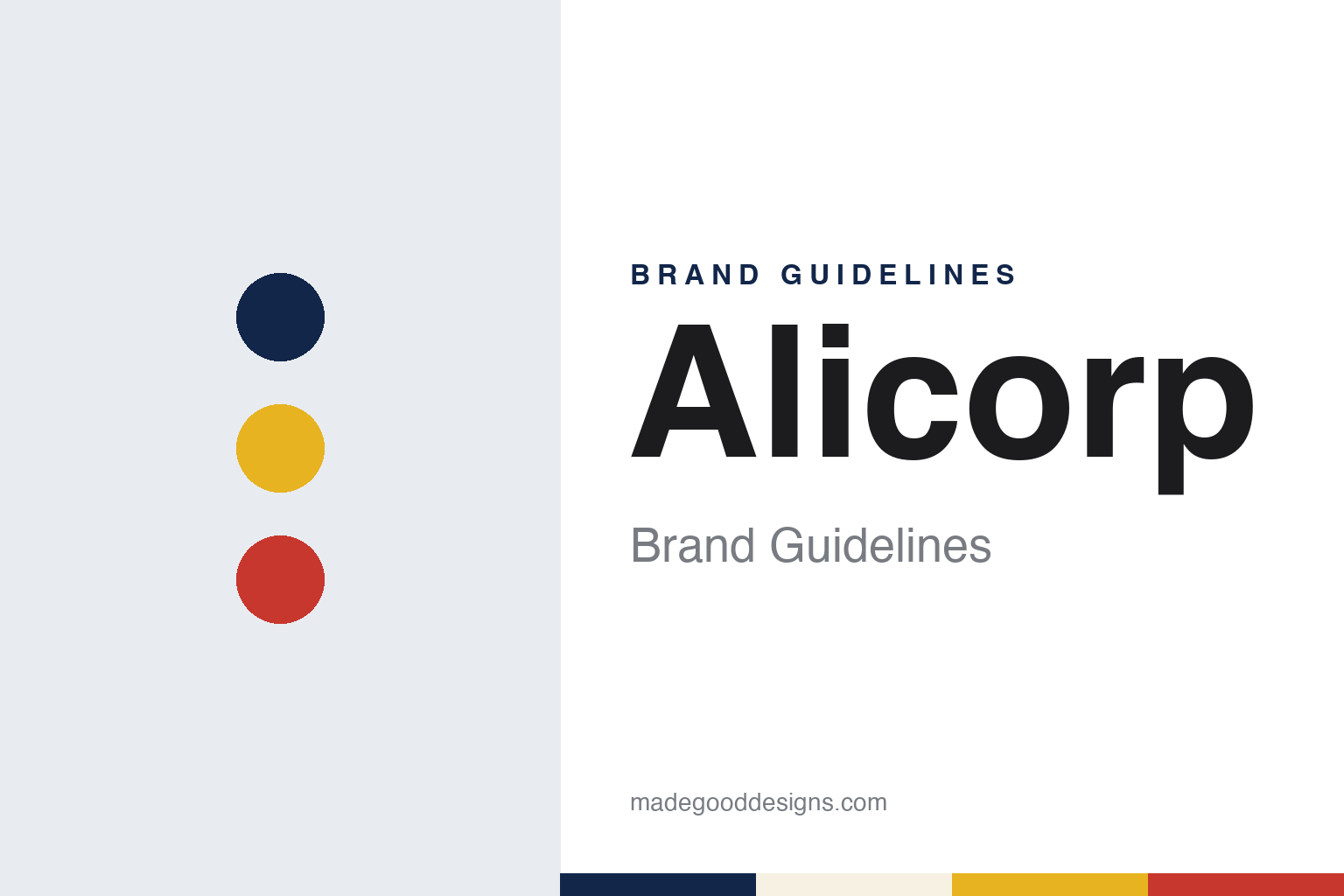
Two constants: a Callao navy, sunflower gold and ají red palette and a geometric corporate sans register. Abstract homage — not an Alicorp product or mark; no pack, logo or label is reproduced.
Callao, 1956
An oil and soap works that became a food group.
Alicorp is Peru’s largest consumer-goods company, English Wikipedia says, and it began as an oil and soap maker. Its roots go back to 1956, when Anderson, Clayton & Co. started making cooking oil and soap in the port of Callao, beside Lima. The company tells the same story in its own words: it says it “began in Peru as an oil and soap company” before expanding into food, home care and personal care.
The decisive change of ownership came in 1971, when the Peruvian conglomerate Grupo Romero bought Anderson, Clayton & Co. and renamed it Compañía Industrial Perú Pacífico, or CIPPSA, according to English and Spanish Wikipedia. The firm kept working through the years of military government and in the 1990s began a run of mergers. In 1993 it absorbed two other Romero companies, Calixto Romero S.A. and Compañía Oleaginosa Pisco. In 1995 it bought La Fabril, then one of Peru’s leading food companies, from the Argentine group Bunge y Born, and took the name Consorcio de Alimentos Fabril Pacífico.
In 1996 Fabril Pacífico merged with the pasta maker Nicolini Hermanos, which Spanish Wikipedia dates to 1900, and with the flour miller Compañía Molinera del Perú. In 1997 the combined business adopted the name Alicorp. A history published on the company’s website in 2014 records that in the same year it installed a line for blowing PET bottles and packing oils at its Copsa plant and began building a pasta plant in Lima, and that in 1999 a central distribution centre brought the work of five warehouses under one roof.
Colour
AlaCena and a portfolio of household names.
The brand that best shows Alicorp’s method is AlaCena. In the late 1990s Fabril Pacífico, soon to become Alicorp, wanted to build new products on what it already made, such as oil and pasta, Gestión reported in August 2024. The consultancy Arellano developed the proposal for the then general manager, Leslie Pierce. Its researchers recruited home cooks known for their mayonnaise and watched them make it; each had her own recipe, but lime was the common ingredient. The research also suggested that people made mayonnaise at home not to save money but because texture and taste mattered more to them than price, Arellano said. Rolando Arellano told Gestión that the team tasted the trial formulas on fried potatoes rather than on soda crackers. Development began in 1998, and the mayonnaise reached the market in the early 2000s.
The format was part of the idea. Imported mayonnaise came mostly in glass jars, while AlaCena was sold in sachets and doypacks, Rosa Guimaray of the Pontifical Catholic University of Peru told the same newspaper. She said that within three months of launch AlaCena led the category with 45% of the national market, and that its arrival helped the whole mayonnaise market grow by 37%. The line later widened into Peruvian sauces: the company’s 2014 history says it launched a Huancaína sauce in 2011, ten years after AlaCena’s introduction, and Spanish Wikipedia lists AlaCena versions of rocoto, tarí and uchucuta sauces.
AlaCena sits among many household names. Spanish Wikipedia lists cooking oils such as Primor, Cocinero and Capri; pasta under Don Vittorio, Nicolini and Lavaggi; Blanca Flor flour and baking mixes; biscuits such as Casino and Tentación; and laundry and cleaning brands including Bolívar, Opal and Sapolio. The company says it owns more than 150 brands of its own.
Typography
Design and documentation.
The seven brands in this group all make food or drink, and they come from five countries: Alicorp, Noel, Postobón, Guaraná Antarctica, La Costeña, Crown and Maeil, from Peru, Colombia, Brazil, Mexico and South Korea. Food and drink brands in general sit at many different points in the trade, from family firms that still carry a founder’s name to names that now belong to much larger groups, and a single brand can be sold everywhere from a corner shop to a supermarket shelf.
A food or drink brand’s identity is usually carried less by a single product than by a pack, a name and the everyday meal or treat it promises, because the company behind the name may have changed hands, moved its factory or grown far beyond the town where it started. That makes the questions behind each name worth asking plainly: who started it, who owns it now, and where its products are actually made and packed.
Each guide separates what independent sources record from what the company says about itself — its founding story, its owners over time, where its products are made and how its packaging has changed — and marks plainly what rests only on the company’s own word.
Aa
A geometric corporate sans for a group whose brands do the talking. (Specimen set in Outfit, a sans STAND-IN; NOT the Alicorp logo.)
Alicorp
A Romero group company built by acquisition.
Alicorp remains part of Grupo Romero. Its shares trade on the Lima Stock Exchange and it is a component of the S&P/BVL Peru General index. Dionisio Romero Paoletti chairs the board, and in September 2025 Gestión reported that Gonzalo Uribe Arbeláez had been named general manager after the resignation of Álvaro Correa.
Growth since 2000 has come largely by acquisition. Spanish Wikipedia lists assets and brands bought from Unilever’s Peruvian subsidiary in 2001 and a Unilever laundry plant in 2005; Alimentum, which took Alicorp into ice cream, in 2004; Industrias Teal, owner of the Sayón brand, in 2013; and the Bolivian oil maker Industrias de Aceite, with its Fino brand, in 2018. In January 2019 Gestión reported the purchase of the Peruvian cleaning-products company Intradevco. Earlier deals had taken the group into Colombia, Argentina and Chile. The investigative outlet Ojo Público reported in 2019 that Alicorp accounted for about 27% of Peru’s food industry in 2015.
Today the company describes three lines of business: consumer goods; Alicorp Soluciones, which supplies ingredients to bakeries, restaurants and industry; and aquaculture feed for shrimp, salmon and fish. It says it has commercial operations in seven Latin American countries, and its stated purpose is “Alimentamos un mañana mejor,” or “we feed a better tomorrow.”
For a design guide, Alicorp shows how a corporate group can stay in the background while household brands, built on research into Peruvian kitchens, carry the identity. Compare Hellmann’s, which Guimaray told Gestión held 60% of the Peruvian mayonnaise market before AlaCena arrived, and Noel, the Colombian biscuit maker. For this guide we use a Callao navy, a sunflower gold and an ají red with a geometric sans, an unofficial interpretation; no product or logo is reproduced.
Explore & save
Keep Alicorp’s identity on hand — save it to a board in the Made Good inspiration library.
Alicorp identity set
Pin the Alicorp Callao navy, sunflower gold and ají red palette and the geometric corporate sans register to your own board.