Tibi Brand Guidelines
The Stühmer chocolate of 1941, named for the founder’s grandson.
Aa
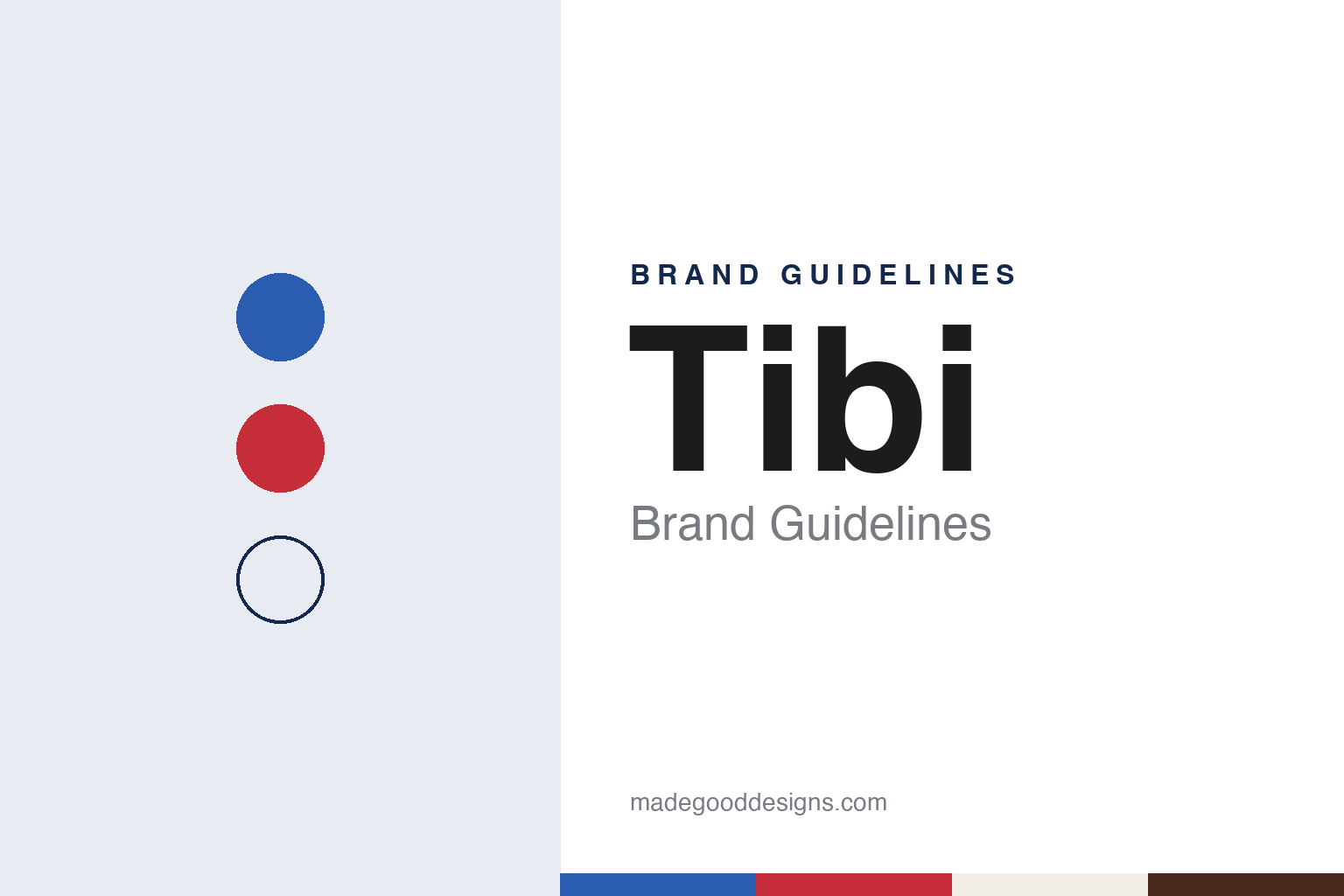
Two constants: a Tibi blue, red and paper palette and a rounded sans register. Abstract homage — not a Tibi product or mark; no bar, wrapper or logo is reproduced.
Stühmer
A Pest chocolate firm, a new factory and a bar named for a grandson.
Tibi was born inside one of Budapest’s oldest chocolate companies. Frigyes Stühmer founded his business in Pest in 1868, and over the following decades it grew from sweets into what Hungarian Wikipedia calls the country’s leading chocolate maker. In 1928, the Budapest history site PestBuda reported in 2021, Stühmer opened a five-storey factory on Szentkirályi utca designed by Ferenc Kende and became a joint-stock company; by then it had more than sixty branch shops, a distribution depot in Paris and a depot in Abbazia on the Adriatic.
Design mattered to the firm early. PestBuda reported that Stühmer entrusted its packaging to applied artists, among them Ernő Jeges, Ilona Szirmai and Kató Lukáts. In 1939 the company began a still larger factory at Vágóhíd utca 20 in Ferencváros, designed by the Olgyay brothers: a building 106 metres long and five storeys high, handed over in 1943 according to PestBuda, while other sources cited by Hungarian Wikipedia give 1941. Its entrance hall received a mosaic by Eszter Hollós Mattioni honouring the founder on the firm’s 75th anniversary.
Tibi arrived in 1941. According to PestBuda, the chocolate was named after the grandson of the company’s founder, and at the factory the product name has been written in lower case — “tibi” — from the start to the present day. The first Tibi bars were plain, unfilled milk and dark chocolate; filled versions came later. It joined other Stühmer favourites of the period, including the Ropp wafer bar, Zizi dragées and Frutti caramels, and became, in PestBuda’s words, perhaps the company’s most popular product.
Colour
Nationalisation, Stollwerck and Bonbonetti.
After the Second World War the company was nationalised. Hungarian Wikipedia gives 1948 for the takeover and says the Vágóhíd utca plant was merged into the state confectionery enterprise; under the name Budapesti Csokoládégyár, the Budapest Chocolate Factory, it went on making Tibi and Zizi through the socialist decades. PestBuda says the company’s managers were forced into emigration. Citing the Budapest Lexikon, Hungarian Wikipedia traces the factory into the Magyar Édesipar group in 1963, the Budapesti Édesipari Vállalat from 1981, Quintie Édesipari Vállalat from 1990 and Stollwerck-Duna Kft. from 1992.
The 1990s brought a foreign owner. PestBuda reported that descendants of the Stühmer family who had settled in Canada tried without success to recover the factory, which was bought by Stollwerck, the Cologne chocolate maker. Stollwerck kept the old favourites in production, among them Tibi, French dragées and Dunakavics. In 2002, PestBuda says, another change of ownership passed the plant to Bonbonetti Choco Kft.
The Stühmer name itself went a separate way. Hungarian Wikipedia, citing Index in 2020, says an Eger entrepreneur, Péter Csóll, bought an Eger Stühmer shop and the trademark in 2006 — PestBuda gives 2008 — and Stühmer chocolates are now made by his company at Maklár, near Eger, according to PestBuda and Hungarian Wikipedia. Tibi did not go with the name: it stayed with Bonbonetti.
English Wikipedia says that in March 2012 the Ukrainian confectionery group Roshen began co-production with Bonbonetti in Hungary. By January 2025 the business daily Világgazdaság described Bonbonetti Choco as Roshen’s Hungarian company and reported that the Ukrainian owner was closing the Vágóhíd utca factory. Citing Interfax-Ukraine, it reported the managing director as saying production in Budapest had stopped in April 2023, and that some machines had been moved to Roshen’s plant in Vinnytsia, Ukraine.
Typography
Hungary’s sweet trades.
The seven brands in this group all make food or drink, and all of them come from Hungary: Szamos, Tibi, Sport, Dreher, Borsodi, Unicum and Pöttyös. Hungarian food and drink brands in general sit at many different points in the trade, from family firms that still carry a founder’s surname to names that now belong to much larger food or drinks groups, and a single brand can be sold everywhere from a corner shop to a supermarket shelf.
A food or drink brand’s identity is usually carried less by a single product than by a pack, a name and the treat or the drink it promises, because the company behind the name may have changed hands, moved its factory or grown far beyond the town where it started. That makes the questions behind each name worth asking plainly: who started it, who owns it now, and where its products are actually made and packed.
Each guide separates what independent sources record from what the company says about itself — its founding story, its owners over time, where its products are made and how its packaging has changed — and marks plainly what rests only on the company’s own word.
Aa
A friendly rounded sans for a bar the maker writes in lower case. (Specimen set in Nunito, a rounded sans STAND-IN; NOT the Tibi logo.)
Tibi
Blue for milk, red for dark, and an old slogan.
The brand outlived the factory. Világgazdaság wrote in January 2025 that the closure did not mean the end of the brand — Tibi, it said, was enjoying a renaissance — only that it was no longer made in Budapest. Bonbonetti’s website, run by Bonbonetti Kereskedelmi és Szolgáltató Kft. in Budapest, presents three brands — Bonbonetti, Tibi and Roshen — and lists a range of Tibi bars that includes plain milk and dark chocolate, cream-filled bars such as pineapple and banana, and the aerated Tibi Bubble.
Much of what is documented about Tibi’s look comes from its maker’s own announcements. In July 2013 Bonbonetti’s blog introduced tibi Classic milk and dark bars whose graphics recalled the old days in a new, modern pack. In February 2016 it said that the chocolate, introduced in 1941, had been renewed again after the 2013 change of image: tibi Classic milk chocolate was given a classic blue wrapper and the dark chocolate a rich red one, in a return to paper packaging, together with an old slogan, “tibi — not only Mum’s favourite.” Later that year the company announced new recipes across a range of thirteen flavours.
The company also reported in May 2011 that its tibi truffle bar had won a silver award in the confectionery category of the Sikertermék, or “success product,” contest run by the market researcher Nielsen and the trade magazine Mai Piac, which ranked the previous year’s new products by retailers’ sales.
For a design guide, Tibi shows how a lower-case name and two plain wrapper colours — blue for milk and red for dark on tibi Classic — can carry a chocolate bar across eight decades and a long chain of owners. Compare Stollwerck, which made Tibi in the 1990s, and Sport szelet, another Hungarian chocolate bar. For this guide we use blue, red and paper white with a rounded sans, an unofficial interpretation; no product or logo is reproduced.
Explore & save
Keep Tibi’s identity on hand — save it to a board in the Made Good inspiration library.
Tibi identity set
Pin the Tibi blue, red and paper palette and the rounded sans register to your own board.