Evoca Brand Guidelines
The Bergamo-area group that gathered Europe’s vending and coffee machine makers.
Aa
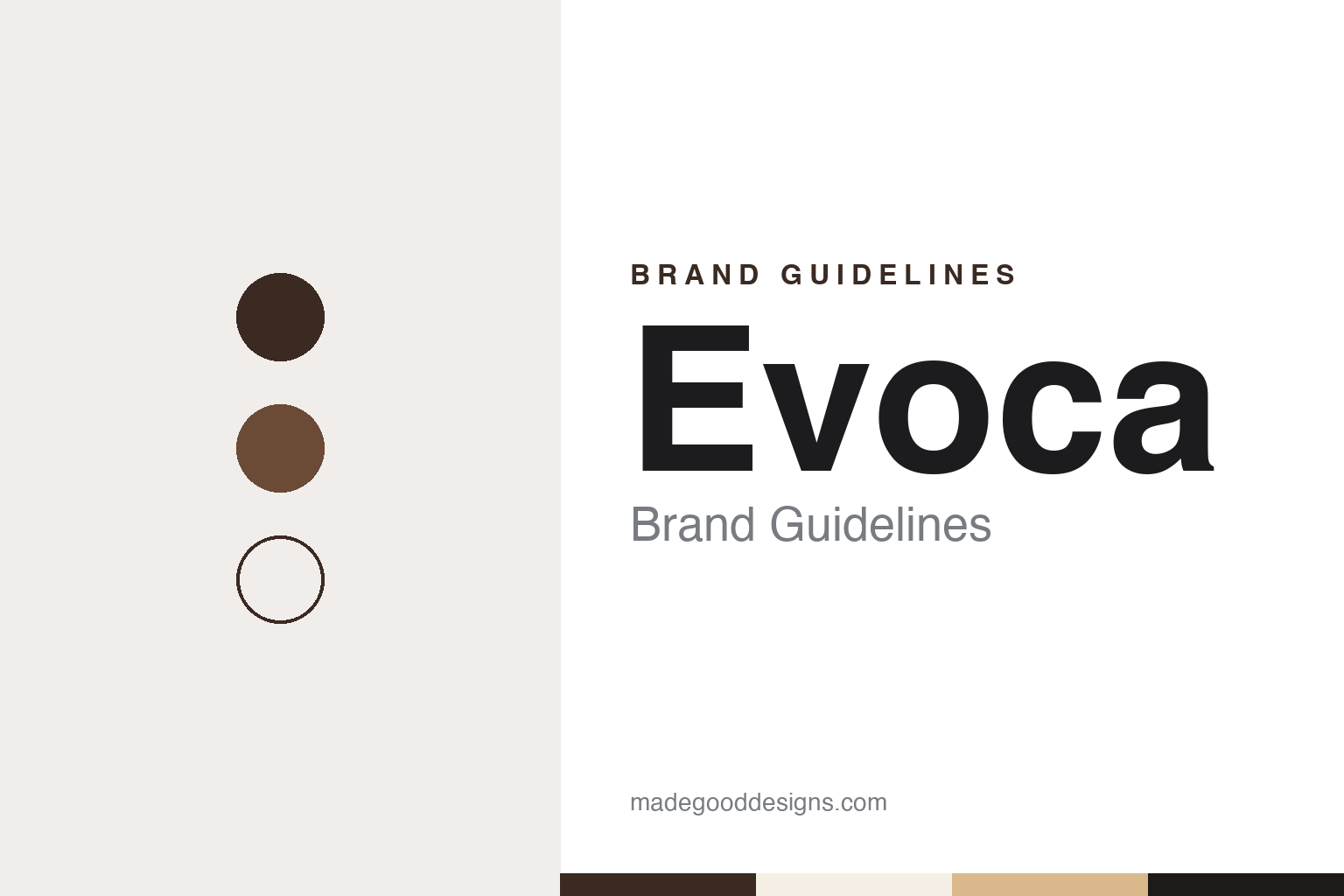
Two constants: an espresso, crema and milk palette and a warm serif register. Abstract homage — not an Evoca product or mark; no machine, logo or nameplate is reproduced.
Wittenborg and Necta
A Danish pioneer and a Zanussi offshoot merge.
Evoca is a young name on older foundations. The company was formed in 2000 as N&W Global Vending, through the merger of Denmark’s Wittenborg and Italy’s Necta, and is based at Valbrembo, near Bergamo, Vending Times reported in 2016. The trade paper dates Wittenborg’s start in vending equipment to 1924, in Odense, and says Necta was formed by Italy’s Zanussi group in 1968 as a vending-machine maker; Zanussi itself was acquired by Electrolux in 1984. Evoca’s own history lists the Valbrembo business as Zanussi Vending, and Necta says its customer relationships date from 1968.
The group passed between private-equity owners. Vending Times reported in April 2016 that an affiliate of Dallas-based Lone Star Funds had acquired N&W from funds formed by Investcorp and Equistone Partners Europe, adding that Investcorp had owned it since 2008. At that time, the paper said, N&W made food, snack and hot-drinks vending machines, office coffee equipment and payment systems, employed about 1,700 people and had factories in Italy, Denmark and China.
Under its new owner the group bought coffee-machine makers. In October 2016 Vending Times reported an agreement under which N&W would take a strategic minority stake in Saeco Vending of Gaggio Montano, with the rest of the share capital bought by a Lone Star affiliate; the paper noted that Saeco had been founded in 1981 and acquired by Philips in 2009. In June 2017 N&W bought Ducale of Parma, which the paper described as a maker of coffee machines for bars and restaurants since the mid-1950s that moved into vending in the 1960s. The same report noted that N&W’s vending and office coffee products had been sold in the United States for the previous decade through Vendors Exchange International of Cleveland.
Colour
From evolution and caffè to a house of brands.
The Evoca name arrived in late 2017. Vending Times reported on 30 November 2017 that N&W Global Vending S.p.A. had become Evoca S.p.A., and that the company explained the name as drawn from “evolution” and “caffè,” while the Italian verb “evocare” means to evoke or call to mind. The paper described the group as the integration of seven coffee-machine makers, a process begun in 2000, and noted a joint venture with Cafection of Quebec City, a maker of bean-to-cup brewers for offices.
Today Evoca presents itself as a house of brands. Its website names three main ones: Gaggia, for manual barista machines and large automatic coffee machines in hotels, restaurants and cafés; Necta, for coffee, snack and cold-drink vending machines in offices, universities, hospitals, stations and airports; and Saeco, for coffee machines in offices and meeting rooms. Its history says Saeco Vending was renamed SaGa Coffee and that Evoca holds licences to use the Saeco and Gaggia brands in the professional market, and that it later acquired licences for the Futurmat and Visacrem brands too. Wittenborg and Cafection serve as regional brands, Futurmat makes professional espresso machines, and Newis supplies apps, cashless payment and remote machine management, the company says.
Necta carries most of the vending design. Its site shows the Krea Touch coffee machine, described with chrome frames, shiny black surfaces and decorative lighting; the VisioShop see-through drawer, which it says is patented and gives a shop-window view of the products; and SWING, introduced as the first of a new generation of snack and cold-drink machines. From November 2018, Necta says, the panels on its vending machines changed to new graphics with the line “Anywhere is break time.”
Typography
How vending machine makers present themselves.
Vending machine makers sell to operators, not to the people who buy a coffee or a chocolate bar, so they present themselves in two registers at once. To operators they talk about capacity, reliability, telemetry and ease of refilling; to the public their machines must look inviting on a station concourse, in a university corridor or beside an office kitchen. The glass-front snack machine, with its spiral shelves in view, and the coffee machine with a large lit selection panel are the two faces most people know.
The front panel has become the main design surface. Makers fit touchscreens, illuminated buttons and printed or backlit graphics, and many machines are co-branded with a coffee roaster or a drinks company, so the maker’s own name often sits small on the cabinet. Cashless readers for cards and phones now sit beside, or in place of, the coin slot, and some makers build their own payment and remote-management systems alongside the machines.
Behind the cabinet is an industrial story. Makers’ own websites and brochures tend to show factory lines, sheet-metal cabinets and spare-parts services. Several of the makers in this guide are based in northern Italy and two in Peralta, in Navarre, and some have passed through mergers and private-equity ownership.
The trade meets at fairs such as EU’Vend in Cologne and Venditalia in Milan, where makers launch new ranges to operators and distributors. This guide sets out what can be checked about each brand — who founded it, who owns it, and where it says its machines are made — and marks clearly what rests only on the company’s own word.
Aa
A warm serif for a coffee and vending group. (Specimen set in Fraunces, a serif STAND-IN; NOT the Evoca logo.)
Evoca
Valbrembo, 135 countries and a Barcelona subsidiary.
The group remains headquartered in Valbrembo as Evoca S.p.A. Its website says it sells in more than 135 countries through more than 30 hubs in Europe, the Americas, Asia and Oceania, serves around 10,000 customers, and has offices across Europe. Its Barcelona subsidiary, Quality Espresso, came to the group by acquisition, the company says; in May 2026 Evoca announced a proposed reorganisation that would discontinue production lines at Quality Espresso’s Zona Franca site. In February 2026 it named Norman Rafael chief executive.
Necta’s recent news shows where the range is heading. In November 2024 it introduced version 3.0 of Breasy, a Newis app that it says improves the user experience, streamlines operators’ work and adds new design and compatibility features; in December 2024 it presented the Barista 300, a table-top machine with vacuum technology designed to keep coffee beans fresh. In April 2026 Evoca said it had launched an ISO-certified Product Carbon Footprint tool, now available for Necta vending machines. The current Necta line-up also includes the Barista 1000 Touch and Barista 500 Pro Touch coffee machines and the Gusto 8 Lift for snacks, food and cold drinks.
Its website describes products for hotels, restaurants, offices and public spaces such as stations and airports, and speaks of more than 90 years of coffee and vending heritage.
For a design guide, Evoca shows how a group built from several older makers keeps separate brand faces for bars, offices and public vending. Compare Azkoyen, the Spanish vending and payment group, and Bianchi Vending, another Italian vending maker. For this guide we use espresso brown, a crema tone and milk white with a serif, an unofficial interpretation; no product or logo is reproduced.
Explore & save
Keep Evoca’s identity on hand — save it to a board in the Made Good inspiration library.
Evoca identity set
Pin the Evoca espresso, crema and milk palette and the warm serif register to your own board.