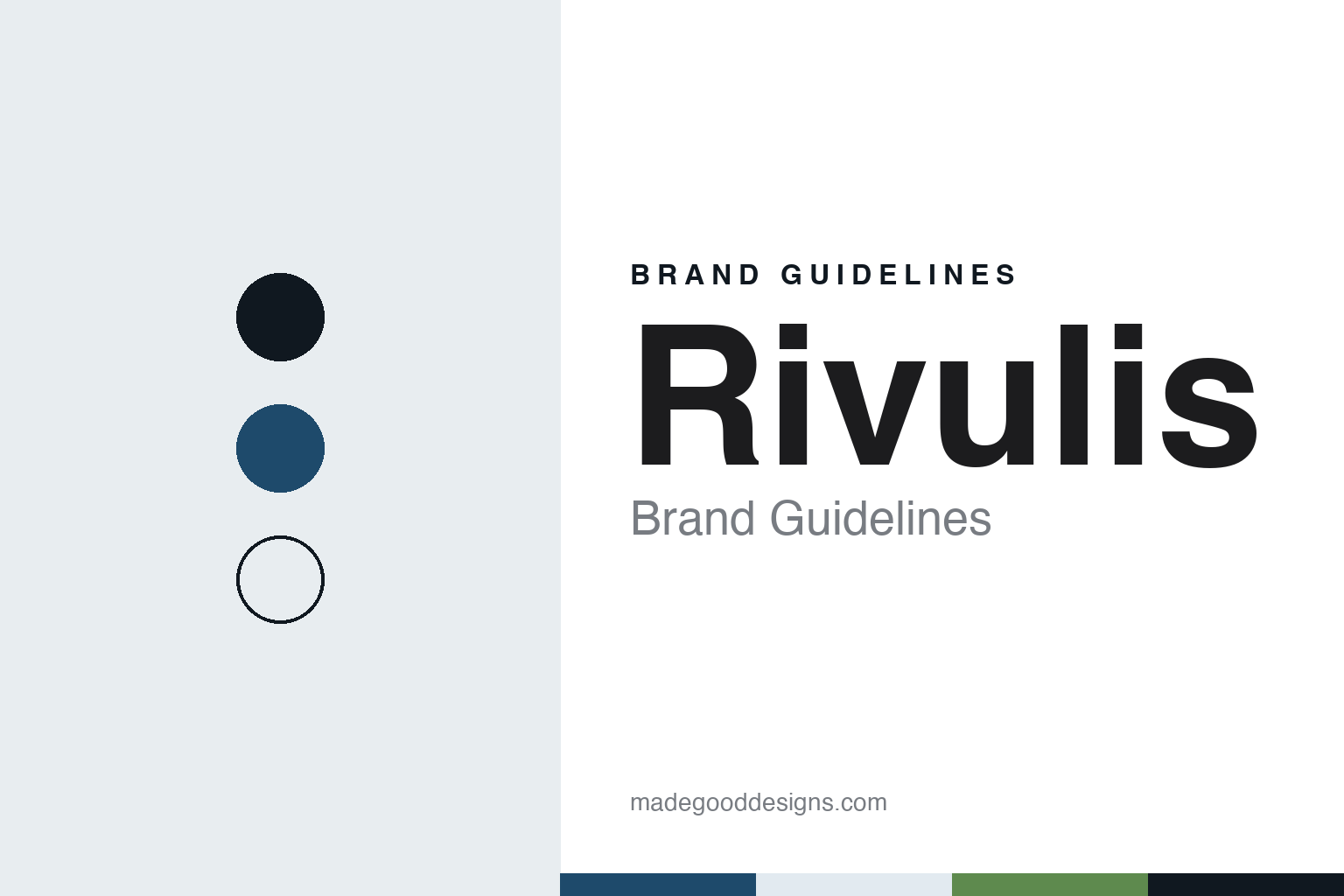
Rivulis Brand Guidelines
From Kibbutz Gvat’s Plastro to a Temasek-owned drip-irrigation group.
Aa
Two constants: a Rivulis stream blue and valley green palette and a calm serif register. Abstract homage — not a Rivulis product or mark; no product, logo or nameplate is reproduced.
Plastro Gvat
A kibbutz factory in the Jezreel Valley.
Rivulis began as Plastro, the irrigation business of Kibbutz Gvat, near Afula in the Jezreel Valley of northern Israel. Globes, the Israeli business daily, reported in June 2022 that the company was founded at the kibbutz and originally called Plastro Gvat; Rivulis gives 1966 as its year of establishment, a date English Wikipedia also uses.
Plastro grew into a public company. By 2008 it was listed on the Tel Aviv Stock Exchange, and the kibbutz owned 75.1% of it through its agricultural cooperative, Globes reported in February 2008.
The first change of owner came from America. Under an initial agreement of July 2007, John Deere agreed to buy Plastro from the kibbutz, and in February 2008 it signed the contract, Globes reported; Plastro would buy back its publicly held securities and leave the exchange, and Deere undertook to keep the company open and to employ kibbutz members there for fifteen years. English Wikipedia says Deere combined Plastro with two American drip-irrigation firms, Roberts Irrigation and T-Systems, in a micro and drip irrigation business called John Deere Water.
Deere did not keep it for long. In 2014 the Israeli private-equity firm FIMI Opportunity Funds bought the water business, Globes reported in 2017 and 2022, and the company took the name Rivulis Irrigation. Rivulis says it chose the name because it comes from the Latin for a small stream or river.
Under FIMI the company stayed at Gvat and began to grow through partners. Globes reported in January 2017 that FIMI had sold a 20% stake the year before to an Indian partner, Dhanna Engineering; by 2020 Rivulis named its Indian shareholder as Jaya Hind Industries, with about 15%.
Colour
Drip tape, drip line and drippers.
Rivulis works in micro-irrigation: water delivered through drip tape, drip line, drippers and small sprinklers. Several of its product names come from the businesses it absorbed. A Rivulis release of December 2020 listed T-Tape, Ro-Drip, D5000 PC and Supertif among its brands, alongside the Eolos lines of Eurodrip. On its website the company divides drip products into tape with integrated emitters and line with moulded emitters, and describes its H6000 PE layflat pipe as having outlets moulded directly into the layflat hose.
The biggest addition under FIMI came from Greece. In January 2017 Rivulis acquired Eurodrip, a Greek irrigation company, in an all-share deal, Globes reported, adding that the merger made Rivulis, by its own account, the world’s second-largest irrigation company outside India. FIMI remained the controlling shareholder; by 2020 the American investor that had controlled Eurodrip, Paine & Partners, held 29% of Rivulis, according to the Israeli business site Calcalist. Eurodrip still appears on the Rivulis website as a product line of its own, “Eurodrip by Rivulis.”
Software followed the hardware. English Wikipedia says Rivulis acquired the Israeli firm Agam Advanced Agriculture in 2016 and formed Manna Irrigation Intelligence, its precision-farming arm, which was merged into the farm-data company Phytech in 2024, with Rivulis becoming a shareholder; it also lists ReelView, a crop and field monitoring application. In March 2024, Wikipedia adds, Rivulis sold its landscape-irrigation management business ETwater to Husqvarna Group.
The company says it has research and development centres in Israel, Greece and California, and its website lists factories in Israel, Australia, China, India, England, France, Greece, Spain, Turkey, the United States, Mexico, Argentina, Brazil and Chile — nineteen manufacturing facilities in all, it says, with more than 2,500 employees.
Typography
Farm irrigation and its makers.
Irrigation makers sell machines that are easiest to understand from a distance. A centre pivot is a long pipeline of sprinklers carried on wheeled towers that turns slowly around a fixed point, and seen from the air it leaves a field of green circles; the Encyclopedia of the Great Plains, published by the University of Nebraska–Lincoln, describes how that design took the industry from water-driven towers to electric and hydraulic drives, corner arms for square fields and, in the 1990s, computerised controls.
The industry’s pictures tend to follow the product. Pivot and linear makers show long spans crossing fields and sprinkler arcs against a low sun; drip and micro-irrigation makers show thin lines laid along crop rows and emitters at the root zone; sprinkler and controller makers for turf show lawns, sports fields and golf courses. The hardware often shares the page with a phone or a tablet, as remote monitoring and control apps are part of what many of these companies sell.
Many of the names come from small places. The centre pivot grew out of Colorado and Nebraska in the late 1940s and 1950s, according to the Nebraska Hall of Agricultural Achievement, and the Encyclopedia of the Great Plains placed the four major pivot makers it listed in Nebraska towns and cities: Valley, Lindsay, Deshler, Hastings and Omaha. This guide also covers makers of drip and micro-irrigation from Israel, Italy and India, and other irrigation makers from the American West and from France.
The Encyclopedia notes that the big pivot makers sell through networks of exclusive dealers. This guide sets out what can be checked about each brand — who founded it, who owns it, and where it says its products are made — and marks clearly what rests only on the company’s own word.
Aa
A calm serif, for a group named after a stream. (Specimen set in Source Serif 4, a serif STAND-IN; NOT the Rivulis logo.)
Rivulis
Temasek, Jain and a new factory.
Rivulis changed hands again in 2020. In September that year Calcalist reported that Temasek, the Singapore government’s investment company, had signed a deal to buy 85% of Rivulis from FIMI and Paine & Partners, and that it intended to keep the management and the headquarters at Kibbutz Gvat. Rivulis announced regulatory approval on 14 December 2020: Temasek then owned about 85% and Jaya Hind Industries the remaining 15%. At the time, Calcalist wrote, Rivulis employed about 1,800 people at 16 facilities, 400 of them in Israel, and its main markets were Turkey, Greece and the Balkans, the United States, Mexico, Brazil and Argentina.
The next merger came from India. In June 2022 Rivulis announced that it would acquire the international irrigation business of Jain Irrigation in a cash-and-stock deal, Globes reported; Jain would hold 22% of the enlarged company and Temasek 78%, and Rivulis would be headquartered in both Singapore and Israel as Rivulis Pte. Ltd. Jain’s overseas business included the Israeli sprinkler maker NaanDan, which Jain had bought in 2012, according to Globes. Rivulis announced the completion on 3 April 2023, naming Jain USA, AVI, IDC and NaanDanJain among the businesses joining it. The company now describes itself as the merger of five firms — Plastro, T-Systems, Roberts Irrigation, Eurodrip and NaanDanJain — and says NaanDanJain’s roots go back to 1937.
Manufacturing has stayed in northern Israel as well as abroad. In November 2025 Rivulis opened a factory at Tzipporit, a 7,000-square-metre plant with more than 150 automated lines for drippers and sprinklers, which the company calls the world’s largest facility of its kind; it said the plant employs more than 200 people from the surrounding communities.
The leadership has also changed. The 2025 announcement quoted Eran Ossmy as president, and on 6 August 2026 Rivulis said it had appointed Steve Francis as chief executive, with Erez Meltzer as chairman.
For a design guide, Rivulis shows how a company assembled from several makers can carry older product names, such as T-Tape and Eurodrip, under one new name. Compare John Deere, its owner from 2008 to 2014, and Jain Irrigation, its minority shareholder. For this guide we use a stream blue, a pale river mist and a valley green with a serif, an unofficial interpretation; no product or logo is reproduced.
Explore & save
Keep Rivulis’s identity on hand — save it to a board in the Made Good inspiration library.
Rivulis identity set
Pin the Rivulis stream blue and valley green palette and the calm serif register to your own board.