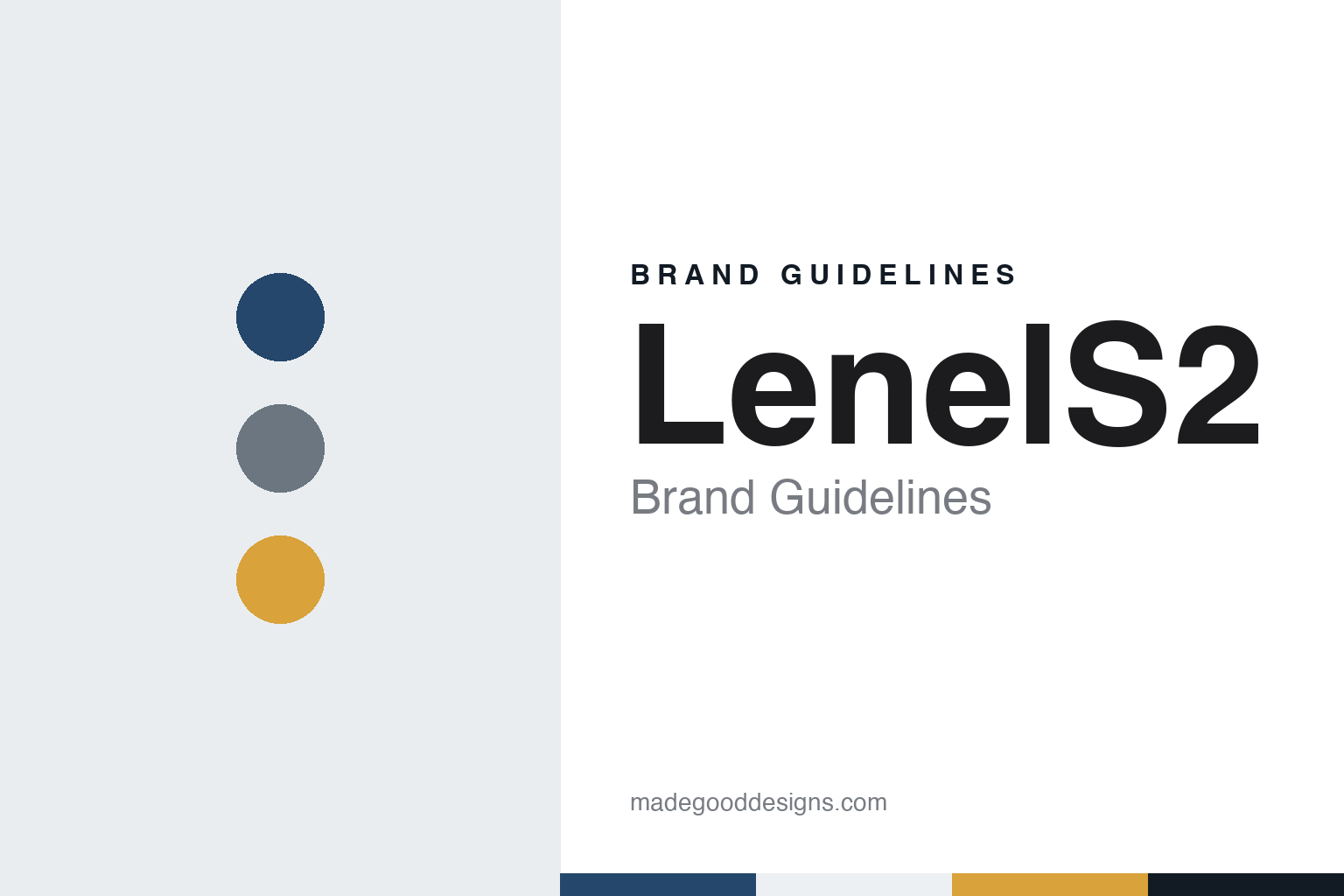
LenelS2 Brand Guidelines
Two access-control pioneers joined under one name.
Aa
Two constants: a navy, steel and amber palette and a technical sans register. Abstract homage — not a LenelS2 product or mark; no device, logo or interface is reproduced.
From Kodak to OnGuard
A Rochester software company finds access control.
LenelS2 is two older access-control names joined into one. The first half, Lenel, came out of Rochester, New York. In a 2018 retrospective for SecurityInfoWatch, the editor Steve Lasky recalled meeting Elena and Rudy Prokupets, a couple from Russia, at a small technology start-up housed inside Kodak in Rochester. They had persuaded Kodak to back an idea for managing photographic images on a personal computer, and the start-up division became Edicon; its digital ID technology grew into a sizeable business for Kodak, Lasky wrote.
The couple then left Kodak to launch Lenel Systems International. It began, Lasky wrote, as a multimedia software company whose customers included Oracle, Borland, IBM and Microsoft, and only later moved into access control, a market in which it was a small newcomer facing established firms. He remembered being invited to the “grand opening” of its new building in Pittsford, outside Rochester, in 1995.
The product that made Lenel’s name was OnGuard, an enterprise security-management system built on what Lasky called an open-architecture approach; in his account, it soon became an industry standard. In June 2005 the Prokupets sold Lenel to United Technologies, the American industrial group. Lasky described the sale as the start of more than a decade of large mergers and acquisitions across the security industry.
Colour
Software House, S2 and a 2018 merger.
The second half of the name, S2, has its own lineage. Its founder, John Moss, had launched Software House in 1981; its C•CURE system became, Lasky wrote, one of the industry’s most installed products, and Moss sold Software House to Tyco in 1996. In the spring of 2003, Moss and several former business and technology partners launched S2, a venture built around networked security products that could run access control, video and other systems over the web, in what Lasky called a plug-and-play format.
The two lines met in October 2018. That month, SecurityInfoWatch reported, UTC Climate, Controls & Security completed its acquisition of S2 Security and combined the technologies of S2 and Lenel to create LenelS2. Lenel’s president, Jeff Stanek, was named to lead the new organisation, with Moss as chief product officer and a leadership team drawn from both companies. UTC said the combined business would serve global enterprises as well as small and mid-sized companies. Speaking to Lasky after the GSX show in Las Vegas that autumn, Alex Housten, UTC Climate, Controls & Security’s vice-president and general manager for fire and security products, said the company believed the potential of LenelS2 was “far greater than the sum of its parts.”
The parent changed twice more. In 2020 United Technologies spun off UTC Climate, Controls & Security as the independent Carrier Global Corporation, English Wikipedia records, at the same time as it separated Otis and merged its aerospace units with Raytheon. LenelS2 then sat in Carrier’s Global Access Solutions business, alongside Onity, which makes electronic locks for hotels, and Supra, which makes electronic lockboxes. On 3 June 2024 Honeywell announced that it had completed its acquisition of that business, bringing the three brands and about 1,200 employees into its Building Automation segment; in that announcement Honeywell described LenelS2 as “a leader in commercial and enterprise access solutions.”
Typography
Design and documentation.
Access control is a quiet kind of design. Most people meet it as a small reader beside an office door, a keypad at a side entrance or a plastic card on a lanyard, and only notice it when the light turns from red to green. The makers in this guide build those readers, the cards and phone credentials that talk to them, the controllers and software behind them, and, increasingly, the cameras and video systems that sit alongside.
Much of the industry’s imagery comes from the building rather than the product. Pictures on company websites and in trade catalogues often show lobbies and turnstiles, staff badges clipped to belts, a phone held up to a door as a key, a guard desk facing a wall of video screens, and rows of server racks where the software runs. Some brands sell mainly through installers and integrators, so their pictures are aimed as much at the person fitting the door as at the person walking through it.
The trade meets at a few large fairs. ISC West in Las Vegas is where HID Global was introduced to the security industry in April 2006, according to the formation announcement reprinted by SecurityInfoWatch; Security Essen, held in the German city of Essen, is another fixture of the calendar. Trade titles such as Security Today and Benchmark report on product launches, new factories and the industry’s own awards.
Ownership in the sector ranges from family firms to divisions of large lock and technology groups, and several brands have changed hands more than once. This guide sets out what can be checked about each maker — who founded it, who owns it, and where it says its products are made — and marks clearly what rests only on the company’s own word.
Aa
A technical sans for a compound name. (Specimen set in IBM Plex Sans, a sans STAND-IN; NOT the LenelS2 logo.)
LenelS2
Two bloodlines in one range.
LenelS2’s range today, as listed on Honeywell’s LenelS2 pages in November 2026, keeps both bloodlines visible. From the Lenel side come OnGuard and OnGuard Cloud, which Honeywell describes as a single-tenant software-as-a-service version. From S2 come NetBox, a browser-based access-control system, and the NetVR video-management line. Newer names include Elements, a cloud system for access control and video, and BlueDiamond, mobile credentials that Honeywell presents as an alternative to plastic badges, along with the Magic Monitor client and VRx video software. The pages list more than 200 integration partners, among them Milestone and dormakaba, and sector pages for airports, data centres, corporate campuses, schools and government buildings.
Honeywell itself has since been reshaped. Its board approved the spin-off of Honeywell Aerospace, with completion set for 29 June 2026, and said the remaining automation company would be renamed Honeywell Technologies, with new brand identities for both, the aviation news service CAPA reported on 30 June 2026 in a report headlined on the completed spin-off. LenelS2 came to Honeywell through its Building Automation segment, and its pages remain on Honeywell’s buildings website; the old lenels2.com address now forwards there.
Within Honeywell, LenelS2 sits beside the two brands that arrived with it in 2024: Onity, whose electronic locks and mobile credentials serve hotels, and Supra, whose cloud-based lockboxes and scheduling software Honeywell described in the same announcement. The LenelS2 pages also carry Honeywell’s regional selector, with local editions from Australia and Japan to Germany, Poland, Saudi Arabia and the United Arab Emirates.
The name itself carries the history. It is written as one word, with the S2 of Moss’s company attached directly to Lenel, so that neither founding company disappears from the mark.
For a design guide, LenelS2 shows how a merged brand can keep both founders’ product names alive through three changes of owner. Compare Honeywell, its owner since 2024, and dormakaba, one of the integration partners it lists. For this guide we use a deep navy, a steel grey and a signal amber with a sans, an unofficial interpretation; no product or logo is reproduced.
Explore & save
Keep LenelS2’s identity on hand — save it to a board in the Made Good inspiration library.
LenelS2 identity set
Pin the LenelS2 navy, steel and amber palette and the technical sans register to your own board.


