Turnbull & Asser Brand Guidelines
The Jermyn Street shirtmaker that began as a St James’s hosier in 1885.
Aa
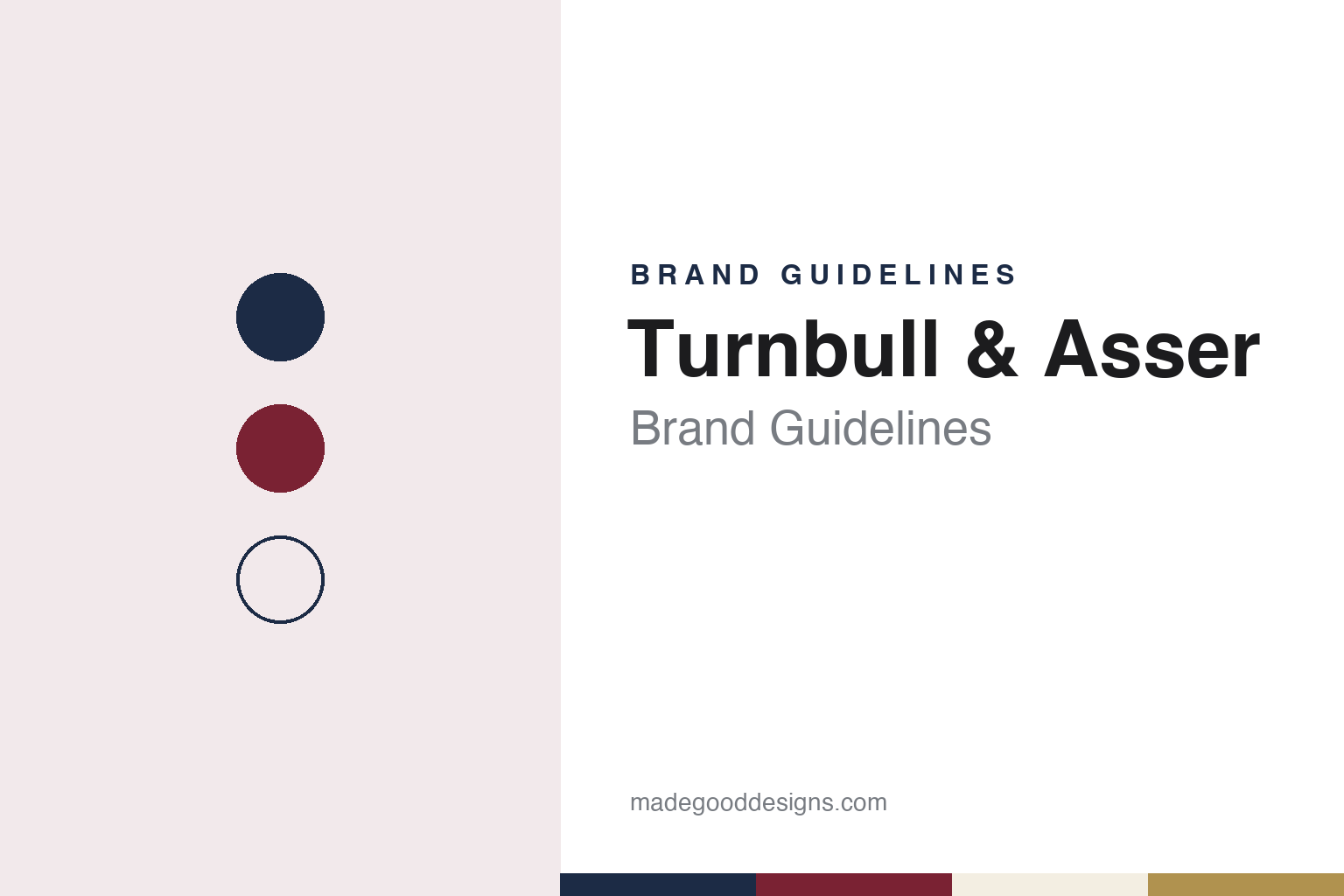
Two constants: a Turnbull & Asser navy, claret and ivory palette and a Traditional serif register. Abstract homage — not a Turnbull & Asser product or mark; no garment, logo or warrant is reproduced.
Hunting Hosiers
A St James’s hosier before it was a shirtmaker.
Turnbull & Asser began as a hosier, not a shirtmaker. In 1885 the hosier John Arthur Turnbull and the salesman Ernest Asser opened a shop under the name John Arthur Turnbull in Church Place, St James’s, according to the company’s 130th-anniversary history, published with the British Fashion Council. English Wikipedia describes the same start and notes that the area was already home to London’s clubs and haberdashers. The name changed to Turnbull & Asser in 1895.
The move that fixed its address came in 1903, when the business took premises on Jermyn Street, and the company still calls itself “a Jermyn Street mainstay since 1903.” Its anniversary history says the shop became known as the “Hunting Hosiers” as it moved into hunting clothes.
English Wikipedia records that between the 1920s and the 1970s the firm used as its symbol a hunting horn with a “Q” above it, called the Quorn after the Quorn Hunt, and that articles such as the Quorn scarf carried the name. The same name appeared on its wartime clothing. In 1915, the anniversary history says, the company made the Quorn coat, an “Active Service Coat” for the British military that doubled as a sleeping bag; English Wikipedia names a related piece, the Oilsilk Combination Coverall & Ground Sheet.
The company’s own account of the 1920s and 1930s centres on cloth: it says it became known in those years for silks and exclusive woven cottons for shirts, and that its pattern books from the period survive. English Wikipedia describes the same decades as the time the firm grew from a haberdasher into a clothier, adding sportswear and both bespoke and ready-to-wear clothing.
Colour
A siren suit, a cocktail cuff and a warrant.
Three commissions do most of the work in the Turnbull & Asser story. The first came in the Second World War. The anniversary history says German bombs partly destroyed Jermyn Street, while the firm’s building survived, and that Winston Churchill commissioned the siren suit, a one-piece coverall he could pull over his clothes when the air-raid sirens sounded. In a 2015 post on the Science Museum blog, the company’s archivist, Martin Wise, wrote that Churchill wore one to the White House in December 1941 and that only three originals are known to survive, among them a green velvet suit made by the firm. He also wrote that Churchill sent his suits back for repair several times because of cigar burns. The company says the green velvet suit is displayed at its Jermyn Street flagship.
The second commission was cinematic. In 1962 the firm supplied shirts and ties for Dr. No, English Wikipedia says, including the turnback cuffs fastened with buttons that became known as “cocktail cuffs” or “James Bond cuffs.” It went on to supply shirts for later films in the series, including those with Pierce Brosnan and Daniel Craig, and the anniversary history adds costumes for Kingsman: The Secret Service in 2015. The company now sells a James Bond Collection and a Churchill Collection.
The third is the Royal Warrant. English Wikipedia says that when the then Prince of Wales gained the power to grant warrants in 1980, his first went to Turnbull & Asser; the company’s own pages use both “his first Royal Warrant” and “one of his first issues.” The anniversary history says head cutter Paul Cuss received it. English Wikipedia says it later passed to Steven Quin and then to James Cook. Il Sole 24 Ore reported in December 2025 that the firm made the coronation shirt for King Charles III.
Typography
Cloth, collars and the shop front.
Shirtmakers show their work through cloth. A bolt of poplin, a stack of stripes or a swatch book does what a logo does elsewhere: it tells a customer what kind of house this is. Charvet presents its shirtings in full bolts rather than on swatch cards, according to English Wikipedia, which describes a wall of four hundred white fabrics on its bespoke floor. Turnbull & Asser says its pattern books from the 1920s and 1930s survive, and it sells bespoke and made-to-measure shirts from its London shops.
Collars are the category’s other recurring image. They are small, repeatable shapes, easy to set out in rows and easy to tell apart. A Highsnobiety visit to Charvet found collar samples pinned to velvet and framed on the wall, and Turnbull & Asser names a collar of its own, the Classic T&A, as its signature style, English Wikipedia says. Paper patterns and fitting shirts belong to the same picture of a trade built on measurement.
Place matters as much as product. London’s Jermyn Street, in St James’s, is home to shirtmakers whose shop fronts appear in their own storytelling, and Turnbull & Asser dates its address there to 1903. In Paris, Charvet’s full name includes Place Vendôme.
Neckwear shares the same visual stock: silk ties folded and laid out by colour, and woven or printed patterns shown in ranges rather than one at a time. This guide sets out what can be checked about each house, including who founded it, who owns it now and where it says its products are made. Where a story rests on a company’s own account, the text says so. The tones and typefaces shown are our own interpretation.
Aa
A traditional serif — a house that presents itself through cloth and the Quorn hunting horn of its past. (Specimen set in Libre Baskerville, a serif STAND-IN; NOT the Turnbull & Asser logo.)
Turnbull & Asser
Thirty-four pieces, made in Gloucester.
Turnbull & Asser ties its identity to making in England. The company says its garments are “made in our English workrooms,” that a shirt is made from 34 individual pieces of cloth, and that its woven ties are slipped by hand in its Gloucester workrooms. Its anniversary history dates the shirt factory’s move to Quedgeley, Gloucester, to 2003, while a company article from 2015 says production in Gloucester had then run for about 30 years, so the two accounts differ. That 2015 article placed tie making at a second factory in Sidcup, Kent. Il Sole 24 Ore reported in December 2025 that production stays in Gloucestershire. During the Covid-19 pandemic, English Wikipedia says, the Gloucester workroom turned to making uniforms for National Health Service staff.
Its signature cut is documented too. English Wikipedia says the firm advertises the Classic T&A collar, a semi-spread with a deep point and an outward flare, as its signature style, and treats a three-button cuff as a staple of its ready-to-wear line. Abroad, it began selling ready-to-wear shirts in the United States in 1974 through Bonwit Teller and Neiman Marcus. The company names its flagships today as Jermyn Street and a townhouse on East 57th Street in Manhattan, with bespoke at Bury Street, where the anniversary history says that department moved in 1970. English Wikipedia records that shops in Beverly Hills and at New York’s World Trade Center later closed.
The company calls itself family-run. Ali Fayed has owned it since 1986, Luxus Magazine reported in March 2026, and his son James Fayed is chairman, according to FashionUnited. In December 2025 the company appointed the Italian designer Roberto Menichetti, whose past work includes Jil Sander menswear, Burberry and Celine, as creative director, overseeing bespoke shirting, tailoring, outerwear and accessories. Il Sole 24 Ore reported that research and development would be based in Italy. The site Shoegazing reported in March 2026 that James Fayed’s company Blu Heartknot UK holds 71% of the Northampton shoemaker Tricker’s, that Menichetti would take the same role there and that Tricker’s footwear would join Turnbull & Asser’s retail network, while Tricker’s said it would keep making shoes in Northampton.
For a design guide, Turnbull & Asser shows how a brand can rest on a few dated commissions and one street. Compare Charvet, the Paris shirtmaker of Place Vendôme, and Tricker’s, the English maker now linked to it by ownership. For this guide we use navy, claret and ivory with a serif, an unofficial interpretation; no product or logo is reproduced.
Explore & save
Keep Turnbull & Asser’s identity on hand — save it to a board in the Made Good inspiration library.
Turnbull & Asser identity set
Pin the Turnbull & Asser navy, claret and ivory palette and the Traditional serif register to your own board.