Sensus Brand Guidelines
Brooklyn water meters, a Rockwell line and a brand inside Xylem.
Aa
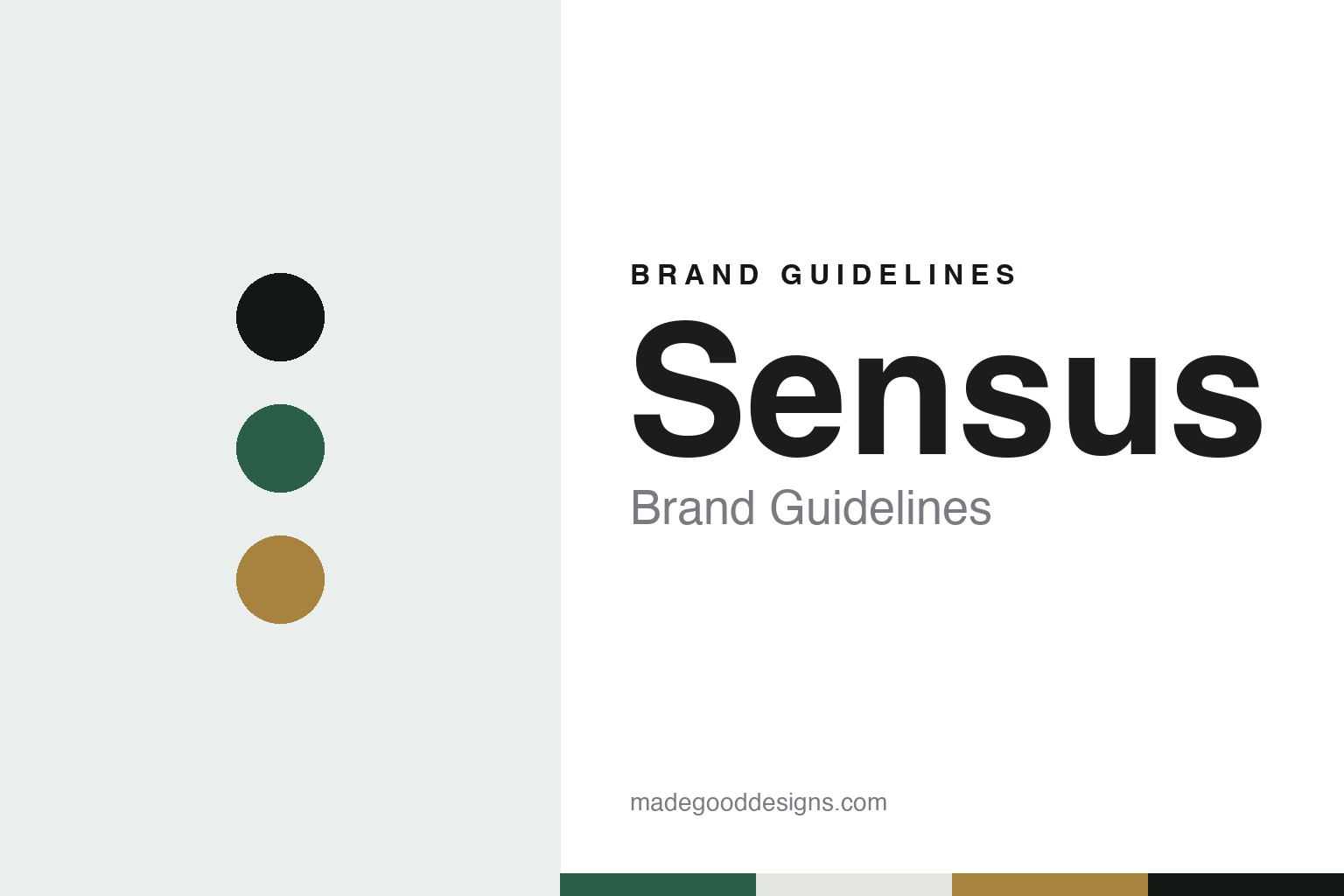
Two constants: a pipe green, ink and brass palette and an industrial grotesque register. Abstract homage — not a Sensus product or mark; no meter, logo or nameplate is reproduced.
National Meter
Brooklyn, Pittsburgh and a Rockwell plant.
Sensus is a young name on an old business. A company profile in Industry Today traces its water meters to the National Meter Company, founded in 1870 in Brooklyn, New York, which made disc and piston water meters. A second line began in Pittsburgh in 1886, when George Westinghouse started the Pittsburgh Meter Company. In 1927 that firm merged with another meter maker to form the Pittsburgh Equitable Meter Company, which made disc, compound and turbine water meters.
Willard F. Rockwell, who had led Pittsburgh Meter, bought Pittsburgh Equitable in 1945 and renamed it the Rockwell Manufacturing Company. In 1953 water meter production moved to a new plant at Uniontown, Pennsylvania, which the same profile still described as a major manufacturing site for the business decades later. In 1972 Rockwell Manufacturing merged with North American Rockwell to become Rockwell International, and the meter business stayed inside it until 1989.
Uniontown shaped the range. The plant made positive-displacement meters of both the disc and piston types, turbine water meters and a newly designed compound meter with a single register, Industry Today says. Later decades added remote-reading generators and encoders in the 1970s, along with instruments for monitoring, recording and controlling the flow of water and gas.
Colour
Sealed registers and meters that report themselves.
The product history is one of meters that read themselves. In 1957, Industry Today says, the company introduced a magnetic-drive 5/8-inch piston water meter with a sealed register, the SR. The 1960s brought right-angle, magnetic-drive turbine meters, and 1972 a plastic injection-moulding operation. Remote reading followed: in 1984 the TouchRead system with an electronic communication register, then RadioRead, which sends readings by low-power radio to a recorder in a vehicle driven along the meter route, and PhonRead, which phones readings through to the utility.
The Sensus name arrived with a change of owner. In 1989 Rockwell International sold its meter-manufacturing operations to BTR plc, the London-based conglomerate, and the business traded as Sensus Technologies. When BTR merged with Siebe in 1999 to form Invensys, the meter arm became Invensys Metering Systems. In January 2004, Water Tech Online reported, The Resolute Fund, managed by The Jordan Company, and GS Capital Partners 2000, managed by Goldman Sachs, completed the purchase of Invensys Metering Systems from Invensys plc and named the new company Sensus Metering Systems, with its base in Raleigh, North Carolina. Two linked businesses came with it: Smith-Blair, which makes pipe-joining and pipe-repair products for water and gas utilities, and Sensus Precision Die Casting. Dan Harness, president of the new company, said it would now focus on customers for automatic meter reading and for water, heat, gas and electricity metering.
By then the business made meters on several continents. Industry Today listed plants in Uniontown and DuBois in Pennsylvania, Orlando in Florida and Norwalk in Ohio, register production in Juárez, Mexico, water meter plants in Brazil and Chile, gas meter production in China and India, and two plants in Germany making water and heat meters. The iCon electricity meter was made at Norwalk, as the company had entered electricity metering shortly before. Smith-Blair was based in Texarkana, Arkansas, and the die-casting arm in Russellville, Kentucky, where it made aluminium housings for gas meters. The profile counted about 3,000 employees worldwide, roughly 1,300 of them in the United States, with headquarters in Raleigh.
Typography
Design and documentation.
Utility meters are everywhere and rarely looked at. They sit in cupboards and basements, in pits under the pavement and in boxes on outside walls, and today they are read far more often by machines than by people. The makers in this guide build electricity, water, gas and heat meters, and increasingly the radio networks and software that collect and manage their readings.
Their imagery follows that shift. Factory photographs show rows of grey and white meters clamped into test rigs, brass water-meter bodies waiting for assembly and the dials of mechanical registers. Newer material shows small digital displays and communication modules, and control-room screens where a utility follows consumption, outages and the state of its network across a town or a region. Product shots tend to sit on plain light backgrounds, close in spirit to the technical drawings of a catalogue.
People appear mostly as installers and operators: field engineers beside liveried utility vans, technicians opening a meter cabinet or lifting the lid of a water-meter pit, staff in front of dashboards. Trade fairs such as Enlit, where the power industry meets, and national utility shows are where these companies present themselves to their customers, and their stands lean on the same mix of hardware, maps and screens.
Ownership in the sector has changed often, with listed groups, private equity investors and family firms buying and selling meter businesses across borders. This guide sets out what can be checked about each brand — who founded it, who owns it now and where its products are made — and marks clearly what rests only on the company’s own word.
Aa
An industrial grotesque for a six-letter name. (Specimen set in Archivo, a sans STAND-IN; NOT the Sensus logo.)
Sensus
From Sensus Technologies to a Xylem brand.
The latest change of owner came in 2016. On 15 August that year Xylem, a global water technology company and pump rental specialist, signed a definitive agreement to acquire Sensus from investment funds affiliated with The Jordan Company and GS Capital Partners 2000, Rental Equipment Register reported. At the time Sensus had more than 80 million metering devices installed around the world, and its FlexNet communications network used licensed radio spectrum in the United States. Xylem’s chief executive, Patrick Decker, said the deal would help move Xylem’s portfolio “up the technology curve.”
Sensus now lives as a brand inside Xylem, and the sensus.com address forwards to Xylem’s website. There the company describes “Xylem’s Sensus brand” as a source of remotely managed products and solutions for investor-owned utilities, cooperatives and municipalities, and as part of Xylem’s digital portfolio. Its range spans electricity, gas and water: smart meters, the FlexNet point-to-multipoint network, the Cordonel commercial and industrial water meter and the Evolve intelligent grid platform, Xylem says. Its case studies name customers such as Fort Worth Water in Texas, which uses the brand’s advanced metering infrastructure, and an electricity cooperative in West Kentucky on the FlexNet network.
For a design guide, Sensus shows how a name adopted in 1989 can outlast three owners and settle as a product brand inside a larger group, carried on meters whose lineage runs back to Brooklyn and Pittsburgh. Compare it with Xylem, its owner, and Badger Meter, another American meter maker. For this guide we use pipe green, ink and brass on a pale stone ground with an industrial grotesque sans, an unofficial interpretation; no product or logo is reproduced.
Explore & save
Keep Sensus’s identity on hand — save it to a board in the Made Good inspiration library.
Sensus identity set
Pin the Sensus pipe green, ink and brass palette and the industrial grotesque register to your own board.