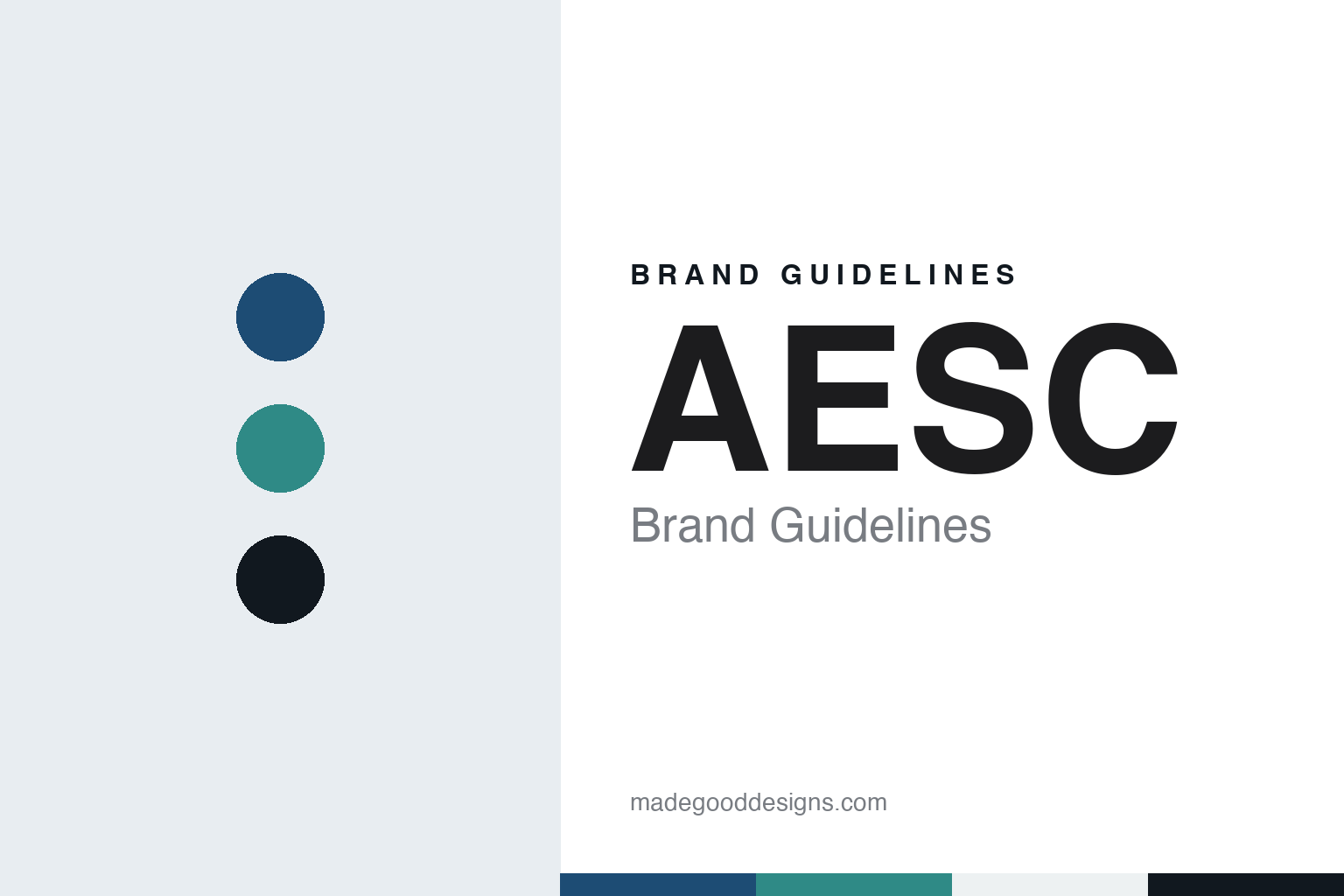
AESC Brand Guidelines
Nissan and NEC’s Leaf battery maker, now owned by Envision.
Aa
Two constants: a cell blue, teal and ink palette and a technical sans register. Abstract homage — not an AESC product or mark; no cell, logo or nameplate is reproduced.
Automotive Energy Supply
A carmaker and an electronics group build a battery.
AESC stands for Automotive Energy Supply Corporation. It began as a joint venture between a carmaker and an electronics group: in 2007, English Wikipedia says, Nissan, NEC and NEC’s components arm NEC Tokin agreed to set up a company to develop and produce lithium-ion batteries for electric vehicles. It was formally established in 2008, with Nissan, NEC and NEC Tokin holding shares in the ratio 51:42:7. The trade magazine BEST, writing in 2017, also gives 2007 as the year AESC was founded to develop advanced lithium-ion batteries.
The first factory was on Nissan’s site at Zama, in Kanagawa prefecture, with electrodes coming from NEC Tokin’s works at Sagamihara nearby, English Wikipedia says. The early batteries used a lithium manganese oxide chemistry, with a manganese spinel cathode, and were built from flat laminated cells rather than cylindrical cans. Forklift trucks were the first intended market, to be followed by Nissan’s electric and hybrid cars. The Zama plant was planned with an initial capacity of 13,000 battery units a year, rising to 65,000, and in late 2008 the owners announced a further factory to make batteries for around 200,000 vehicles a year.
Trial production at Zama began in mid-2009. In 2010 Nissan started building the Leaf, its mass-market electric hatchback, with AESC batteries.
Colour
The Leaf, and a long search for a buyer.
English Wikipedia says that in 2014 it was the world’s second-largest electric-vehicle battery maker, after Panasonic. Its customers were Nissan and Renault, and battery packs were assembled at Nissan’s plants in Smyrna, Tennessee, and Sunderland, in north-east England. In late 2014, English Wikipedia says, citing Reuters, the Renault–Nissan alliance was divided over where to source cells for those two plants, with LG Chem as an alternative supplier.
Nissan then decided it no longer wanted to make its own cells. English Wikipedia says it chose in 2016 to sell its stake, preferring to buy batteries from outside suppliers. In August 2017 Nissan announced a sale of its battery business to GSR Capital, a Chinese private equity firm, BEST reported; Nissan was first to take full control of AESC by buying NEC’s 49 per cent, and the deal covered the Smyrna and Sunderland operations and part of its Japanese production at Oppama, Atsugi and Zama. GSR’s chairman said the buyer planned to invest in research, expand production in the US, the UK and Japan, and add facilities in China and Europe, and NEC was in talks to sell its own battery and electrode subsidiary, NEC Energy Devices. That sale was cancelled in July 2018, after three delays, English Wikipedia says, because GSR Capital did not complete its funding.
A new buyer was announced in August 2018: Envision Group, the Chinese energy technology company. The deal was completed in early April 2019, InsideEVs reported, with the new company starting operations on 1 April. Envision took 75 per cent and Nissan kept 25 per cent, and the sale included AESC, the battery plants at Smyrna and Sunderland and Nissan’s Japanese battery development and production engineering at Oppama, Atsugi and Zama. Nissan said it would keep working with the new company as an important supplier, and continue to use its packs for the Leaf and the e-NV200 van.
Typography
How battery makers show themselves.
Battery makers sell mostly to other companies: carmakers, bus and truck builders, and the developers of grid storage. Few drivers ever see the name on the cells under the floor of their car, so these firms tend to build their public image around the product itself and the scale of the places where it is made, rather than around a consumer logo on a shop shelf.
The visual language that results is fairly consistent across the category. Press images often show a cell or pack in cutaway, with its layers, modules and cooling channels opened up like a technical drawing. Factory photographs favour long, white, brightly lit production halls, with workers in clean-room clothing beside automated lines. Product pages pair battery packs with renders of a bare electric-vehicle chassis, and storage products appear as rows of steel containers set out on open ground.
Trade fairs are where much of this imagery is first shown. Shows such as The Battery Show in North America and CIBF, the China International Battery Fair, gather cell makers, materials suppliers and equipment builders, and many makers time product names and launch films for those stands. Named product ranges, rather than model numbers alone, have become a common way for makers to give a cell chemistry or pack design a memorable identity.
The makers in this group are documented unevenly. Founding dates, stock listings, factory openings and major shareholders can usually be checked in public sources, while claims about chemistry, capacity and performance often rest only on the company’s own word. This guide keeps those two kinds of statement apart and attributes each claim to the source that makes it.
Aa
A technical sans for a cell maker. (Specimen set in IBM Plex Sans, a sans STAND-IN; NOT the AESC logo.)
AESC
From Zama to plants on three continents.
Under Envision the company first traded as Envision AESC and expanded quickly. English Wikipedia says it announced a large plant at Jiangyin, near Wuxi in Jiangsu, in April 2019, followed by plants at Ordos in Inner Mongolia, Shiyan in Hubei and Cangzhou in Hebei. In Europe it lists a new factory at Sunderland, a plant at Douai in northern France planned with Renault, confirmed in June 2021, and a project in Extremadura, Spain. In Japan the Zama and Ibaraki plants and the Sagamihara electrode works remain on its list.
The United States has been harder. In April 2022 the company presented a plant for Kentucky, and it began another at Florence, South Carolina, to supply cells to BMW. Earlier in 2025 it had dropped plans for a second factory on the Florence site, saying the first could meet BMW’s demand, the AP reported. In June 2025 AESC halted construction at Florence, citing “policy and market uncertainty,” the Associated Press reported; it said it would restart but did not say when, and the AP described it as a battery maker based in Japan with facilities in China, the United Kingdom, France, Spain and Germany. English Wikipedia adds that the Smyrna plant stopped production for Nissan in June 2025 and switched to energy storage, and that in April 2026 AESC sold its majority stake in its sole US battery plant to Fixx Energy.
The name has shortened along the way: the AP’s 2025 report called the company AESC while also giving its full name, Automotive Energy Supply Corp. Its ownership traces to the 2019 sale, in which Envision took control and Nissan kept a minority holding.
For a design guide, AESC shows how a battery maker can change owners and countries while keeping the initials it was born with. Compare Panasonic, another Japanese battery maker, and SK On, which signed a supply contract with Nissan in 2025. For this guide we use cell blue, teal and ink with a sans, an unofficial interpretation; no product or logo is reproduced.
Explore & save
Keep AESC’s identity on hand — save it to a board in the Made Good inspiration library.
AESC identity set
Pin the AESC cell blue, teal and ink palette and the technical sans register to your own board.