Gillig Brand Guidelines
The San Francisco carriage shop that became a Californian transit bus maker.
Aa
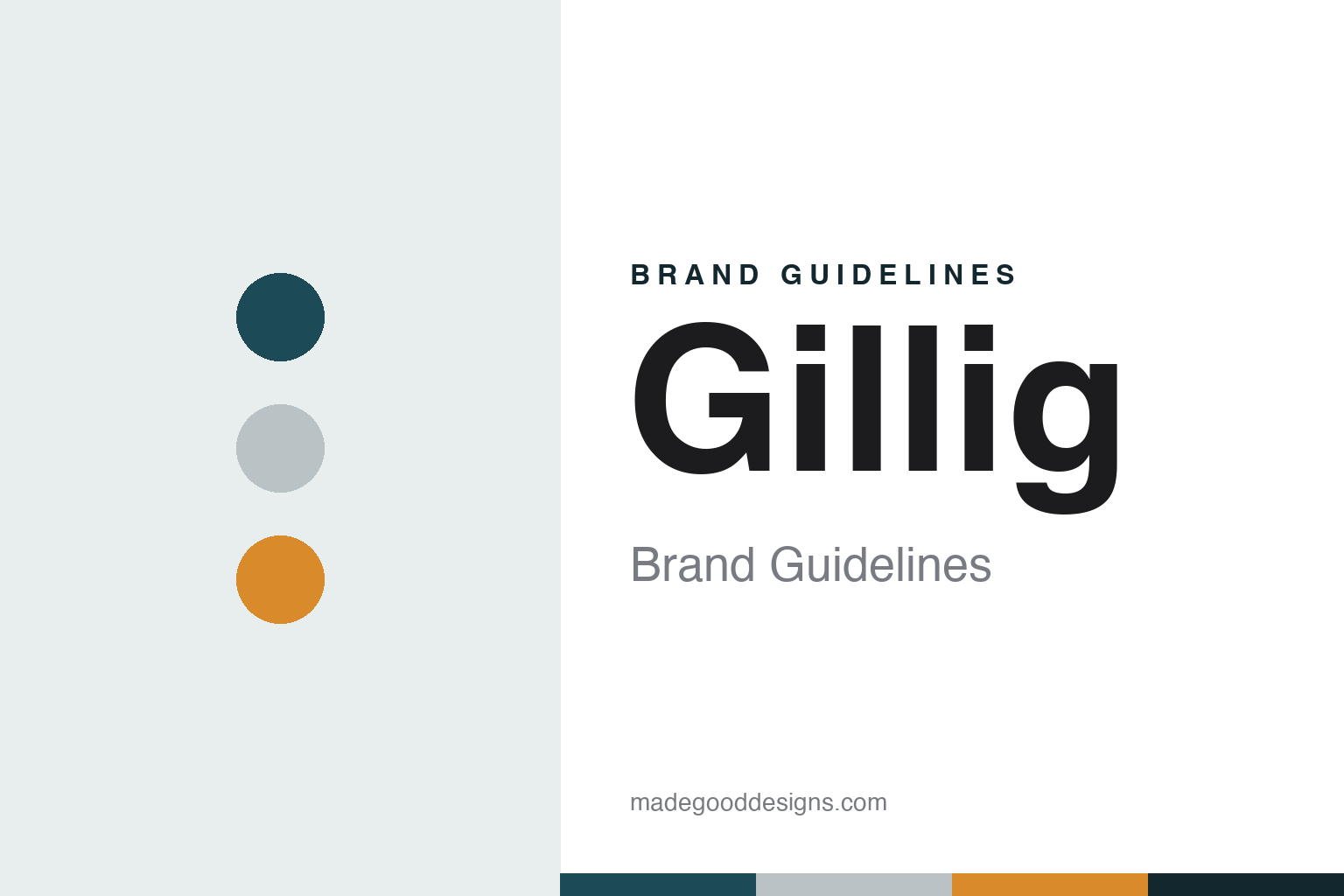
Two constants: a depot teal and brushed steel palette and a road-sign sans register. Abstract homage — not a Gillig product or mark; no vehicle, logo or nameplate is reproduced.
Jacob Gillig’s shop
From carriages to the California Top.
Gillig traces itself to 1890, when Jacob Gillig opened a small shop in San Francisco making carriages and wagons, the company says. The Pioneer, reporting in March 2017 and citing the company, describes him as a carriage builder and upholsterer, and a 2024 column reposted on Gillig’s website quotes its marketing manager placing the roots of the business in the Bay Area’s carriage upholstery trade. When the investment bank Lincoln International announced the company’s 2008 sale, it too described Gillig as established in the San Francisco Bay Area since 1890.
The city’s own history shaped the next step. Gillig says the shop was destroyed in the 1906 San Francisco earthquake, and that the family rebuilt and shifted its focus to automobiles.
Gillig’s timeline says that in the years from 1914 to 1920 Chester Gillig joined his brother Leo to form Gillig Bros, and it credits them with inventing the “California Top.” The Pioneer says a roof and side-curtain window system for a car was patented in 1919, with Jacob’s sons Leo and Chester by then in the business.
Buses came next. The Pacific Bus Museum says the first school bus body appeared in 1932, and The Pioneer also dates the start of bus making to 1932, citing the company; Gillig’s own timeline says only that it pivoted to school buses in the 1930s. The museum dates the first transit bus to 1937 and the first underfloor-engine school bus to 1941. It says those school buses were the mainstay of the business for the next four decades.
Gillig says that during the Second World War it moved production to military vehicles, and that it introduced its first diesel-powered school bus in the 1950s.
Sources date the move to Hayward, across the bay, differently. The Pioneer, citing the company, says the business outgrew San Francisco and moved to Clawiter Road in West Hayward by 1938, and the Pacific Bus Museum also gives 1938. Gillig’s current timeline instead lists 1968, saying it moved then to a larger facility in Hayward, and the 2024 column calls Hayward a home of nearly 50 years.
Colour
The Phantom, the Low Floor and the Crown family.
The turn to transit buses came in stages. The Pacific Bus Museum says Gillig did not enter the field in earnest until it began licensed production of rear-engine Neoplan buses in 1977, and that an original design, the Phantom, took it into heavy-duty transit buses. The museum dates the Phantom to 1981; Gillig’s timeline dates its debut to 1980 and calls it a favourite for its durability and practical, customer-driven design.
The next platform grew out of the first. Gillig says it launched its first Low Floor bus in 1997–98, based on the Phantom, with a plant expansion to meet demand. The Pioneer, citing the company, says a first hybrid model followed in 2002 and a hydrogen fuel-cell bus was produced in 2004 to test the technology.
Ownership changed in 2008. Metro Magazine reported on August 1 that year that Gillig had been purchased by Henry Crown & Co., operating under CC Industries of Chicago. Lincoln International, the buyer’s adviser, said CC Industries had acquired Gillig from privately held Herrick-Pacific Corporation, and described CC Industries as the holding and management company for the Crown family’s privately held businesses, among them the trailer maker Great Dane. Gillig’s website now says it has been “privately owned by just three American families since 1890,” and the 2024 column calls it family-owned.
In 2017 the factory left Hayward. The Pioneer reported in March that year that executives and owners had decided in 2014 to find a new, larger site, that a cheaper move out of California had been possible, and that the company had chosen to stay in the state, with a purpose-designed building and a moving slat-conveyor assembly line. The Pacific Bus Museum dates the move to May 2017. The 2024 column gives the Livermore plant 600,000 square feet and quotes the marketing manager saying the company chose it to keep its team together, going as far as mapping employees’ commutes. Gillig says its buses are “proudly designed, built, and supported by a dedicated American workforce,” and Metro Magazine reported in 2019 that its battery electric buses would be built at Livermore.
Recent moves have reached beyond the factory. Metro Magazine reported in February 2024 that GERCO LLC, a wholly owned Gillig subsidiary, had bought select assets of Lightning eMotors and Lightning Systems through a receivership sale and hired some of their former engineers, with Loveland, Colorado, becoming Gillig’s Colorado Technology Center; Lightning’s business itself was not acquired or resumed. In October 2025 the same magazine reported a 50/50 joint venture between Gillig and NFI Group, GR Seating LLC, which acquired the assets of the seat maker American Seating. Operations stay in Grand Rapids, Michigan, under the American Seating name, and neither owner runs them day to day.
Typography
Fleets and factory floors.
Bus and coach makers sell to operators, councils and school districts, so their brands reach most people second-hand. The maker’s badge often rides under someone else’s livery, and the passenger may never learn who built the vehicle. Even the badge can move: Wrightbus launched its Rightech midibuses in January 2025 with King Long building them, Sustainable Bus reported.
The trade shows how these companies present themselves when they do speak for themselves. Fleets lined up at depots, finished vehicles leaving the factory floor and milestone units rolling off the line are standard material. King Long’s own history counts its hundredth driverless Apolong and its 100,000th bus in that way. The stand at Busworld in Kortrijk, Belgium, is the other set piece, and King Long marks its first appearance there, in November 2005, as a step into international markets.
Vehicle form carries part of the identity. A cut-away van chassis gives the small school bus its proportions, and the destination blind gives a city bus a slot of type that the operator controls. In North America, colour is largely settled before a designer starts: English Wikipedia says Blue Bird engineers took part in a 1939 conference that helped select school bus yellow, the shade the whole industry shares. That leaves makers with details such as Blue Bird’s roof emblem, painted on many of its buses since the early 1960s.
Logos, typefaces and colour values are rarely documented for these makers. This guide sets out what can be checked: who founded each company, who owns it now, where it says its vehicles are made and which claims rest on the company’s own word. The palette and specimen here are ours, not the brand’s.
Aa
A road-sign sans — one capitalised name on a working vehicle. (Specimen set in Barlow, a sans STAND-IN; NOT the Gillig logo.)
American-built
A brand that travels in other people’s colours.
Gillig’s buses appear in their operators’ own schemes: the 2024 column notes 35 buses for ABQ Ride in Albuquerque carrying “mobile mural” paint wraps of New Mexico landscapes. The same column points out that the maker’s name sits prominently right above the licence plate.
On its own pages the company writes its name in capitals, as GILLIG. Its language is built from a few repeated ideas. The phrase “American-built” runs through its history page and product descriptions, and its home page carries five capitalised values: “FAMILY. QUALITY. SAFETY. PASSION. INTEGRITY.” The company says it considers colleagues “the family that we have chosen,” and its history page counts more than 130 years.
Its product line is organised by what powers the bus rather than by model name. The Low Floor platform carries four versions, named plainly: Clean Diesel, CNG, Hybrid Electric and Battery Electric. Gillig describes the platform as a stainless steel chassis with an aluminium body, and presents customer choice as the point, with propulsion, seating, amenities and accessibility features all specified by the agency. That modular approach also means parts commonality: Metro Magazine reported that the battery electric bus shown in Livermore in 2019, with an electrified powertrain from Cummins and charging from ChargePoint, was designed on the existing platform, sharing parts and training with other Gillig fleets.
Electric and hydrogen work has followed. The company says its third-generation battery electric bus earned the highest-ever score for zero-emission buses at Altoona in 2023, and that it introduced a hydrogen fuel-cell bus in 2024. Orders give a sense of its scale: the 2024 column reports a five-year King County Metro contract, with an initial 89 battery electric buses and an option on up to 306 more, and a February 2025 item on Gillig’s website reports Dallas Area Rapid Transit buying 476 CNG buses. The labour side is on record too. The column says the company reached five-year agreements with its Teamsters and Painters units in 2024.
For a design guide, Gillig shows how a maker can build a brand on continuity and a plain product platform while its buses appear in other organisations’ liveries. Compare New Flyer, the Canadian maker The Pioneer named alongside Gillig in 2017, citing Forbes, and Thomas Built Buses, another American bus maker that grew out of an earlier vehicle trade. For this guide we use a depot teal, a brushed steel and an amber with a sans, an unofficial interpretation; no product or logo is reproduced.
Explore & save
Keep Gillig’s identity on hand — save it to a board in the Made Good inspiration library.
Gillig identity set
Pin the Gillig depot teal and brushed steel palette and the road-sign sans register to your own board.