Proterra Brand Guidelines
An electric bus maker that went through Chapter 11 and left its name on a battery company.
Aa
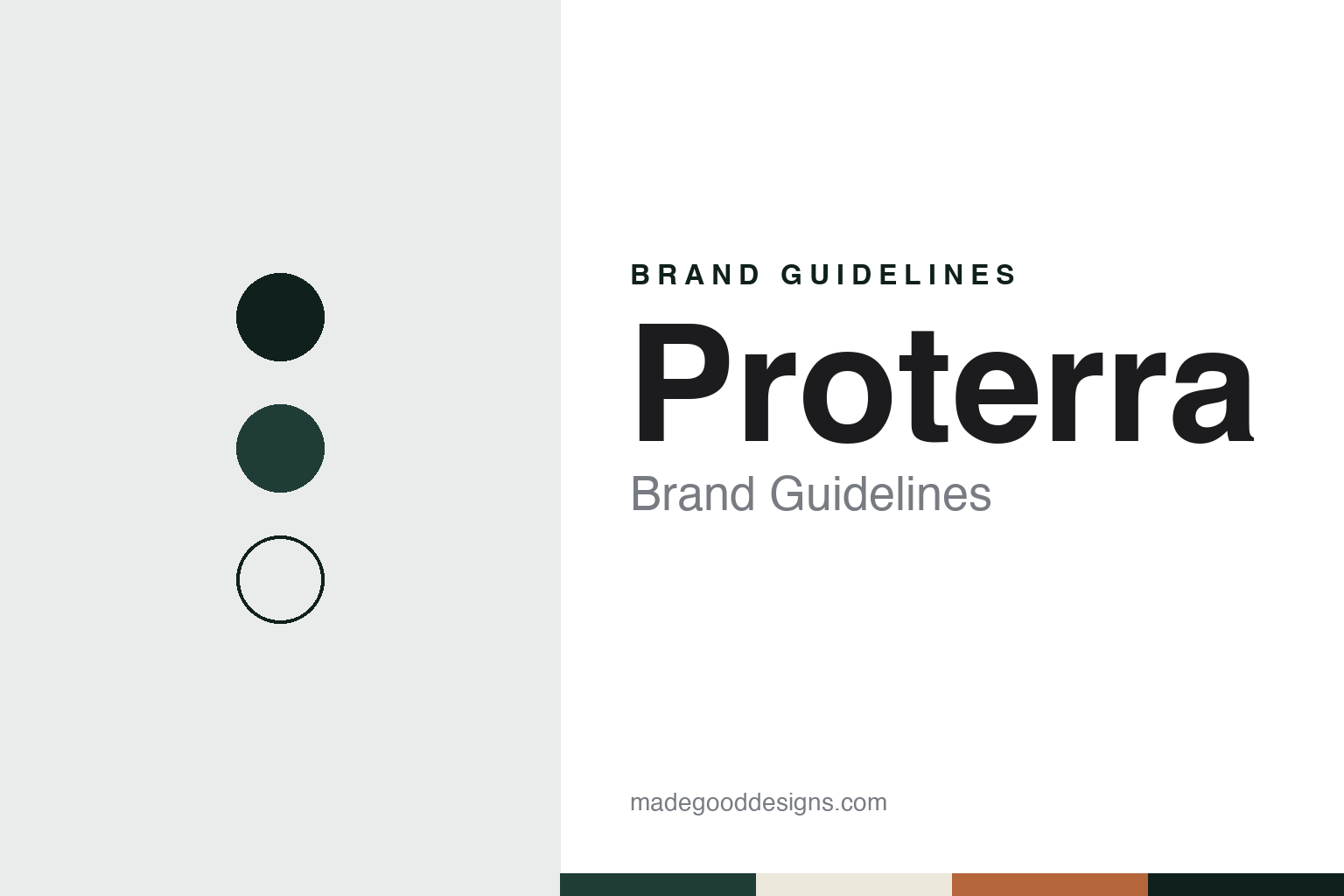
Two constants: a Proterra pine, sand and clay palette and a Plain engineering sans register. Abstract homage — not a Proterra product or mark; no vehicle, logo or nameplate is reproduced.
Golden, 2004
A composite bus from Colorado.
Proterra began in Colorado. Its filings with the US Securities and Exchange Commission say it was formed in June 2004 as a Colorado limited liability company and became a Delaware corporation in February 2010. English Wikipedia names Dale Hill as the founder and Golden, Colorado as the place. Hill had earlier founded TransTeq, a Denver bus maker known for the hybrid “EcoMark” shuttles on the city’s 16th Street Mall, and Alumatech, which made aluminium dump trailers.
The first product was the EcoRide. Wikipedia says a prototype with a composite body and a hydrogen fuel-cell range extender appeared at the 2008 APTA Expo, and that the fuel cell had been dropped by the time the bus toured California in 2009. Foothill Transit in Southern California took the launch buses in 2010, and the prototype later went to the Museum of Bus Transportation in Hershey, Pennsylvania.
The company then moved twice. In February 2010 it announced a move of manufacturing from Golden to Greenville, South Carolina, beside Clemson University’s automotive research centre, and in October 2011 it said all operations would gather there. Ryan Popple, who had worked at Tesla Motors, became chief executive in 2014. In October 2015 the headquarters moved again, to Burlingame, California, and a second bus line was funded in the City of Industry in Southern California.
Proterra became a public company through a merger with ArcLight Clean Transition Corp., a special-purpose acquisition company. The merger agreement was dated 11 January 2021 and the deal closed on 14 June 2021, its filings say. Gareth Joyce became chief executive at the start of 2022.
Colour
Catalyst, ZX5 and other people’s vehicles.
Three bus families carried the name. The EcoRide ran from 2010 to 2014. The Catalyst followed in 2014, first at 40 feet and then at 35 feet from 2015, keeping a composite structure. The ZX5 was announced in 2020 as its replacement, with a more angular look and a roof fairing six inches shorter, according to Wikipedia. Edmonton’s transit system was the launch customer for the 40-foot version. Wikipedia says the composite bodies came from TPI Composites, at Warren, Rhode Island.
The buses also had a charging system of their own: a proprietary overhead “blade” charger in which they docked. It was dropped in 2018 in favour of the standard SAE J3105 charging options.
Over time the batteries became the larger story. Van Hool announced a partnership in October 2017 to build an electric CX45 coach with Proterra batteries. Alexander Dennis offered an Enviro500EV double-decker with a Proterra powertrain. Thomas Built Buses announced the “Jouley” electric school bus in October 2018, and ENC announced an electric Axess in September 2022. In August 2019 Proterra gave this work a name of its own, Proterra Powered, for other heavy-vehicle builders that wanted its drivetrain.
Figures for 2022 give the scale. Wikipedia, citing the company’s annual report, gives 199 new transit buses delivered and battery systems for 1,229 vehicles. Manufacturing Dive reported in November 2023 that a battery pack plant in the Los Angeles area had opened in December 2020 and a battery factory in Greer, South Carolina in January 2023. By 30 September 2023, its filings say, bus production was consolidated in Greenville and battery production in Greer.
By then the company described itself in three parts: Proterra Transit, which made the buses; Proterra Powered, which made batteries and drivetrains for others; and Proterra Energy, which sold fleet charging and software. The sale process in Chapter 11 ran along those same lines, the company’s lawyers say.
Typography
Design and documentation.
Bus and coach makers sell to operators, councils and school districts, so their brands reach most people second-hand. The maker’s badge often rides under someone else’s livery, and the passenger may never learn who built the vehicle. Even the badge can move: Wrightbus launched its Rightech midibuses in January 2025 with King Long building them, Sustainable Bus reported.
The trade shows how these companies present themselves when they do speak for themselves. Fleets lined up at depots, finished vehicles leaving the factory floor and milestone units rolling off the line are standard material. King Long’s own history counts its hundredth driverless Apolong and its 100,000th bus in that way. The stand at Busworld in Kortrijk, Belgium, is the other set piece, and King Long marks its first appearance there, in November 2005, as a step into international markets.
Vehicle form carries part of the identity. A cut-away van chassis gives the small school bus its proportions, and the destination blind gives a city bus a slot of type that the operator controls. In North America, colour is largely settled before a designer starts: English Wikipedia says Blue Bird engineers took part in a 1939 conference that helped select school bus yellow, the shade the whole industry shares. That leaves makers with details such as Blue Bird’s roof emblem, painted on many of its buses since the early 1960s.
Logos, typefaces and colour values are rarely documented for these makers. This guide sets out what can be checked: who founded each company, who owns it now, where it says its vehicles are made and which claims rest on the company’s own word. The palette and specimen here are ours, not the brand’s.
Aa
A plain engineering sans — a name now carried by battery packs. (Specimen set in Barlow, a sans STAND-IN; NOT the Proterra logo.)
Proterra
One company, three outcomes.
On 7 August 2023 Proterra Inc. and Proterra Operating Company filed for Chapter 11 in the US Bankruptcy Court for the District of Delaware, its filings say. The shares left Nasdaq that month and traded over the counter from 17 August. Wikipedia lists the reasons given at the time as supply-chain disruption, penalties on supplier contracts, delayed deliveries, inflation and the highly customised nature of each transit agency’s order.
The company did not survive as a bus maker. Each line went its own way:
Proterra Powered went to the Volvo Group. The Driven reported on 14 November 2023 that Volvo Battery Solutions had won the auction, and Mass Transit reported on 2 February 2024 that the purchase was complete, including a battery development centre in California and the Greer assembly plant. Volvo said it would run Proterra “as a going concern and deliver to selected customers.”
Proterra Transit went to Phoenix Motor Inc. of Anaheim, California, which had made medium-duty shuttles and school buses. The court approved the sale on 9 January 2024 and it closed on 11 January, a company filing says. Wikipedia says the ZX5 is now built at the former Proterra plant in Greenville and that Phoenix buses carry Phoenix’s own branding, not Proterra’s. By September 2025 Phoenix Motor’s shares traded on the OTC Pink market and it sold the buses through a division called PhoenixEV, a company release said.
Proterra Energy is where sources differ. The law firm Paul, Weiss, which acted for Proterra, says the reorganised company kept it; English Wikipedia says it was purchased by Cowen Equity. The company’s plan took effect on 13 March 2024, when it left Chapter 11. A filing says the old shares were cancelled and that holders of its second-lien convertible notes received all the new equity.
The name itself went with the batteries. Proterra’s website in 2026 sells the Onyx Slate and Onyx Strata battery packs, gives its headquarters as Burlingame and its factory as Greer, and sums up the arrangement in the line “Designed in California. Manufactured in South Carolina.” Its footer reads “An Independent Business in partnership with Volvo.” Its pages close with the words “For the Earth.” The site is about batteries for trucks, port equipment and other vehicles as well as buses, and it no longer sells a bus of its own.
For a design guide, Proterra shows how a name can leave the product that made it known, since the buses and the badge now belong to different owners. Compare Thomas Built Buses, which used its batteries in the Jouley, and Van Hool, another partner that went through bankruptcy. For this guide we use a deep pine, a pale sand and a fired clay with a sans, an unofficial interpretation; no product or logo is reproduced.
Explore & save
Keep Proterra’s identity on hand — save it to a board in the Made Good inspiration library.
Proterra identity set
Pin the Proterra pine, sand and clay palette and the Plain engineering sans register to your own board.