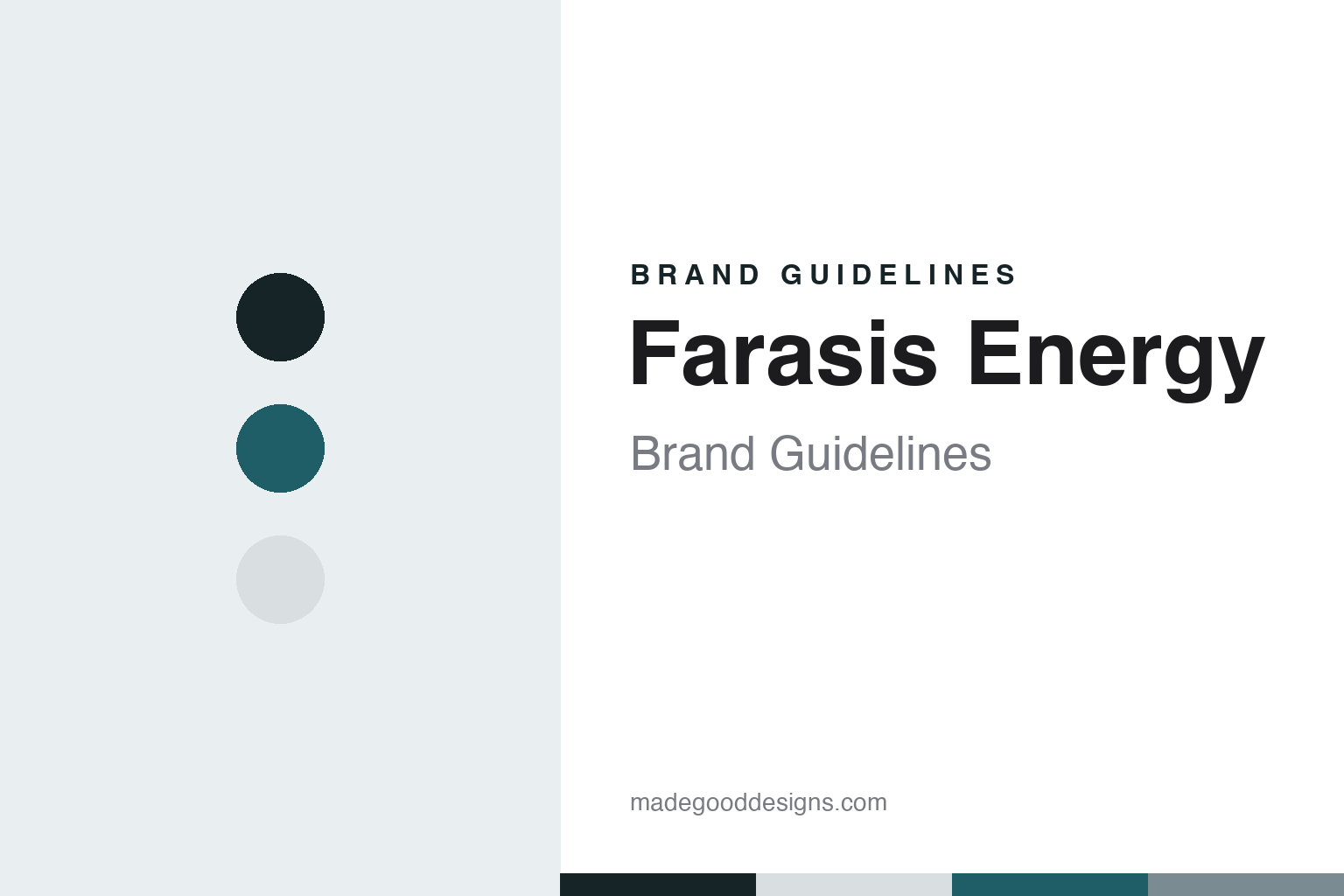
Farasis Energy Brand Guidelines
The Silicon Valley pouch-cell start-up rebuilt in Ganzhou.
Aa
Two constants: a graphite, teal and silver palette and a technical sans register. Abstract homage — not a Farasis Energy product or mark; no cell, logo or nameplate is reproduced.
Silicon Valley to Ganzhou
Two battery scientists, a California start-up and a move to Jiangxi.
Farasis Energy began in California in 2002. Yicai Global reported in August 2023 that it was established in Silicon Valley that year by two battery scientists, Dr. Yu Wang of Canada and Dr. Keith D. Kepler of the United States. The company’s own news releases give the same two founders and the same year, and its milestones page opens with the California founding.
The move that shaped the company came in 2009, when Farasis entered the Chinese market by setting up a local subsidiary, Farasis Energy (Ganzhou), in Ganzhou in Jiangxi province, Yicai Global reported. That company, known in Chinese as Funeng Technology, became the listed parent: it went public on Shanghai’s STAR Market in July 2020, and the company’s milestones page says mass production began at a second Chinese plant, in Zhenjiang, the same year.
The company’s own timeline fills in the years between. It says it supplied battery systems to electric motorcycle customers from 2011, began large-scale shipments to Chinese carmakers in 2016 and started strategic cooperation with Daimler in 2018. A Chinese business report carried by Yicai Global in April 2025 said its first major car customer, signed in 2015, was the new-energy vehicle arm of BAIC, and that Mercedes-Benz followed with a seven-year order in 2018; the same report named GAC’s new-energy arm and Great Wall Motor as later customers.
Colour
Pouch cells, a German partner and a Turkish joint venture.
Farasis is a pouch-cell specialist. The company describes itself as a maker of lithium-ion pouch batteries, and Yicai Global wrote in 2023 that the Ganzhou company focuses on developing and producing soft-pack batteries, and that it had launched what it calls the Super Pouch Solution in September 2022. The April 2025 Yicai Global report described it as one of the first companies in China to mass-produce ternary soft-pack power batteries. Its website groups its work under four headings: green mobility, smart energy storage, low-carbon construction machinery and portable power stations.
One documented partnership is with Mercedes-Benz. In July 2020 Charged EVs, citing Daimler, reported that Mercedes-Benz had launched a strategic partnership with Farasis and taken an equity stake in the company, covering the development and industrialisation of advanced cell technologies. Markus Schäfer, then the Mercedes-Benz chief operating officer, called it a decisive step in the carmaker’s “Electric first” strategy, and the report said the contract would give Mercedes-Benz a secure supply of battery cells. Hubertus Troska, a member of Daimler’s board of management, said it was the first time the group had taken a stake in a Chinese battery cell maker.
The second partnership is in Turkey. Siro, a joint venture between Farasis Energy and the Turkish car brand Togg, started production at a new site in Gemlik on 31 March 2023, Powertrain International reported, making battery modules and packs based on Farasis lithium-ion technology. The report said Siro supplies Togg, customers of Farasis Energy Europe and its own customers in vehicles, industry and stationary storage.
Closer to home, the company says it signed a strategic agreement with the commercial-vehicle maker FAW Jiefang in Changchun on 1 March 2024, to work on semi-solid-state and solid-state battery projects for light, medium and heavy trucks, and another with Geely’s Radar pickup brand on 4 June 2025, covering Radar’s vehicles, home energy storage and portable power. Its timeline also says it supplied its first sodium-ion battery to an electric-vehicle customer in 2023.
Typography
How battery makers present themselves.
Battery makers sell mostly to other companies: carmakers, bus and truck builders, and the developers of grid storage. Few drivers ever see the name on the cells under the floor of their car, so these firms tend to build their public image around the product itself and the scale of the places where it is made, rather than around a consumer logo on a shop shelf.
The visual language that results is fairly consistent across the category. Press images often show a cell or pack in cutaway, with its layers, modules and cooling channels opened up like a technical drawing. Factory photographs favour long, white, brightly lit production halls, with workers in clean-room clothing beside automated lines. Product pages pair battery packs with renders of a bare electric-vehicle chassis, and storage products appear as rows of steel containers set out on open ground.
Trade fairs are where much of this imagery is first shown. Shows such as The Battery Show in North America and CIBF, the China International Battery Fair, gather cell makers, materials suppliers and equipment builders, and many makers time product names and launch films for those stands. Named product ranges, rather than model numbers alone, have become a common way for makers to give a cell chemistry or pack design a memorable identity.
The makers in this group are documented unevenly. Founding dates, stock listings, factory openings and major shareholders can usually be checked in public sources, while claims about chemistry, capacity and performance often rest only on the company’s own word. This guide keeps those two kinds of statement apart and attributes each claim to the source that makes it.
Aa
A plain technical sans for a cell maker. (Specimen set in IBM Plex Sans, a sans STAND-IN; NOT the Farasis Energy logo.)
Farasis Energy
From founder-led to state-controlled.
Control of Farasis has changed hands. In August 2023 Yicai Global reported that Guangzhou Industrial Investment Holding Group, owned by the Guangzhou city government, which also owns the carmaker GAC Group, would become the controlling shareholder, with Dr. Wang moving to a newly created co-chair role; the same report described Farasis as China’s ninth-biggest battery maker at the time. The deal took until 2025 to complete. In April 2025 the company announced that the share transfer had been registered: its controlling shareholder, Hong Kong Funeng, and a party acting in concert had transferred 5% of the shares to Guangzhou Industrial Control Group and a partner company. After the transfer, Yicai Global reported, the Guangzhou group and its concert parties held about 14% of the share capital, and the Guangzhou Municipal People’s Government became the company’s actual controller. Caixin described the same step as the Guangzhou government taking control of the battery maker.
Today the company says it runs research and production across Ganzhou, Zhenjiang, Guangzhou and Yunnan in China, Stuttgart in Germany, Silicon Valley in the United States and Gemlik in Turkey. It says it received a conformity assessment report under the EU Battery Regulation from TÜV SÜD in April 2025, and that it took part in a battery-passport pilot on a platform led by the China Academy of Information and Communications Technology the same month. Its stated mission is “Provide Clean Energy, Build an Intelligent World.”
For a design guide, Farasis Energy shows how a battery maker with California roots now presents itself as a Chinese listed company with German and Turkish partners: technical, plain and built around a single cell format, the pouch. Compare CATL, another Chinese cell maker, and Northvolt, a European one. For this guide we use a deep graphite, a cool teal and a pale silver with a sans, an unofficial interpretation; no product or logo is reproduced.
Explore & save
Keep Farasis Energy’s identity on hand — save it to a board in the Made Good inspiration library.
Farasis Energy identity set
Pin the Farasis Energy graphite, teal and silver palette and the technical sans register to your own board.