Wondfo Brand Guidelines
The Guangzhou rapid-test maker that grew into nine platforms.
Aa
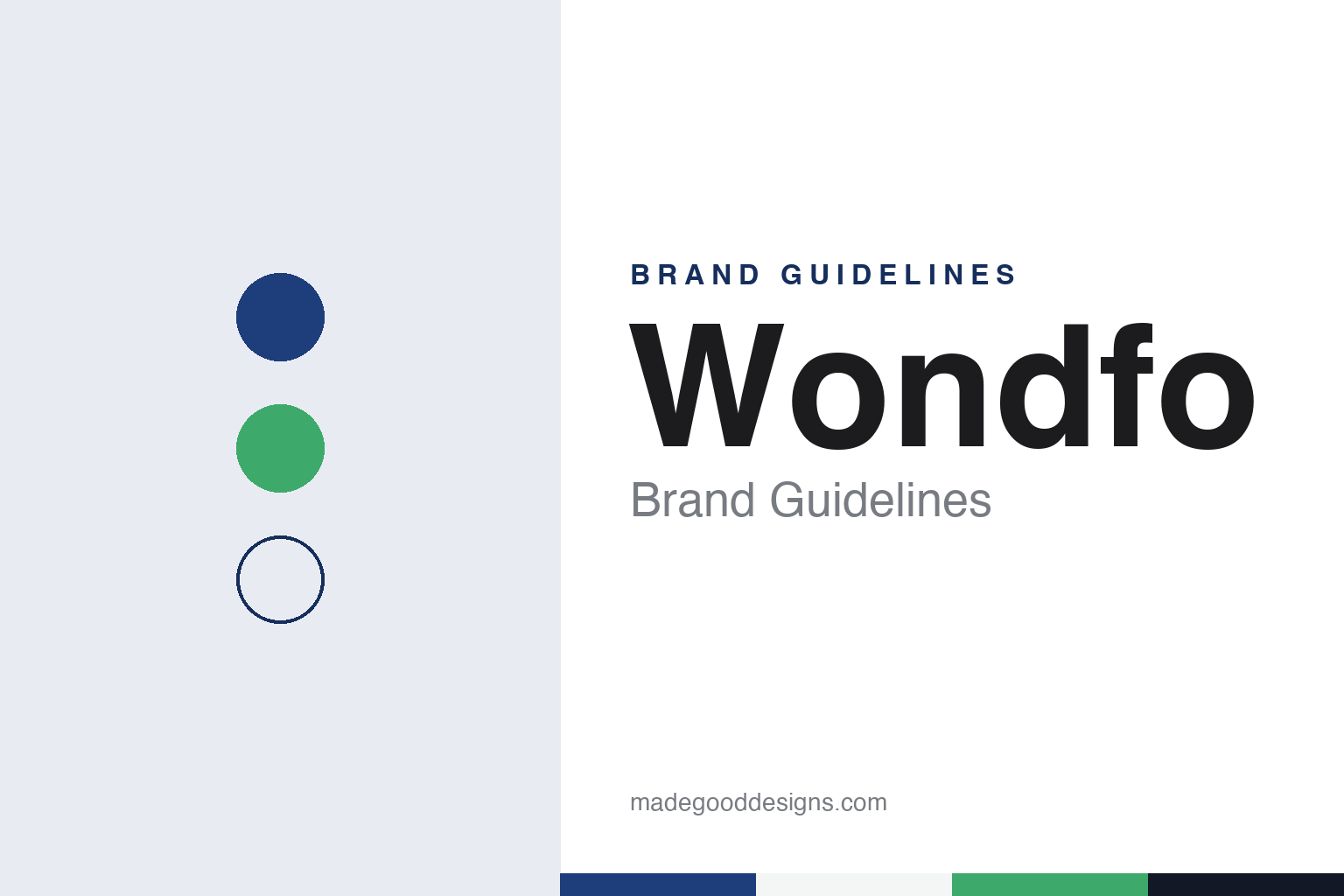
Two constants: a deep blue, fresh green and soft white palette and a rounded geometric sans register. Abstract homage — not a Wondfo product or mark; no test, logo or package is reproduced.
Guangzhou, 1992
Two university scientists and a test kit.
Wondfo — in full, Guangzhou Wondfo Biotech, or 万孚生物 in Chinese — was founded in Guangzhou in 1992. Chinese Wikipedia, citing a 2019 history of Guangzhou companies from Guangzhou Publishing House, names its founders as Li Wenmei, then working at the food and light industry school of the South China University of Technology, and Wang Jihua, who was teaching at Jinan University.
The company’s own timeline sets out the early years. Its first products, a western-blotting kit and a gold immunofiltration antibody test, appeared in 1996; it was accredited as a High-Tech Enterprise in China in 2001; and in 2003, it says, it developed a SARS antigen test kit. An immunofluorescence platform followed in 2007, and a United States subsidiary in 2009. The company gives its mission as “Racing for Life” and lists a State Science and Technology Progress Award, one of China’s national science prizes, in 2017.
Its tests reached the American market before that subsidiary did. The US Food and Drug Administration’s 510(k) database records Wondfo’s first clearance, for a one-step urine pregnancy test, in April 2005, followed in November 2005 by a multiple drugs-of-abuse assay. By 2026 the database listed more than forty Wondfo clearances, many of them for urine drug-test cups and panels — from the CR3 Keyless Split Sample Cup in 2014 and 2015 to the T-Cup in 2018 and the T-Dip panel in 2020 — along with a rapid strep A test in 2014 and a digital pregnancy test in 2018.
Colour
Rapid tests on nine platforms.
Wondfo works in point-of-care testing — in vitro diagnostic tests designed to be run close to the patient rather than in a central laboratory. A March 2020 company profile published by the Guangzhou Development District government described it as a developer, maker and marketer of such products, with more than 100 of them covering infectious diseases, pregnancy, cardiovascular diseases, drugs, tumours and metabolic diseases, used in hospitals, pharmacies and disease-control centres. The same profile said it had a branch and an R&D centre in the United States, marketing centres in Germany, Kenya and Indonesia, and partnerships with retailers including Boots and Watsons. It described an industrial base of 33,000 square metres for rapid-test products, including a clean production workshop of 5,000 square metres, and a daily capacity of 1.5 million rapid-test reagents.
The company now describes nine technology platforms. The first is immune colloidal gold, the lateral-flow format behind many rapid tests; the others are immunofluorescence, electrochemistry, dry biochemistry, chemiluminescence, molecular diagnostics, instruments, pathology and biological raw materials. Alongside the single-use tests the company lists analysers, among them an optical blood-coagulation analyser, the BGA-102 blood gas analyser and the Truth-H80E HPLC haemoglobin analyser for HbA1c, and a PA-3600 staining system for pathology laboratories.
Its timeline records a test kit for the H7N9 avian influenza virus in 2013, World Health Organization prequalification for an HIV rapid test in 2018, the launch of chemiluminescence products the same year, and a veterinary-diagnostics subsidiary, Wondko. In 2020 it launched PCR, antigen and antibody tests for COVID-19. Chinese Wikipedia says that when China first allowed antigen test kits onto the market in March 2022, Wondfo was among the first companies approved.
In the United States its tests carry several names. FDA records show clearances for SAFElife fentanyl urine tests in July 2024 and a Wondfo COVID-19 antigen test in September 2024; under its American company, Wondfo USA, WELLlife home tests for COVID-19 and influenza were cleared in January 2025, and a WELLlife influenza test in August 2025. The company’s website also promotes a Finecare vitamin D test.
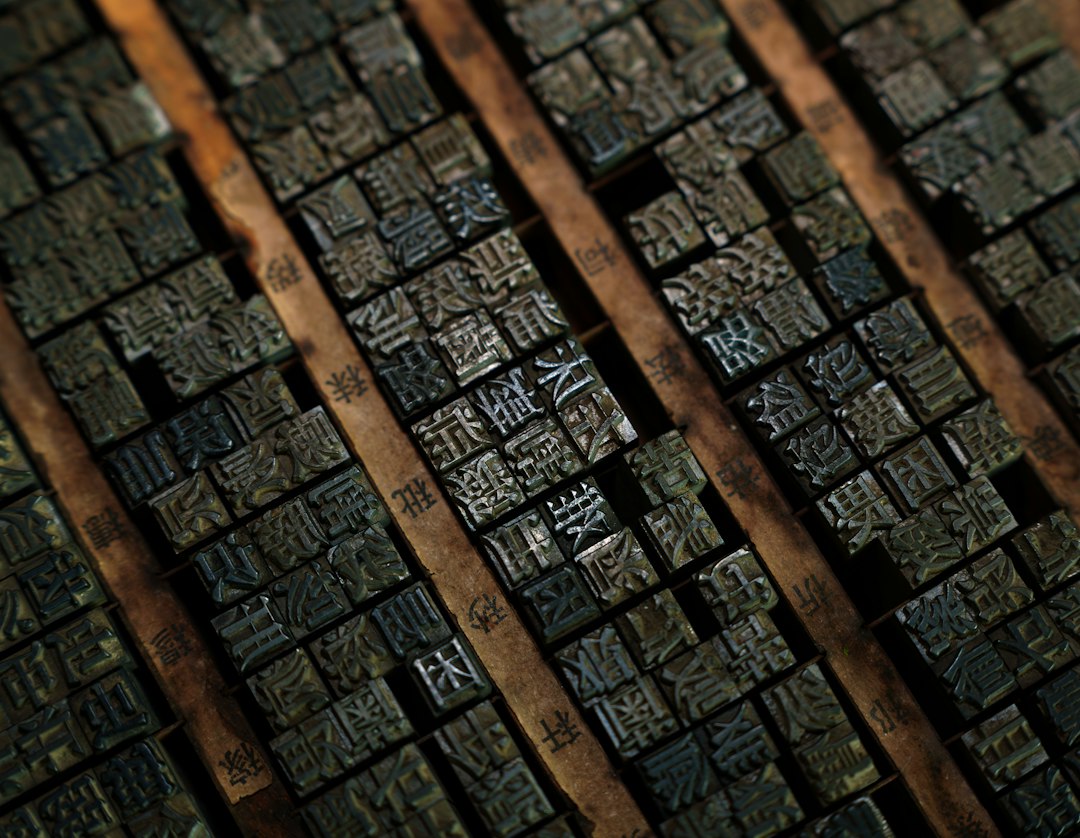
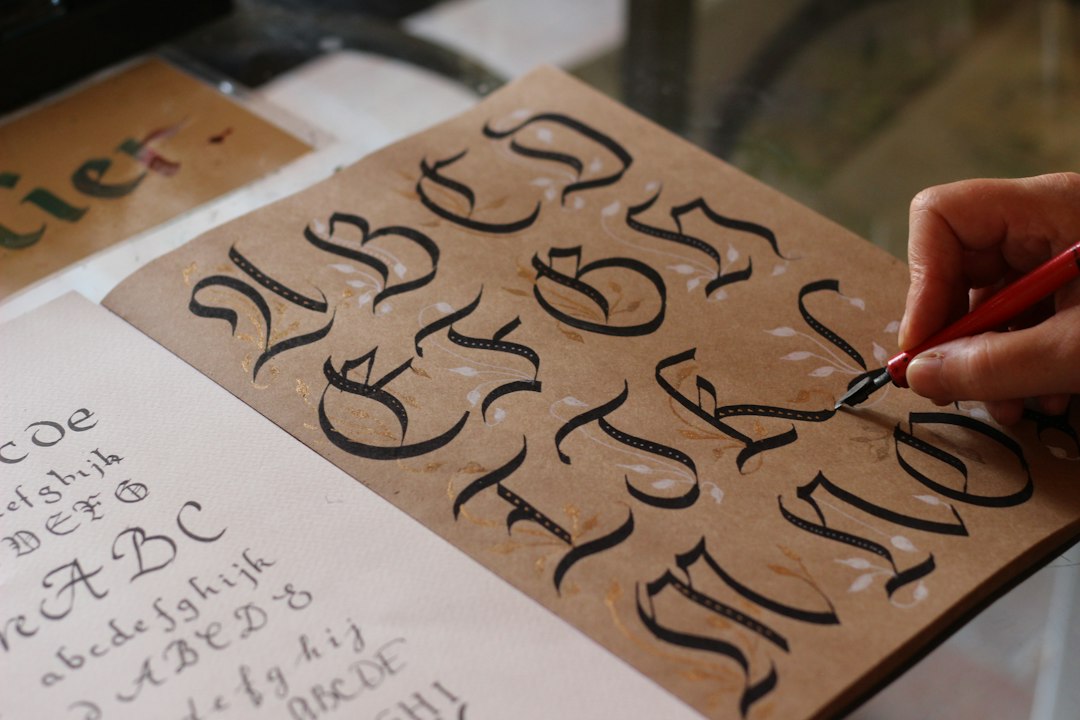
Typography
Diagnostics and documentation.
In vitro diagnostics is a business most people meet only at second hand, through a blood sample sent away or a result read back by a doctor. The companies behind those results make analysers, the reagents that run on them and the software that ties them together, and they sell mainly to hospital laboratories, independent labs and clinics rather than to the public.
That shapes how they look. The typical product photograph shows a white or pale grey bench analyser in a clean laboratory, sometimes linked to others in a line of automation, with sample tubes standing in racks and a touchscreen at the front. Smaller formats appear too: single-use cartridges for point-of-care machines, test strips and cassettes for rapid tests, pipettes and reagent packs. Blue and white palettes are common across the sector, along with plain sans serif type and diagrams of the laboratory workflow, and some makers have had their instruments judged on design: Sysmex’s clinical laboratory system was among the Good Design Gold Award winners in Japan in 2011.
The trade meets at a few large events. MEDICA in Düsseldorf gathers medical technology makers, and the annual meeting of ADLM, the Association for Diagnostics & Laboratory Medicine, formerly the American Association for Clinical Chemistry, brings laboratory companies together in the United States. Some of these groups grew by acquisition, so a single corporate name often sits above product names that began with other companies.
This guide sets out what can be checked about each brand: who founded it, who owns it, where its products are made and what it says about its own identity, and it marks clearly what rests only on the company’s own word. No diagnostic or clinical claims are made for any product.
Aa
A rounded geometric sans for a maker of rapid tests. (Specimen set in Manrope, a sans STAND-IN; NOT the Wondfo logo.)
Wondfo
A Shenzhen listing, 2015.
Wondfo listed on the Shenzhen Stock Exchange’s growth board, ChiNext, in June 2015, the Guangzhou Development District profile says; the company describes itself as the first point-of-care testing company in China to go public. It remains headquartered at Guangzhou Science City, in the Huangpu district, where the 2020 profile also placed the company.
The company says it has more than 3,000 employees, over 20 subsidiaries worldwide and R&D centres in San Diego and Guangzhou, and that it has invested in factories in Asia, South America, Africa and the Commonwealth of Independent States; those are its own figures. In its April 2026 report on its 2025 results, it said it had received Chinese regulatory approval for the WonNova 1600 automated nucleic-acid extraction and real-time PCR system and for a microsatellite-instability detection kit, and that it had made AI and digital tools one of its strategic priorities, taking minority stakes in three technology companies, including the digital-pathology firm CellsVision. It also said its molecular-diagnostics products had gained 33 registrations outside China, in more than 20 countries, and that the first WonNova 1600 systems had been installed in China’s disease-control network.
For a design guide, Wondfo shows how a rapid-test maker can run one company name alongside separate product names for different markets. Compare Abbott, a much older maker of rapid and laboratory tests, and Snibe, another Chinese diagnostics company. For this guide we use a deep blue, a fresh green and a soft white with a sans, an unofficial interpretation; no product or logo is reproduced.
Explore & save
Keep Wondfo’s identity on hand — save it to a board in the Made Good inspiration library.
Wondfo identity set
Pin the Wondfo deep blue, fresh green and soft white palette and the rounded geometric sans register to your own board.