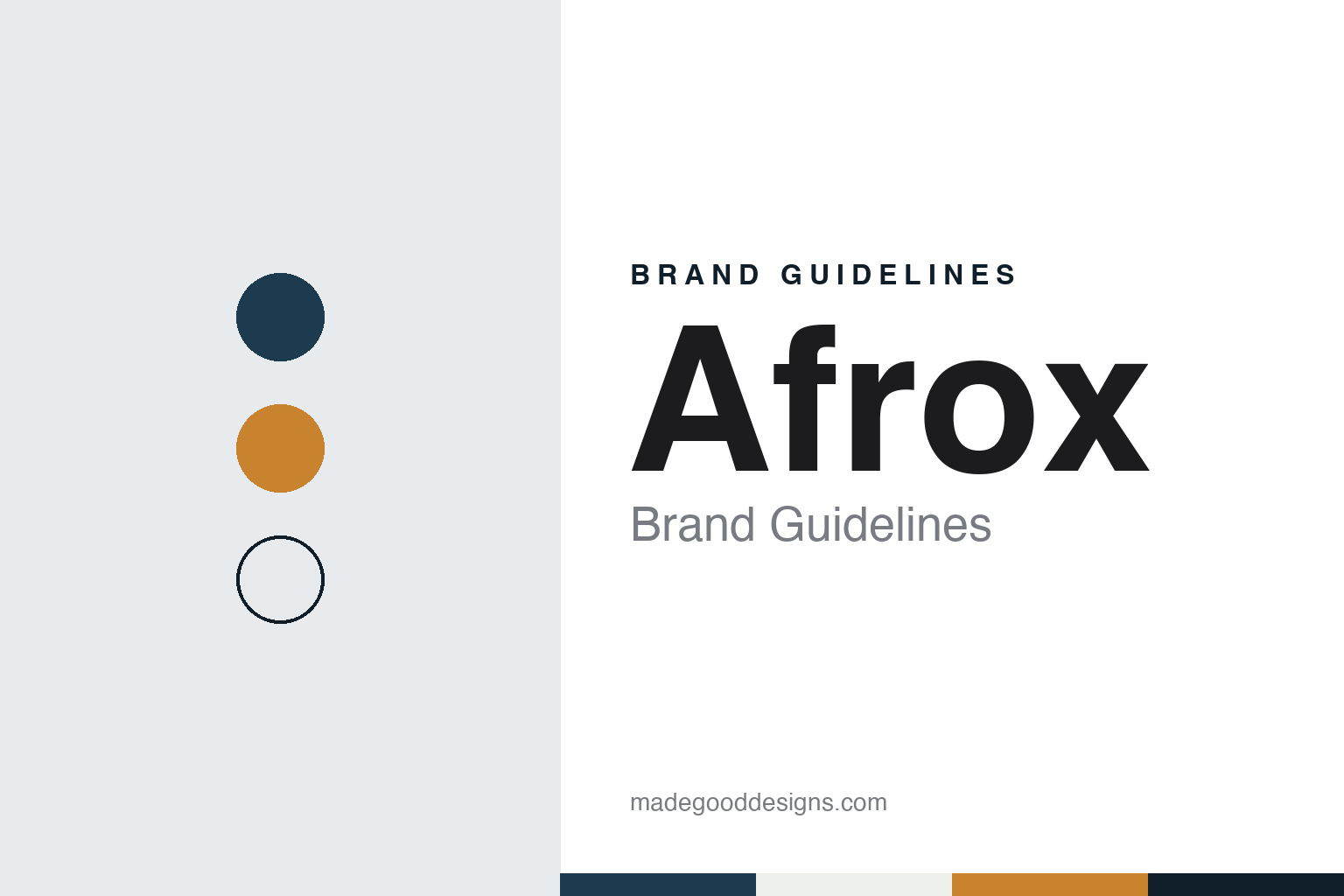
Afrox Brand Guidelines
The South African gases and welding company that dates itself to 1927.
Aa
Two constants: a slate, amber and chalk palette and an industrial grotesque register. Abstract homage — not an Afrox product or mark; no cylinder, logo or label is reproduced.
African Oxygen
A gases and welding company that dates itself to 1927.
Afrox is the short name of African Oxygen, a South African supplier of industrial and medical gases and of welding products. On its own website the company, now trading as African Oxygen (Pty) Limited, says simply that “Afrox was founded in 1927”, and that it has grown by meeting customers’ needs and developing solutions for their applications. It calls itself the market leader in gases and welding products in sub-Saharan Africa; that is the company’s own description.
Its early years are tied up with the British gases industry. The British Oxygen Company, which English Wikipedia traces to Brin’s Oxygen Company, formed in 1886 by the French brothers Arthur and Léon Brin and renamed in 1906, is part of that story. A history of BOC in the International Directory of Company Histories (1999) says that around 1930 BOC merged with Allen-Liversidge, a South African company with which it had worked through the 1920s on developing the acetylene welding process. Oxygen and acetylene for cutting and welding metal were the core of the business that the name African Oxygen describes.
For most of its modern life Afrox was a listed company. Business Report wrote in December 2020 that Afrox had been listed on the JSE since 1963; it was also listed on the Namibian Stock Exchange. By 2020, Business Report wrote, the Linde group held a majority of its shares.
Colour
Gas, welding and a hospital arm that went its own way.
Afrox’s range today is built around cylinders, bulk gas and the welding bench. Its online shop lists industrial gases such as oxygen, acetylene, argon and nitrogen; shielding-gas mixtures sold as Suremix; a portable range called Partigas; Agrigas for farm use; food-preservation gases and refrigerants; and specialty and laser gases. Beside the gas pages sit welding consumables — electrodes such as Vitemax and Transarc, filler wires and hardfacing wire — together with arc and gas welding equipment and protective gear.
One consumer-facing name in the range is Handigas, Afrox’s liquefied petroleum gas, sold in cylinders for home and leisure use. The company runs a Handigas availability checker on its website so buyers can find a stockist.
Medical gases are a separate line. On a page titled “About Afrox Healthcare,” the company describes itself as a partner for pharmaceutical and medical gas products, services and patient-care programmes for hospitals and clinicians. That use of the name should not be confused with the hospital business that once carried it. In November 2003, English Wikipedia’s history of BOC says, BOC announced that it would complete the sale of Afrox Healthcare, a hospital and managed healthcare group in South Africa, to a consortium led by Black Economic Empowerment investors. English Wikipedia’s article on that group, now Life Healthcare Group, says it was formerly Afrox Healthcare and dates the sale to Business Venture Investments to 2005; the sources give 2003 for the announcement and 2005 for the sale.
Afrox’s reach goes beyond South Africa. The company says it operates in South Africa and in nine other African countries, and manages operations in five more on behalf of Linde; its website links to country pages for Botswana, Namibia, Zambia and Malawi.
Typography
Cylinders, tanks and the plant at night.
Industrial gas companies sell something nobody sees. Oxygen, nitrogen, argon, carbon dioxide and hydrogen are colourless, so the identity of a gas supplier has to live on the things that hold and move the product: the cylinder, the storage tank, the delivery truck and the plant where air is separated into its parts.
The cylinder is the most familiar object in the category. Rows of steel and aluminium bottles, their shoulders painted in colours that identify the contents, appear in almost every supplier’s photography, often chained in racks at a welding shop or a filling plant. Beside them stand the larger forms of the trade: white or pale-grey bulk tanks outside factories and hospitals, and long tanker trucks that carry liquefied gases from plant to customer, usually wearing the supplier’s name and colours along the side.
The plants themselves have become an image of their own. An air-separation unit is a tall column, often wrapped in cladding and pipework, that cools air until its components can be drawn off one by one. Photographed at night, lit against a dark sky, these columns give the sector its most dramatic pictures, and many companies use them in annual reports and on their home pages.
The human scenes are fewer and more settled. A welder behind a mask in a shower of sparks stands for the industrial side; a hospital corridor or a patient at home with an oxygen concentrator stands for the medical side. Between the hardware and those two scenes, most of the visual language of the category is set. The brands in this guide work within that shared vocabulary, and what separates them is largely the name on the truck and the colour of the paint.
Aa
A sturdy industrial grotesque for a gases and welding company. (Specimen set in Archivo, a sans STAND-IN; NOT the Afrox logo.)
Afrox
From the JSE to a Linde subsidiary.
Afrox’s ownership followed its parent. English Wikipedia says BOC has been a subsidiary of Linde since 2006, and Linde’s own article lists Afrox among the brand names it uses for industrial gases, alongside BOC, AGA and others. Afrox’s website today names Linde as its parent company and uses Linde’s mission line, “making our world more productive.”
The last step came in 2020. On 20 October 2020 CFO South Africa reported that the Linde group intended to buy the Afrox shares it did not already own and then to delist the company from the JSE and the Namibian Stock Exchange. Linde’s reasons, as reported, were that Afrox suited an unlisted setting, that its low share liquidity put off investors and that a listing gave shareholders little benefit; Linde also wanted closer integration between Afrox and its own operations. Shareholders holding about 63.5 percent of the shares supported the plan, and the Afrox leadership said the business would carry on as usual whatever the outcome.
On 30 December 2020 Business Report wrote that all conditions of the scheme had been met. Linde, which already held a majority stake of 50.47 percent, would apply to delist the shares on 6 January 2021; trading was to be suspended on 13 January, and the listing was expected to end on 19 January 2021, closing a presence on the exchange that dated from 1963. Since then Afrox has been a private company inside Linde, still trading under its own name.
For a design guide, Afrox shows how a regional name can survive inside a global group: the parent changed from BOC to Linde, and the shares left the exchange, but the African Oxygen name, the Handigas cylinder and the welding counter stayed. Compare BOC, the British group Afrox grew up beside, and Linde, its parent today. For this guide we use a deep slate, a welding amber and a chalk white with a sans, an unofficial interpretation; no product or logo is reproduced.
Explore & save
Keep Afrox’s identity on hand — save it to a board in the Made Good inspiration library.
Afrox identity set
Pin the Afrox slate, amber and chalk palette and the industrial grotesque register to your own board.