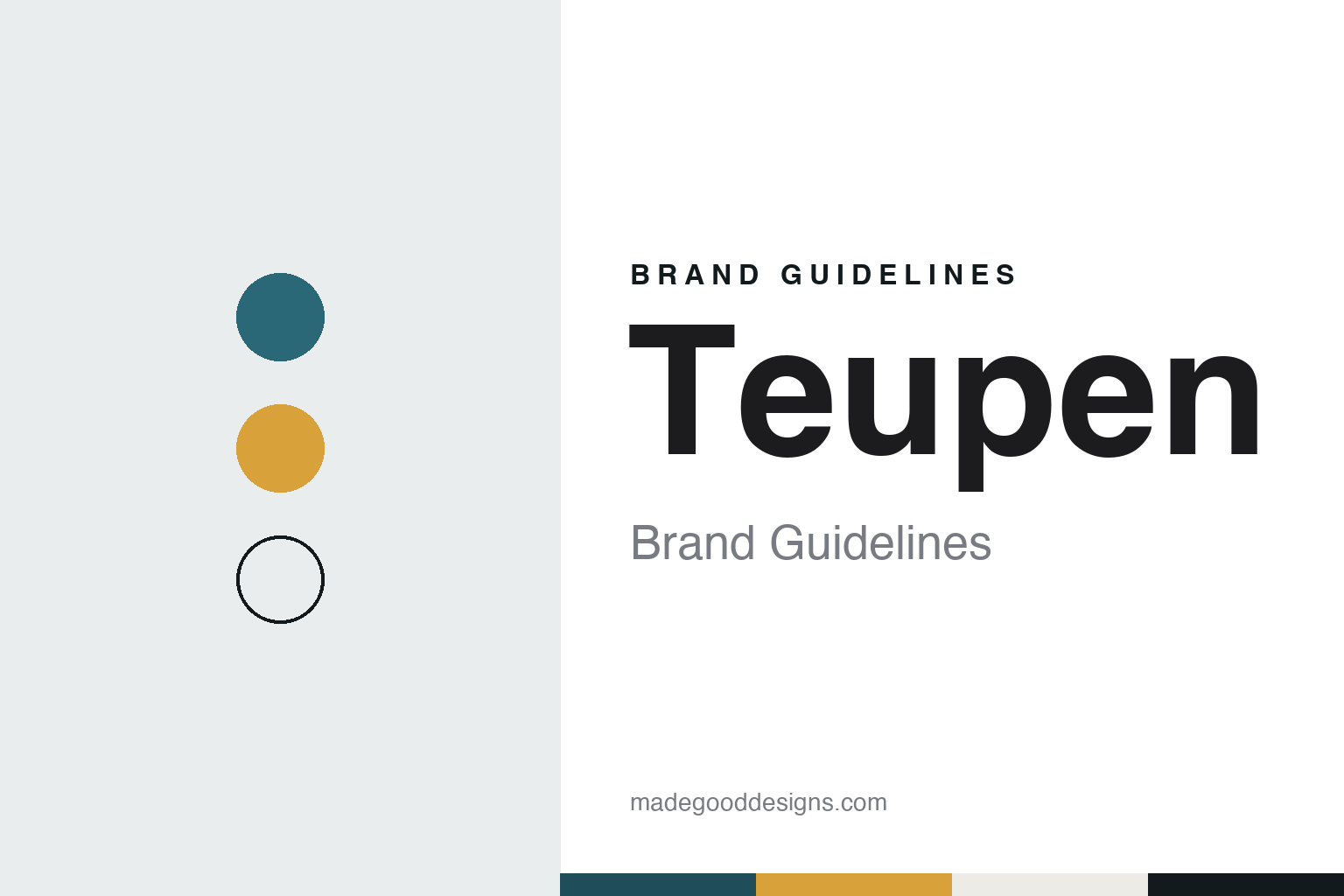
Teupen Brand Guidelines
From furniture hoists in Gronau to tracked spider lifts.
Aa
Two constants: a petrol and amber palette and a grotesque sans register. Abstract homage — not a Teupen product or mark; no machine, logo or decal is reproduced.
Furniture hoists
A Westphalian workshop that found its niche on tracks.
Teupen began in 1977 in Gronau, in north-west Germany. According to a company history published by the trade magazine Vertikal in April 2024, it was founded by Bernd Teupen to make furniture hoists. A trailer-mounted lift followed the next year, and in 1987 the company added its first tracked spider lift, the type of compact, crawler-mounted platform that would define it. Small truck-mounted lifts, mainly for the home market, came later.
By early 2008, Vertikal was describing Teupen as a company that had moved from standard work platforms to crawler-mounted spider lifts for indoor and outdoor use, with most of its sales abroad. The 2016 Leo generation shows what that means in practice: according to Vertikal, the smaller models sit on a chassis 980 millimetres wide, the larger ones on a 1.58-metre chassis under two metres high, and the Leo23T can level itself on ground up to 1.2 metres out of level.
Gronau has remained the base. In August 2025 a German rental company that had taken delivery of two Leo models told Vertikal it had first inspected the machine at the plant in Gronau before a test drive at the trade fair in Munich, adding that the controls of the two machines were almost identical, and the law firm Orrick, announcing the 2024 sale, described Teupen as based in Gronau with partners and subsidiaries abroad.
Colour
The Leo range and a move into big trucks.
The Leo name runs through the catalogue. In May 2016 Vertikal reported a new generation of five Leo spider lifts, the Leo19T, 23T, 27T, 31T and 35T, built on a modular concept with high-strength steel, modern bending and welding processes, and cylinders, cables and hoses run inside the boom; the three larger models replaced the earlier Leo25Tplus, Leo30T and Leo36T. The same report listed a standard platform capacity of 250 kilograms across the range, 450 degrees of slew, 180 degrees of platform rotation, remote control of all functions, a “home” function that returns the machine to its transport position and a memory function that stores a point in the working range for later. The number in each name tracks the working height in metres, as in the 30-metre Leo 30Tplus and the 39-metre Leo 39GTplus that Vertikal reported in a 2025 delivery story.
In 2025 Teupen stepped outside the spider-lift niche. At bauma in Munich that April it launched the TE720, a truck-mounted platform with a working height of 71.6 metres, International Rental News reported, as the first of a wider TE Series of perhaps four models. The magazine said Teupen would build it at its Krefeld facility and offer it on Scania, MAN and Volvo chassis, with the choice of Teupen’s own control system or several industry-standard controls. The magazine listed work on power lines, telecom towers and industrial buildings among its intended uses, for both rental companies and end users.
Teupen’s products have also gone out under another name. Before the 2024 takeover, Vertikal reported, Teupen had for a year or two been supplying Altec with an insulated spider lift similar to its Leo 56AIC, after the American company placed an initial order of around 100 units.
Typography
How the category presents itself.
Aerial work platform makers present themselves through the machines first. Scissor lifts, articulated booms, telescopic booms, truck-mounted platforms and tracked spider lifts are usually painted in a single strong colour, such as an orange, a blue, a red or a yellow, with the maker’s name and the model code set large on the chassis or the boom. Seen across a site, the colour does much of the work a logo would do elsewhere.
Much of the industry sells to rental companies rather than to the people who use the machines, and its pictures often show that. Brochures and websites favour long rows of identical scissors and folded booms in a rental yard, machines lined up on a delivery truck, and close views of control boxes, battery packs and parts that a fleet workshop would care about. Product names tend to be strings of letters and numbers that encode working height, width or drive type.
The other stock image is the machine at work: a platform raised against a steel frame, a warehouse ceiling or a building facade, with operators in hard hats and harnesses at height. Electric and hybrid drive, lithium batteries and low-noise indoor use have become common themes in recent launches, described in the makers’ own words.
Trade fairs and awards fill the rest of the calendar. New models are often unveiled at The ARA Show in the United States, at bauma in Munich and at APEX, the access-equipment show in the Netherlands, while the industry press runs its own prizes, such as the International Awards for Powered Access. This guide sets out what can be checked about each brand — who founded it, who owns it and where it says its machines are made — and marks clearly what rests on the company’s own word.
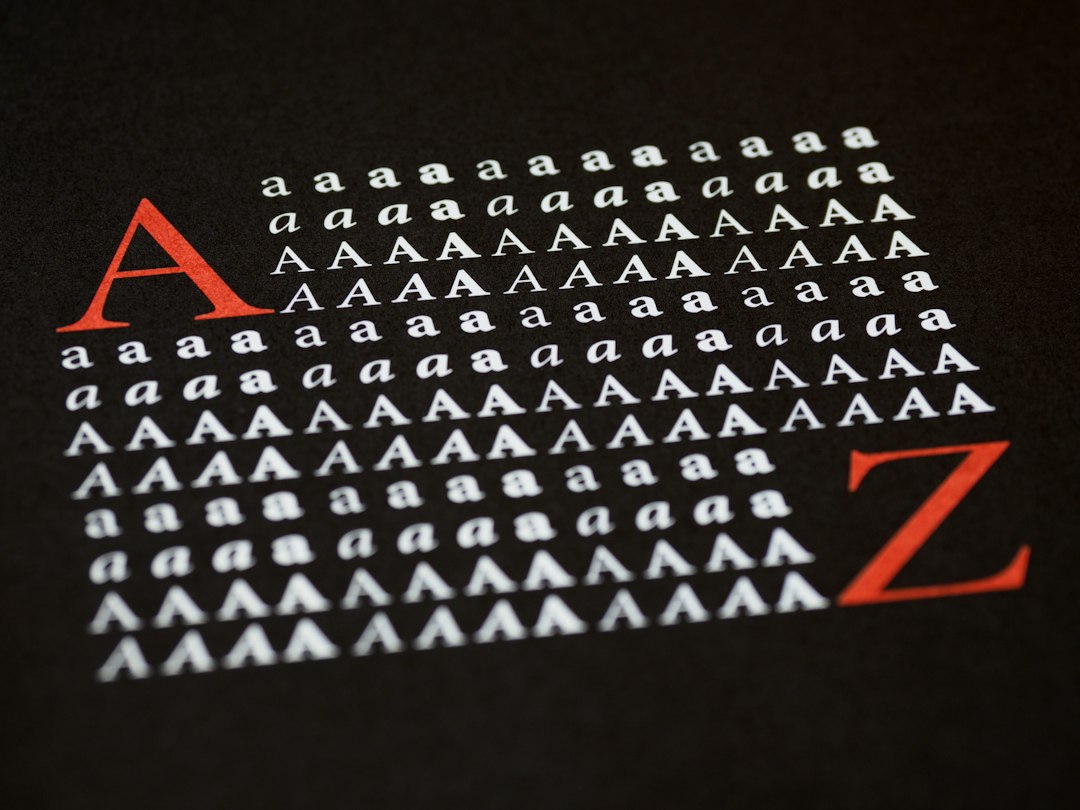
Aa
A grotesque sans, the register of a German engineering catalogue. (Specimen set in Archivo, a sans STAND-IN; NOT the Teupen logo.)
Owners
Managers, investors and an American group.
Ownership has changed several times. Vertikal’s 2024 history says the business was bought in the 1990s by its managing directors, Alfons Thihatmer and Andreas Grochowiak. In February 2008, Vertikal reported at the time, the Hanover private-equity firm Nord Holding bought a majority stake, with the two managers keeping a significant share and continuing to run the company. Nord Holding said at the time that it saw particular opportunities for Teupen in the United States, India and Brazil, and Vertikal described the investor as working on an “evergreen” basis, with no fixed time limit on its holdings. According to Vertikal, another Hanover investor, Hannover Finanz, took a majority stake in 2012, and Martin Borutta, recruited to head the business in 2015, acquired the majority holding in 2017. The Chinese platform maker Dingli held a 24 percent stake from 2020, Vertikal reported, which Borutta bought back before the next sale.
That sale came in April 2024, when Altec, the American maker of vehicle-mounted and utility equipment, acquired Teupen. Vertikal reported on 9 April that Altec had bought the company from Borutta, who would stay on to run it, including its US operations; Orrick, which advised the seller, described it as a portfolio company of Hannover Finanz. Teupen kept its name: Altec’s managing director Paul Crane said the company was excited to offer “the Teupen product” to customers across several of its core industries. Altec said the purchase widened its footprint worldwide and complemented its products for the utility, telecommunications, tree care and lights and signs markets.
For a design guide, Teupen shows how a narrow specialism, the tracked spider lift, can carry a brand through several changes of owner. Compare Haulotte, another European platform maker, and Dingli, a former shareholder. For this guide we use a petrol blue and an amber with a sans, an unofficial interpretation; no product or logo is reproduced.
Explore & save
Keep Teupen’s identity on hand — save it to a board in the Made Good inspiration library.
Teupen identity set
Pin the Teupen petrol and amber palette and the grotesque sans register to your own board.