Haitian Brand Guidelines
The Ningbo commune works that named its machines after planets.
Aa
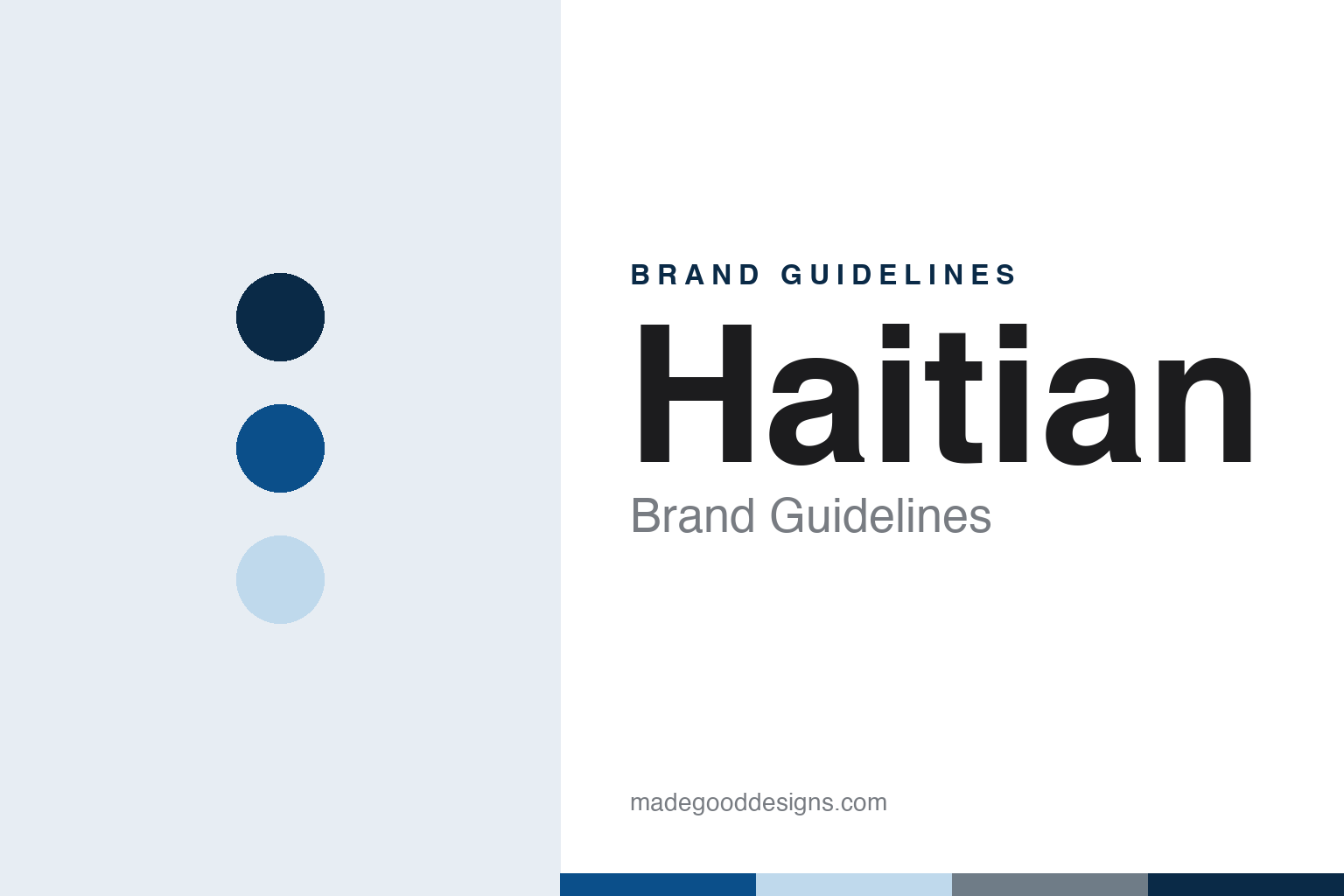
Two constants: a Haitian sea blue and sky palette and an Industrial sans register. Abstract homage — not a Haitian product or mark; no machine, logo or nameplate is reproduced.
Jiangnan
From a commune repair works to a Hong Kong listing.
Haitian dates itself to 1966. The milestones on Haitian International’s website say the group began that year as the Jiangnan Agricultural Machinery Plant, produced its first injection moulding machine in 1973, and founded Ningbo Haitian Machinery Manufacturing in 1989, the year it exported its first machine. The Chinese newspaper National Business Daily reported in December 2016 that Zhang Jingzhang ran the Jiangnan commune’s farm tool repair works in Zhenhai county, which it calls the predecessor of Ningbo Haitian, from November 1970 to June 1994.
Accounts of the founding use different dates. A 2016 company release calls Zhang Jingzhang “our company founder.” Haitian International’s 2006 annual report says he managed the Zhenhai Plastic Injection Moulding Machinery Factory, “the predecessor” of Ningbo Haitian, from 1970 to 1994, and “founded the Group” in July 1994. A profile by Huashang Taolue, carried by The Paper in April 2022, says that in 1994 Haitian was restructured from a township enterprise into a private shareholding company with Zhang as chairman. The same profile describes the works he took on in 1970 as a small hardware shop in a run-down nunnery, with four old instrument lathes.
The name has two stories. The 2016 release says the brand was registered in 1984 and reads its parts as “flowing thoughts” (Hai; water) and “spiritual freedom” (Tian; heaven); the website’s milestones and The Paper both give 1985. The Paper ties the name to the Xiaojia River by Zhang’s home village, where sea and sky seem to meet. The name is also carried by a different company, Foshan Haitian Flavouring & Food, the Guangdong sauce maker whose website is haday.com, according to English Wikipedia.
In 2006 the moulding business was restructured under Haitian International Holdings, which listed in Hong Kong that year; National Business Daily dates Zhang’s post as its executive director and chairman to December 2006. The wider Haitian Group is larger than that one company. The Paper listed five businesses in 2022: plastics machinery, machine tools, drives, metal forming and smart manufacturing, with a second listed company, Haitian Precision, on China’s A-share market. Haitian International’s website today quotes Zhang Bin as its chief executive.
Colour
Mars, Jupiter, Venus.
The brand’s most visible idea is a naming system. Haitian’s 2016 release says the servo-hydraulic Mars drive technology was developed in 2006, and that in 2007 the portfolio was split into a “Planet Series” for different applications. The Mars Series launched that year. By the company’s count more than 150,000 had been sold by mid-2016, and its website records sales of the series passing 200,000 in 2017.
The planets remain the structure of the catalogue. The website lists the Mars Series of toggle machines and the Jupiter Series of two-platen machines under servo-hydraulics, and the all-electric Venus Series and the Zeres Series, which the 2016 release dates to 2012 and describes as electric with integrated servo-hydraulics. Together, the company says, its machines run from 400 to 88,000 kN of clamping force. Its markets, as the website groups them, include automotive, consumer goods, packaging, home appliances, logistics and medical parts.
Size has been a recurring theme in the company’s story. The 2016 release lists machines of 25,000 kN in 1997, 40,000 kN in 2004 and 66,000 kN in 2014. The website’s milestones give 2013 for the delivery of the JU66000II two-platen machine, and record the 88,000 kN JU88000 being delivered and assembled in France in 2024. Two-platen machines first appear in the milestones in 2000, as a trial production.
Zhafir is the second brand. The milestones record the acquisition of Zhafir Plastics Machinery GmbH in 2007 and a Zhafir production base in Ningbo in 2008; the 2016 release adds a Zhafir research centre and production in Germany and China in 2007, a German assembly plant in 2009 and the Chunxiao plant in Ningbo. Zhafir’s own website presents it as the premium electric line, “part of Haitian International.”
Technology is described in the company’s own words as “Technology to the Point,” a phrase the 2016 release calls the core of its strategy. Haitian International’s website also says that, within the group, it makes nearly all the key components of its drive systems, including servo-hydraulic and electric motors, inverters and linear guides, and that its control systems are developed in-house. Those are the company’s statements. The newest step in its timeline is the fifth generation of machines from Zhafir and Haitian, launched in 2023 and tied on the Zhafir site to a set of smart features called HT·XTEND.
Typography
Machines as brand.
Injection moulding machine makers sell equipment that most people never see, so their visual language is built for a trade audience. The machine itself is usually the hero: a long horizontal body photographed side-on in factory light, often in a paint scheme the maker has kept for years. A colour on the guarding can do the work of a logo across a crowded production hall.
The second recurring picture is the open machine. Platens stand apart with a mould half showing, and a robot arm reaches in to lift a part from the tool. Close-ups of screws and barrels show the plasticising end of the process, where granulate becomes melt, and walls of moulded samples turn an abstract capability into objects a visitor can pick up: closures, housings, gears and containers. Where makers serve cleanroom production, the same machines appear inside enclosed, brightly lit cells.
Trade fairs give makers a place to show a machine running: K in Düsseldorf, Fakuma in Friedrichshafen, NPE in the United States and Chinaplas in Asia. Live moulding demonstrations make parts in front of visitors.
Behind the machines sits a quieter layer of typography and naming. Series names, short codes and clamping forces in kilonewtons carry much of the information, and controllers have become design objects in their own right, with screens and panels of their own. Many makers remain family-held or sit within larger groups, so names and marks can outlast changes of ownership, and the history is often part of the pitch.
Aa
An industrial sans for a planet-named catalogue. (Specimen set in Archivo, a sans STAND-IN; NOT the Haitian logo.)
Haitian
Three brands and a spreading factory map.
Haitian’s partnerships shaped the brand map. In 1998 it formed Demag Haitian Machinery, a joint venture with Demag, according to its milestones. Demag Plastics Group was sold to Sumitomo Heavy Industries in 2008, the Polish trade portal Plastech reported that March, and that line now trades as Sumitomo (SHI) Demag.
The third brand is Japanese. In March 2023 Haitian acquired the injection moulding maker now called Niigata Machine, a partner it had supplied with frames and platens since 2017, Plastics Machinery Manufacturing reported in January 2024; Niigata’s machine tool division was separated as part of the deal. The same report placed Haitian at Xiaogang. The website’s milestones record a new headquarters in Ningbo in 2013, where the 2016 release gives 2014, and a South China headquarters in 2025.
Where the machines are made has widened in stages. The website’s milestones list plants in Guangzhou (2000), Wuxi (2007), Vietnam (2011), Turkey and India (2018) and Mexico (2021), and Ningbo plants on Haitian Road and Tongtu Road. CPRJ Adsale reported in 2026 that a factory in Niigata began operating in August 2025, that a base at Ruma, Serbia, began production in December 2025, and that a second Indian plant, in Chennai, started the same month. The company held an open day at Ruma in September 2026. For 2025 it says it sold around 56,800 machines, with about 42.9% of its products exported.
Its public language is consistent: “We create and extend Advantage” is the line on the website, and low investment, short delivery, low service costs and energy savings are its named promises. In 2016 it chose the anniversary slogan “New directions, courage, and care,” and its timeline records brand visibility at Times Square in New York that year.
For a design guide, Haitian shows how one group can organise a very wide catalogue with a single naming idea, then carry that idea across more than one brand. Compare Sumitomo (SHI) Demag, which carries on the Demag moulding line, and Nissei Plastic, another Asian moulding machine maker that has bought a brand abroad. For this guide we use a sea blue, a pale sky and a machine grey with a sans, an unofficial interpretation; no product or logo is reproduced.
Explore & save
Keep Haitian’s identity on hand — save it to a board in the Made Good inspiration library.
Haitian identity set
Pin the Haitian sea blue and sky palette and the Industrial sans register to your own board.