Holmatro Brand Guidelines
A 1967 Dutch shipbuilding supplier turned rescue-tool maker.
Aa
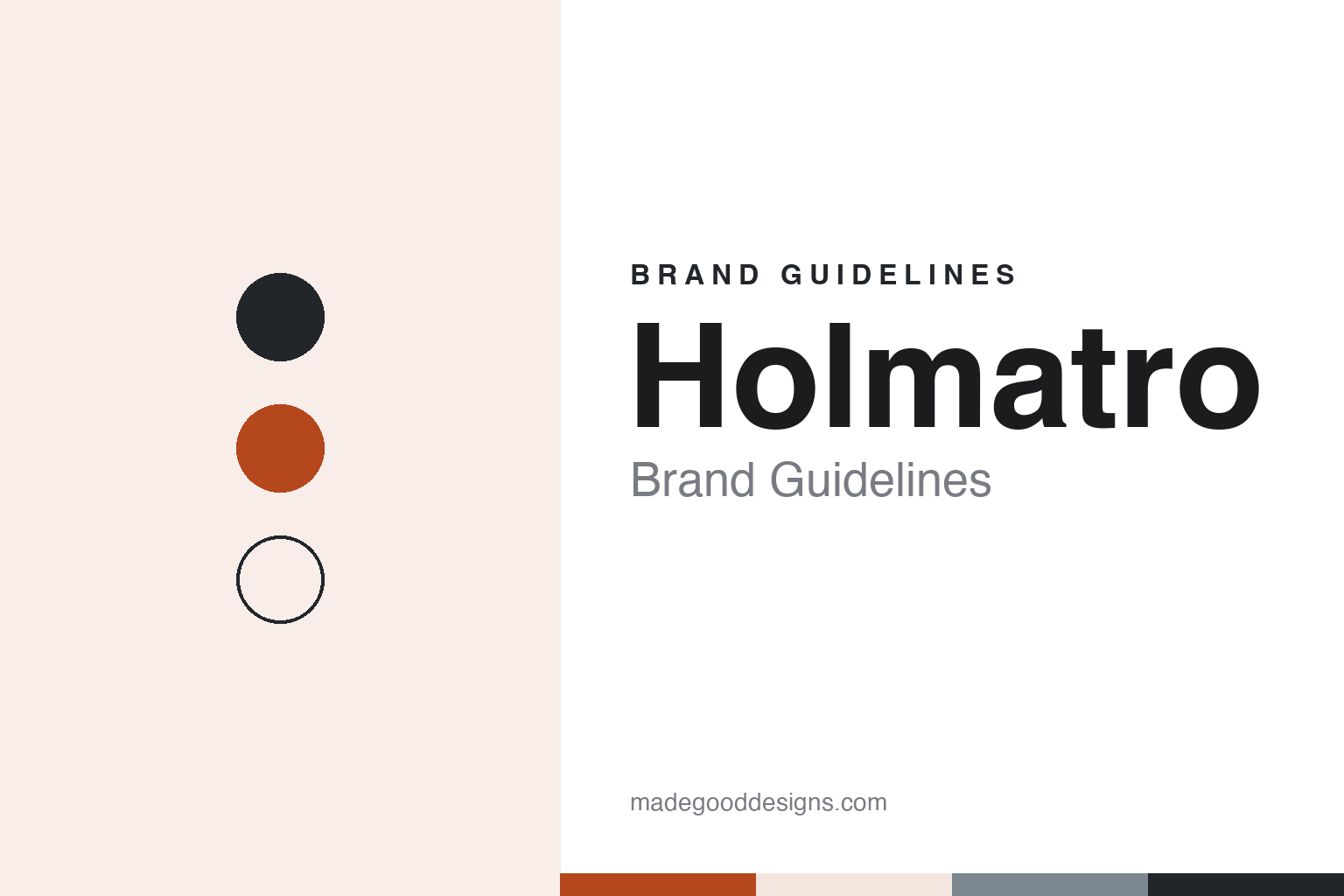
Two constants: a signal orange, graphite and steel palette and an Industrial sans register. Abstract homage — not a Holmatro product or mark; no tool, logo or nameplate is reproduced.
High pressure for shipyards
A hydraulics trader from 1967.
Holmatro began in the Netherlands in 1967. English Wikipedia describes it as a Dutch maker of hydraulic equipment for industrial and emergency-response work, founded that year to supply hydraulic equipment to the shipbuilding industry. The company’s own profile on the trade site Offshore Technology tells the same story in its words: it was established in 1967 “as a trader in high-pressure hydraulic equipment for the shipbuilding industry.”
The company is based at Raamsdonksveer, a town in the municipality of Geertruidenberg in North Brabant, where its profile gives its group address. From a trading start, it says, it now designs, develops, manufactures and supplies high-pressure hydraulic equipment for industry and for rescue services, and it describes its work as serving three fields: rescue, special tactics and industrial applications.
Wikipedia calls Holmatro privately owned and notes branches in the United States and China, together with a worldwide dealer network. The company’s profile names the same three bases — the Netherlands, the US and China — and says its production facilities are in the Netherlands and the United States, a statement we give as the company’s own.
The American branch has its own dated history. Holmatro USA began in 1984 as a one-man sales office, English Wikipedia says, citing The Baltimore Sun, and in 1988 it added a manufacturing and distribution facility at Glen Burnie, Maryland, near Baltimore/Washington International Airport.
Colour
Spreaders, cutters and rams.
Holmatro’s rescue tools belong to a family of equipment that fire services in the Netherlands call redgereedschap. Dutch Wikipedia describes the basic set: a hydraulic cutter, a spreader, a combination tool that does both, and a ram that pushes in a straight line, all driven by oil pumped at about 700 bar. Its short list of makers whose equipment is used in the Netherlands names Holmatro alongside WEBER RESCUE and Dynastart. German Wikipedia dates hydraulic rescue shears in fire-service use to the 1970s, noting that in 1974 the volunteer fire brigade at Reutte, in Austria, received the first such shears there; it adds that most European makers have designed devices built from 2011 to the requirements of the standards EN 13204 and NFPA 1936.
English Wikipedia says Holmatro’s hydraulically powered spreaders and cutters are used by fire and rescue services to free people from crashed vehicles. It also notes a point of naming that matters for any brand in this field: such tools are often called “jaws of life” in everyday speech, but Jaws of Life is a registered trademark of Hurst, the North Carolina maker.
The same article records how the company works with car makers’ information. Manufacturers share details of vehicle design and materials with rescue-tool makers, and Holmatro, Wikipedia says, provides fire departments with a book showing where airbags and seat-belt tensioners sit in vehicles. Its representatives give demonstrations to fire departments using wrecked cars supplied by insurers.
Industry is the other half of the business. In its Offshore Technology profile the company lists equipment for the offshore sector — pulling cylinders, multipurpose cylinders, industrial cutters and locknut cylinders, together with pumps — and says it manufactures its hydraulic tools and systems in-house, using automated production processes. We give those as the company’s claims.
Typography
Design and documentation.
Rescue and emergency medical equipment is bought by people who will use it under pressure, so the makers in this field tend to present themselves through the equipment at work rather than through lifestyle imagery. The typical brochure shows a stretcher being loaded into an ambulance, a crew lifting a patient down a narrow stair, or a basket stretcher being lowered on ropes, with the product carrying most of the colour in the frame.
That colour is often functional before it is decorative. Orange and yellow stretchers, spine boards and evacuation chairs are meant to be seen against grey streets, snow or dark water, and product photographs often make those working colours the focus of the frame, set against equipment in dark navy, graphite or black. The language is technical: load ratings, materials, fastening systems and named product lines rather than adjectives.
Training is the other stage where these brands are seen. CPR manikins laid out in rows in a training room, hydraulic cutters and spreaders opening a scrapped car at a vehicle extrication drill, and ambulances and fire trucks parked with their doors open for inspection all serve as the industry’s own advertising. The photographs are rarely staged far from that reality, because the buyers are paramedics, firefighters and fleet managers who know the work.
Trade fairs give the category its calendar. Interschutz in Hannover, RETTmobil in Fulda and EMS World Expo in the United States are where makers show new stretchers, rescue tools and vehicles side by side, and where a stand’s colours and signage have to read from across a crowded hall. For a designer, the lesson of the category is that a brand earns its look from the job its equipment does: clear colour, clear type and the product shown in use.
Aa
An industrial sans — a name set for workshops and fire stations. (Specimen set in Archivo, a sans STAND-IN; NOT the Holmatro logo.)
Holmatro
A name on the racetrack.
For many American viewers the Holmatro name was most visible in motor racing. From 1996 to 2018, English Wikipedia says, the company had a sponsorship arrangement with the Indianapolis Motor Speedway and IndyCar, and the series’ rescue crew was known as the Holmatro Safety Team, travelling to every IndyCar race with the company’s tools.
An IndyCar.com article of 24 December 2015 described the team’s members as the “Angels in Orange” and reported that they had demonstrated extrication techniques that month at the Performance Racing Industry trade show in Indianapolis, as part of a racetrack-safety programme run by the International Council of Motorsport Sciences. The same article reported that, after a crash at Indianapolis in May 2015, INDYCAR’s track-safety staff were working with Holmatro USA on better ways to cut the Zylon panels fitted to the cars, and it described Holmatro as the maker of hydraulic equipment used for rescue, industrial and special-tactics operations.
The arrangement changed in 2018. On 6 March 2018, NBC Sports reported that the Speedway had named American Medical Response as the new primary sponsor of the INDYCAR Safety Team, replacing Holmatro. Holmatro, which had recently signed a five-year extension with the Speedway and INDYCAR, would remain involved by supplying the team’s tools, the report said.
Beyond the racetrack, the record of the brand is mostly industrial: a supplier to shipyards that grew into a maker, with production in the Netherlands and in Maryland by the company’s and Wikipedia’s accounts.
For a design guide, Holmatro shows how a trade supplier can carry one name across shipyards, fire stations and pit lanes. Compare WEBER RESCUE, another European rescue-tool maker named alongside it in the Netherlands, and Hurst Jaws of Life, the holder of the Jaws of Life trademark. For this guide we use a signal orange, a graphite and a steel grey with a sans, an unofficial interpretation; no product or logo is reproduced.
Explore & save
Keep Holmatro’s identity on hand — save it to a board in the Made Good inspiration library.
Holmatro identity set
Pin the Holmatro signal orange, graphite and steel palette and the Industrial sans register to your own board.