Zoomlion Brand Guidelines
A Changsha research institute’s heirs, from concrete pumps to tower cranes.
Aa
Two constants: a grey, gravel and green palette and an industrial grotesque register. Abstract homage — not a Zoomlion product or mark; no crane, logo or livery is reproduced.
Changsha
A research institute’s heirs.
Zoomlion is a Changsha company. English Wikipedia says it was founded in 1992 as Changsha Hi-tech Development Area Zoomlion Construction Mechanical Industry Company, and that concrete pumps were among its first products. Chinese Wikipedia dates the founding to 28 September 1992 and traces the business back to the Changsha Construction Machinery Research Institute, set up in Beijing in 1956 under the First Ministry of Machinery Industry. The company’s own profile also gives 1992 as its founding year.
Early growth came through bringing older state bodies together. English Wikipedia lists the former Concrete Machinery Research Office and parts of the research institute among the entities merged into Zoomlion; Chinese Wikipedia describes a four-way merger in 2003 that joined the institute, Zoomlion and the Puyuan group, whose unit had produced cranes, according to English Wikipedia. Zoomlion’s hoisting machinery branch, first based in Changde, moved to Changsha in June 2006, English Wikipedia says.
The company listed on the Shenzhen Stock Exchange on 12 October 2000, according to English Wikipedia, and Chinese Wikipedia records a listing on the Hong Kong exchange on 24 December 2010. Zoomlion describes itself as the first company in its industry to be listed on both the A-share and H-share markets. Its headquarters is the Zoomlion Science Park in Changsha, and the company says it now runs 26 industrial parks in China and 11 research and manufacturing bases abroad.
Colour
CIFA, Jost and Wilbert.
Zoomlion grew abroad by buying. English Wikipedia records the purchase of the British company Powermole on 23 November 2001 and of Hunan Machine Tool Works in 2002. In 2008 it bought the Milan concrete machinery maker CIFA, Compagnia Italiana Forme Acciaio, together with Hony Capital, Goldman Sachs and Mandarin Capital Partners; Chinese Wikipedia dates the agreement to June 2008 and says it covered all of CIFA’s shares. Chinese Wikipedia adds the German dry-mortar equipment maker M-TEC, signed in December 2013, and English Wikipedia a majority stake in the farm machinery maker Chery Heavy Industry in August 2014.
Cranes sit beside concrete machinery at the centre of the range. On 11 December 2018 the crane trade magazine Vertikal reported that Zoomlion had confirmed the purchase of all the equity of the German tower crane company Wilbert, signed on 27 November. Wilbert, based at Waldlaubersheim to the west of Frankfurt, had built its name in tower crane rental and began making its own flat-top and luffing-jib cranes in 2004, the magazine said; it also noted that Zoomlion had acquired the Jost flat-top tower crane designs in 2011. Wilbert’s own press release of 30 November 2018 says the sale was announced at the bauma CHINA trade fair in Shanghai, and that under its new shareholder Wilbert would stay a German crane manufacturer and rental company.
At home, Chinese Wikipedia notes the QAY2000, launched in 2011, which it calls the largest all-terrain crane in the world at the time, with a boom designed to reach wind turbines of up to 3 MW. Zoomlion’s profile names tower cranes, crawler cranes, wheeled cranes and construction hoists among the products it says hold national “single champion” status in China. Its range today runs from mobile and tower cranes and concrete machinery to aerial work platforms, earthmoving, mining and agricultural machinery, according to its website; English Wikipedia’s wider list also takes in fire appliances, road sweepers, snowplows and refuse trucks, and farm machinery such as tractors and combine harvesters.
Typography
How crane makers present themselves.
Crane makers present very large machines largely through pictures. Their catalogues and websites lean on a small set of pictures: a tower crane standing over an unfinished skyline, a mobile crane with its telescopic boom fully extended, a crawler crane lifting a turbine section on a wind farm, or a loader crane folded neatly behind a truck cab. The machine itself becomes the logo at a distance, so the paint matters as much as the nameplate.
That is why colour does so much work in this category. Booms and jibs are painted in strong, flat tones, often yellow, red or white, with the maker’s name lettered large along the steel so it can be read from the street. Some makers go as far as naming their colours and applying them across a whole fleet, so that a crane on a distant site can be placed before its lettering can be read.
Closer in, the presentation shifts to the operator. Cab interiors, joysticks, load-moment displays and remote controls appear in brochures alongside outrigger layouts and load charts, with lettering that has to work on a decal, in a manual and on a small screen.
Trade fairs are the other stage. bauma in Munich, ConExpo-Con/Agg in Las Vegas, bauma CONEXPO INDIA and national shows in China and Japan are where new cranes are unveiled, often fully rigged on outdoor stands, and where companies announce acquisitions and new models. This guide sets out what can be checked about each maker — who founded it, who owns it and where its cranes are built — and marks clearly what rests only on the company’s own word.
Aa
An industrial grotesque for a machinery group. (Specimen set in Archivo, a sans STAND-IN; NOT the Zoomlion logo.)
Zoomlion
Three named greys and a green.
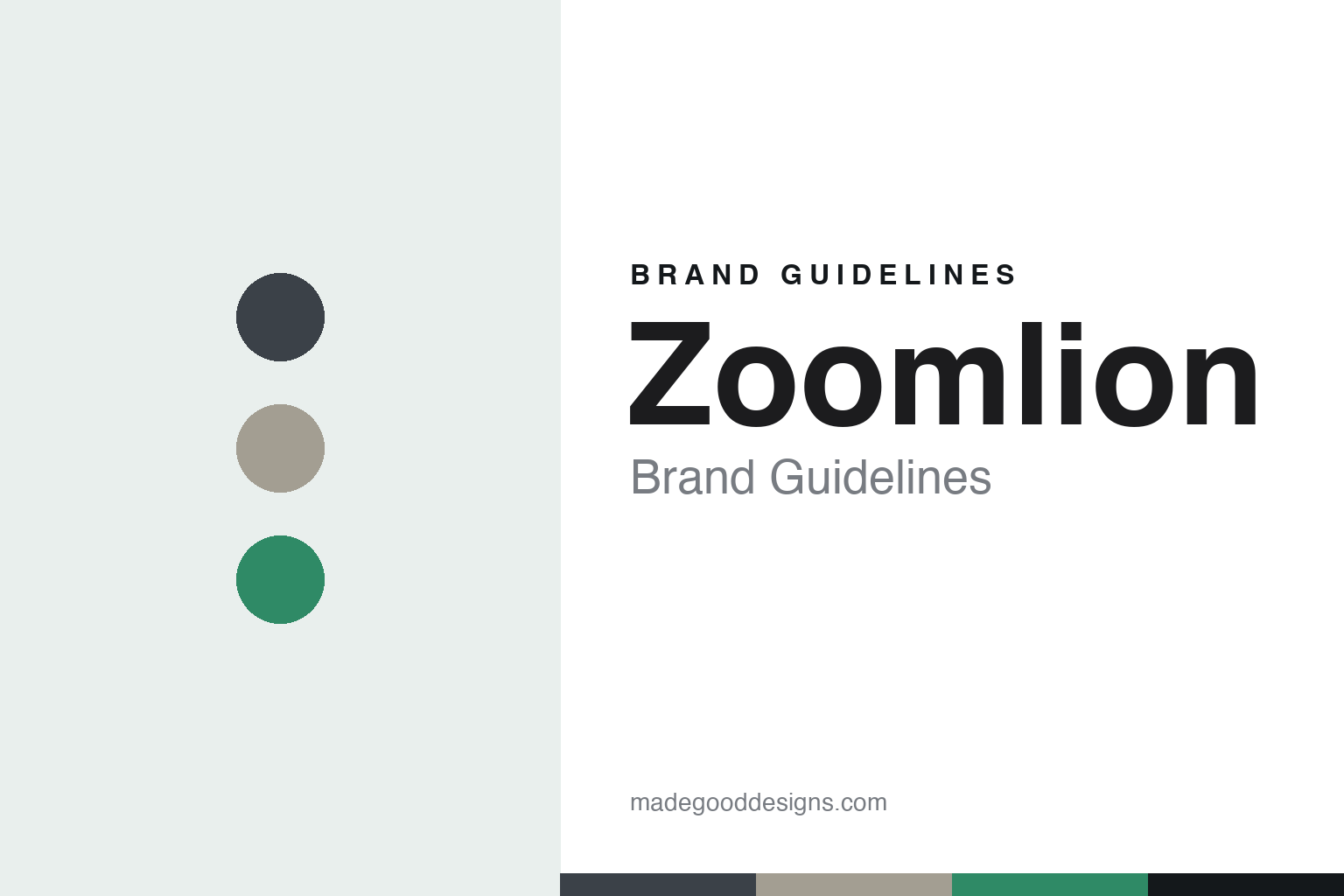
The company writes its name in capitals, ZOOMLION, across its own website; its Chinese name is 中联重科, Zhonglian Zhongke. Chinese Wikipedia records a change of livery: on 15 April 2015, at the construction machinery museum the company built at its Lugu industrial park in Changsha, Zoomlion unveiled a new paint scheme for its machines in three named colours, which translate as star grey, gravel grey and aurora green.
Where the machines are made is spread across China and Europe. English Wikipedia lists industrial parks in Changsha and elsewhere in Hunan, including Changde and Yuanjiang, as well as at Huayin in Shaanxi and Songjiang in Shanghai, with CIFA in Milan among the production sites; Vertikal described Wilbert’s Waldlaubersheim site in 2018 as a production facility with offices, warehousing and a large rental yard. The group has also narrowed its focus at times: in May 2017, English Wikipedia says, it sold its environmental machinery unit after a long slowdown in Chinese construction.
Its presence abroad has grown market by market. English Wikipedia says Zoomlion entered Turkey in 2007, opened its first local office there in 2018 and in October 2022 opened a headquarters in Tuzla, Istanbul, later adding Ankara, İzmir and Adana. The company’s website points visitors to its stands at bauma, ConExpo and Intermat, and lists regional pages for Europe, North and South America, the Middle East and south-east Asia.
For a design guide, Zoomlion shows how a machinery group can give a whole fleet one look by naming its colours. Compare SANY, another Changsha machinery maker, and XCMG. For this guide we use a dark grey, a gravel tone and a green with a sans, an unofficial interpretation; no product or logo is reproduced.
Explore & save
Keep Zoomlion’s identity on hand — save it to a board in the Made Good inspiration library.
Zoomlion identity set
Pin the Zoomlion grey, gravel and green palette and the industrial grotesque register to your own board.