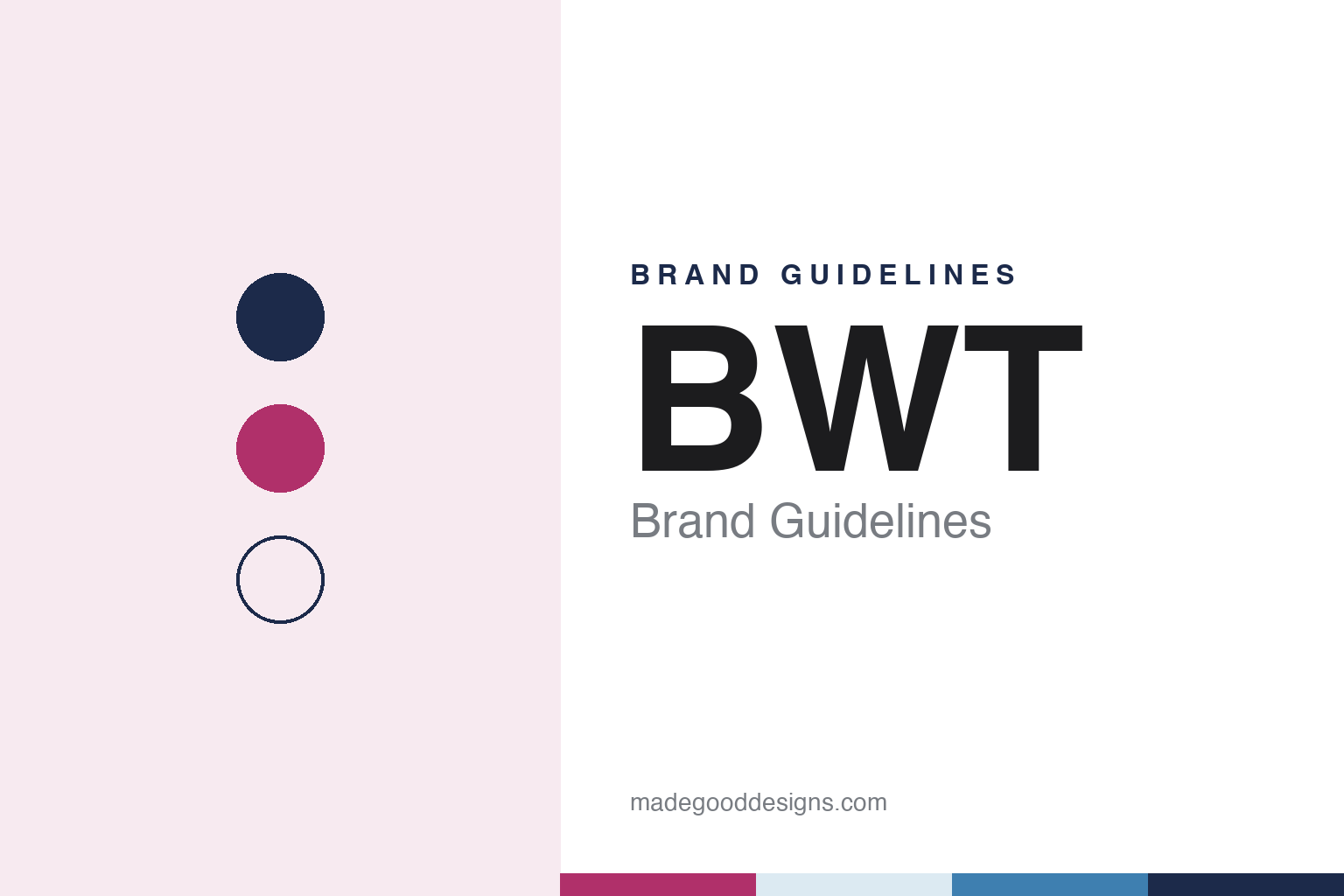
BWT Brand Guidelines
Best Water Technology, a 1990 buyout and a pink livery.
Aa
Two constants: a pink, navy and lake blue palette and a rounded technical sans register. Abstract homage — not a BWT asset; no product, logo or livery is reproduced.
Benckiser
A chemical name, a water unit and a buyout.
BWT, short for Best Water Technology, became an independent company in 1990. On 30 June 1990, the Vienna newspaper Die Presse reported in 2015, Andreas Weißenbacher, a manager who had joined Benckiser Austria as an assistant in 1980, bought Benckiser Wassertechnik, the water technology business of the German chemical group Benckiser, in a management buyout. The company says he turned “Benckiser Wasser Technik” into “BWT,” that it was first based in Hallein, near Salzburg, and that it moved two years later to Mondsee in Upper Austria, where the head office remains.
BWT traces its roots further back. Its website says they go to 1823, when Johann Adam Benckiser took over a small chemical works in Pforzheim; German Wikipedia, citing a 2003 history of Austrian innovations published by Böhlau, also says BWT grew out of Joh. A. Benckiser. That lineage includes a documented record from the Nazi period. In March 2019 Der Spiegel reported, from archive research first published by Bild am Sonntag and confirmed by the spokesman of the family holding company JAB, that forced labourers had been abused at Benckiser’s works in Ludwigshafen during the war, and that the family had engaged a historian to investigate. German Wikipedia lists the resulting study, Paul Erker’s Die chemische Fabrik Joh. A. Benckiser im Nationalsozialismus, published by Wallstein in 2023. German Wikipedia adds that members of the family set up the Alfred Landecker Foundation in 2019, which among its aims supports former forced labourers at Benckiser. BWT as a company was formed decades later, after the buyout, and these findings concern the Benckiser chemical works.
BWT was listed on the Vienna Stock Exchange in 1992, German Wikipedia says. After a planned merger was blocked by Austria’s Supreme Court in July 2017, Weißenbacher’s WAB foundation carried out a squeeze-out of the remaining shareholders that year, and on 1 October 2020 BWT AG became BWT Holding GmbH.
Colour
From softeners to pure water.
BWT works across the whole field of water treatment rather than one product. Its website lists filtration and filter media, ion exchange for demineralisation and softening, membrane technology from microfiltration to reverse osmosis, pure steam generators and distillers, UV systems, ozone and chlorine dioxide generators, and metering pumps, for homes, industry, commerce, hotels and the public sector. Among its consumer products it names filter cartridges that add magnesium to drinking water.
German Wikipedia groups the range by the water it treats: drinking water; pharmaceutical and process water, including purified water and water for injection; heating water; boiler and cooling water; water for air-conditioning; and swimming-pool water. It adds that the company opened a further line of business by developing membranes for fuel cells and batteries. By 2015, Die Presse reported, BWT had subsidiaries in more than 20 countries and sold in more than 60, while Weißenbacher told the paper that the head office would stay in Mondsee.
German Wikipedia names the main production sites as Mondsee in Austria, Schriesheim in Germany, Paris and Aesch, near Basel in Switzerland. The company says its premium and high-end products are made at its plants in Germany, Austria and France; that products for mid-range and value segments come from sites in the United Kingdom, Ukraine, Russia and a factory in China; that its Fumatech subsidiary in Germany makes membranes for fuel cells; and that its Swiss site makes equipment for the pharmaceutical, biotech and life sciences industries. Those are the company’s own descriptions.
Some products have won design and innovation awards. German Wikipedia, citing the award archive, says the Rondomat Duo S range of large water softeners won the Austrian State Prize for Design in the capital goods category in 2011; the same year a magnesium filter cartridge for table-top water filters won Upper Austria’s regional innovation prize, the Oberösterreichische Nachrichten reported. The AQA perla softener and the E1 single-lever filter received Plus X awards in 2012 and 2013, German Wikipedia says.
Typography
Design and documentation.
Desalination and industrial water companies sell things that few people ever see up close. Their customers are utilities, governments, refineries, mines and factories, and what they buy is rarely a boxed product: it is a plant, a process, a long operating contract or a membrane that will sit inside a pressure vessel for years. That shapes how these companies present themselves.
The plant is usually the hero. Company websites and annual reports in this field tend to lead with aerial photographs of coastal desalination works, with intake pipes running out to sea and long halls beside the shore. Inside, the familiar image is a row of white or grey pressure vessels holding reverse-osmosis membranes, stacked rack upon rack, or the polished casings of pumps and pressure exchangers that recover energy from the brine stream. Engineers in hard hats and high-visibility jackets on site, checking a control screen or walking a pipe gallery, give the pictures a human scale.
The vocabulary is technical and often trademarked. Membranes, energy-recovery devices and treatment processes carry their own names, and companies list reference plants, countries and project counts the way consumer brands list stockists. Awards from the water trade press and industry bodies are often displayed prominently.
The industry also meets in person. Trade fairs such as IFAT in Munich and Singapore International Water Week bring utilities, contractors and equipment makers to the same halls, and the stands there, with their models, membrane cut-aways and video walls, are one of the few places where these brands show themselves to each other. This guide sets out what can be checked about each company and marks what rests on its own word.
Aa
A rounded technical sans for a consumer-facing water brand. (Specimen set in Manrope, a sans STAND-IN; NOT the BWT logo.)
BWT
Pink on the grid.
BWT is also a visible sports sponsor. German Wikipedia, citing a March 2017 report by Motorsport-Total, says the Force India Formula One team switched to pink that season with BWT as its new sponsor, and that BWT backed the team and its successors until 2021 and has been the main sponsor of the Alpine F1 Team since 2022. According to German Wikipedia, the company also sponsors winter sports and football, including the Linz club LASK, and has partnered with the ADAC racing series since 2021.
Its motto is “For You and Planet Blue,” which the company explains as a pledge to its customers, partners and staff and to the planet’s limited water. BWT says it has more than 6,500 employees, 13 production sites and partners in more than 120 countries; those figures are its own.
For a design guide, BWT shows how a water treatment maker with an engineering name has carried one sponsor colour onto race cars. Compare Grundfos, a European pump maker serving the same buildings, and Kurita, a water treatment chemicals company. For this guide we use pink, navy and a lake blue with a sans, an unofficial interpretation; no product or logo is reproduced.
Explore & save
Keep BWT’s identity on hand — save it to a board in the Made Good inspiration library.
BWT identity set
Pin the BWT pink, navy and lake blue palette and the rounded technical sans register to your own board.


