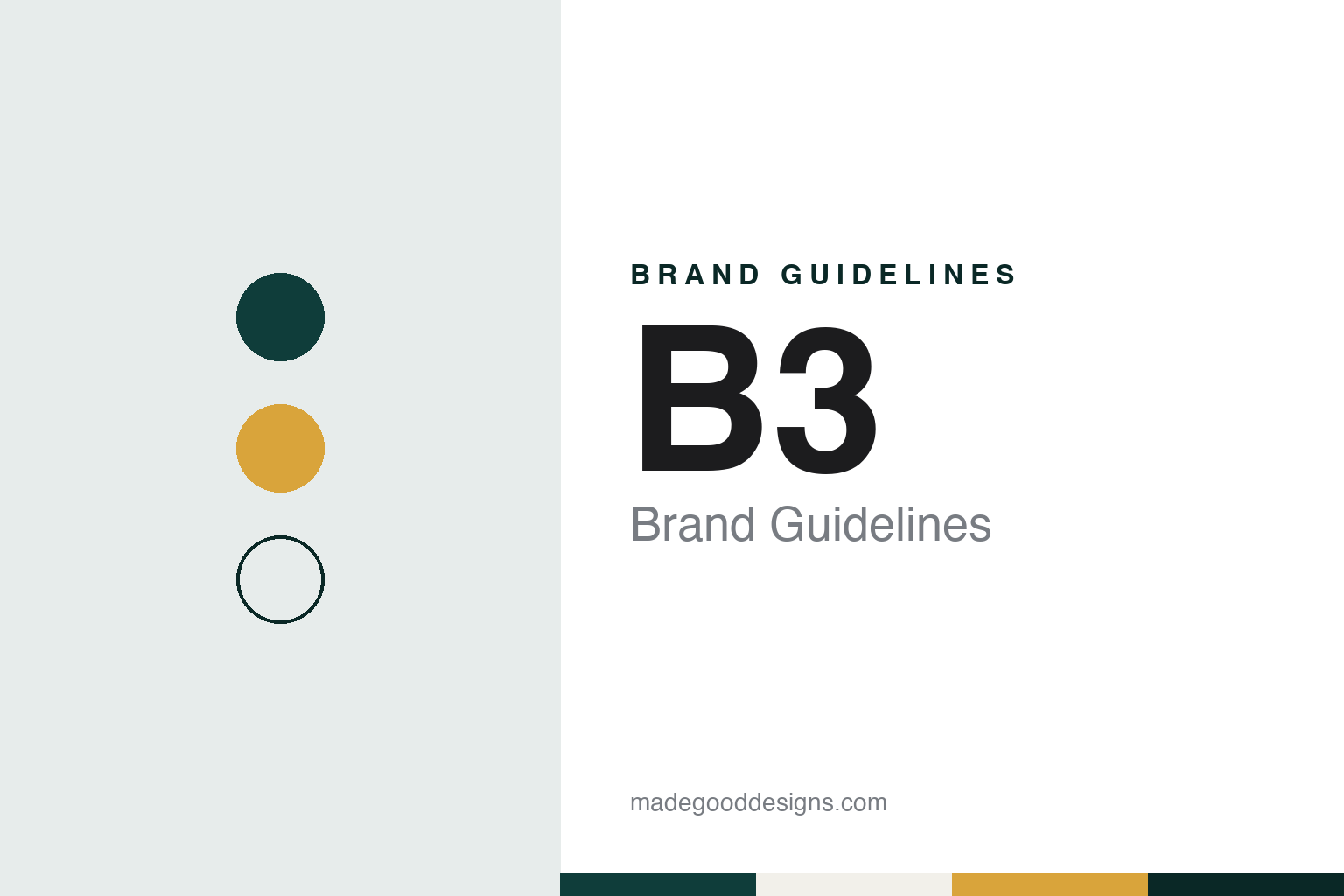
B3 Brand Guidelines
An 1890 São Paulo bourse, a futures market and a registry, under one cubed letter.
Aa
Two constants: an exchange green, stone and gold palette and a geometric grotesque register. Abstract homage — not a B3 asset; no logo, ticker or mark is reproduced.
From Bolsa Livre to Bovespa
An 1890 bourse that took over a country’s share trading.
B3’s equities business traces back to 23 August 1890, when Emílio Rangel Pestana founded the Bolsa Livre in São Paulo, according to Portuguese and English Wikipedia. Portuguese Wikipedia says that first exchange closed in 1891, during the speculative crisis known as the Encilhamento, and that a successor, the Bolsa de Fundos Públicos de São Paulo, opened in 1895. In 1934 it moved into the Palácio do Café, near the Pátio do Colégio, and the following year it became the Bolsa Oficial de Valores de São Paulo.
Until the mid-1960s, Brazil’s stock exchanges were official bodies tied to the finance departments of the states, with brokers appointed by the government, both Wikipedia articles say. The financial-system reforms of 1965 and 1966 turned them into non-profit civil associations, and the individual public-funds broker gave way to brokerage firms. In 1967 the São Paulo exchange took the name Bolsa de Valores de São Paulo — the Bovespa.
For much of its history Rio de Janeiro’s exchange was the larger market, Portuguese Wikipedia says, but from the 1970s São Paulo gained ground. In 2000 the Bovespa and the Rio exchange led an agreement that integrated the nine Brazilian stock exchanges: from then on, shares of listed companies traded in São Paulo, while the regional exchanges kept market-development and local service roles.
Technology runs through the story. English Wikipedia says that in 1972 the Bovespa introduced an automated system for distributing market information in real time, that in the late 1970s it added a telephone trading system called SPOT, that from 1990 its CATS electronic system ran alongside the open-outcry pit, and that the Mega Bolsa trading system followed in 1997 and the internet-based Home Broker in 1999. The Ibovespa, the benchmark index, has been published since 1968.
Colour
Futures, a merger and a registry.
The second strand is commodities and futures. Portuguese Wikipedia says the Bolsa de Mercadorias de São Paulo was set up by São Paulo exporters, traders and farmers on 26 October 1917, and was the first in Brazil to handle forward contracts, with a long record in coffee, cattle and cotton. A separate Bolsa Mercantil & de Futuros, already using the initials BM&F, appeared in July 1985 and began trading in January 1986; in May 1991 the two combined as the Bolsa de Mercadorias & Futuros.
In 2000 the Bovespa created the Novo Mercado and the Level 1 and Level 2 segments, listing tiers in which companies voluntarily accept stricter disclosure and governance rules, with arbitration for disputes, English Wikipedia says; companies in the Novo Mercado may issue only voting shares, Portuguese Wikipedia adds. The exchange demutualised in 2007, and the BM&F floated its own shares in November that year.
On 8 May 2008 the Bovespa and the BM&F merged as BM&FBOVESPA, both Wikipedia articles say; B3’s investor-relations history describes the new company as born from the merger of BM&F and Bovespa Holding. B3 dates a strategic partnership with the CME Group, with a 5% cross-holding, to 2010 — English Wikipedia places the share swap in early 2008 — and says the two developed the PUMA Trading System, launched in derivatives in 2011 and in equities in 2013, before the partnership ended in 2016. A new data centre opened in 2014, the company says.
The third strand is Cetip, founded in 1984 as a not-for-profit body with Central Bank support and operating from 1986, according to B3’s history. It registered and held fixed-income securities and over-the-counter derivatives, became a for-profit company in 2008 and listed in 2009; in 2011 an Intercontinental Exchange company took a stake in it.
Typography
How exchanges present themselves.
Stock exchanges sell something that cannot be held: access to a market. Most of their public image is therefore built from rituals, rooms and numbers rather than products. One common ritual is the ceremony around the opening or closing of trading. Borsa İstanbul, for example, says it announces the start and end of each session by ringing a bell symbolically, offers bell-ringing ceremonies to listed companies and other organisations, and hands guests a crystal gong hammer as a keepsake.
Rooms come next. Older exchanges often began in borrowed spaces: the Shanghai Stock Exchange reopened in 1990 in the ballroom of a hotel on the Bund before moving to a purpose-built tower in Pudong. Exchanges also show off their trading floors and technology: Borsa İstanbul lists a renewed trading floor and a primary data centre among its milestones. Exchange buildings themselves, from façades to statues at the entrance, become part of the identity.
Numbers carry the rest. Index names such as the SSE Composite or the BIST 100 work as brands in their own right, quoted daily in news reports and printed on tickers and screens. Listing ceremonies supply the backdrops that newly listed companies use in their own announcements, and cross-border links such as Stock Connect give exchanges a story to tell about reach.
Exchanges also publish a great deal: annual and integrated reports, investor-education material and milestone timelines. This guide uses those documents alongside independent dated sources, and marks clearly where a fact rests only on the exchange’s own account. The palettes and typefaces shown are unofficial interpretations, not the exchanges’ own marks.
B³
A geometric grotesque for a name built from three initials. (Specimen set in Archivo, a sans STAND-IN; NOT the B3 logo.)
B3
Brasil, Bolsa, Balcão.
The boards of BM&FBOVESPA and Cetip approved combining the two businesses in 2016, according to B3. Brazil’s competition authority, CADE, approved the transaction at its tribunal session of 22 March 2017, with restrictions centred on access to central depositary services, the authority said in a notice published the next day. The trade magazine Capital Aberto reported on 1 April 2017 that the new company, B3, had been presented to the market on 30 March, about ten months after the deal was announced, and that its commitments included giving potential competitors access to its clearing and depositary services, treating them equally, and publishing its access rules and pricing policy. English Wikipedia says the securities regulator, the CVM, approved the corporate name B3 S.A. – Brasil, Bolsa, Balcão on 16 June 2017, and that Cetip’s incorporation into B3 took effect on 3 July 2017.
The name spells out its three parts: Brazil, exchange and over-the-counter market. Portuguese Wikipedia notes that the name is stylised as a B in brackets with a superscript three, a nod to those three initials. On its own website B3 describes itself as a financial-market infrastructure company working across exchange and over-the-counter markets, whose shares trade in its own Novo Mercado segment under the code B3SA3. Its activities include trading, clearing, settlement, depositary and registration systems, a central counterparty for most trades on its markets, and services for vehicle and property financing. Its stated purpose, in Portuguese, is to drive sustainable economic development so that society can prosper, and its sign-off reads “B3. Com o mercado, para o futuro.”
The company has kept buying data and technology businesses since the merger. Its investor-relations history lists PDTEC in 2019, Neoway in 2021, when it also formed Dimensa as a joint venture with TOTVS, and Neurotech and Datastock in 2022. English Wikipedia says the exchange operates under the supervision of the CVM, keeps offices in Rio de Janeiro, Shanghai and London, and was a founding member of the United Nations Sustainable Stock Exchanges initiative in June 2012.
For a design guide, B3 shows how a merged exchange can compress a long, many-stranded history into three letters and a number. Compare Intercontinental Exchange, whose group once held a stake in Cetip, and the NYSE. For this guide we use a deep exchange green, stone and a coffee gold with a sans, an unofficial interpretation; no product or logo is reproduced.
Explore & save
Keep B3’s identity on hand — save it to a board in the Made Good inspiration library.
B3 identity set
Pin the B3 exchange green, stone and gold palette and the geometric grotesque register to your own board.


