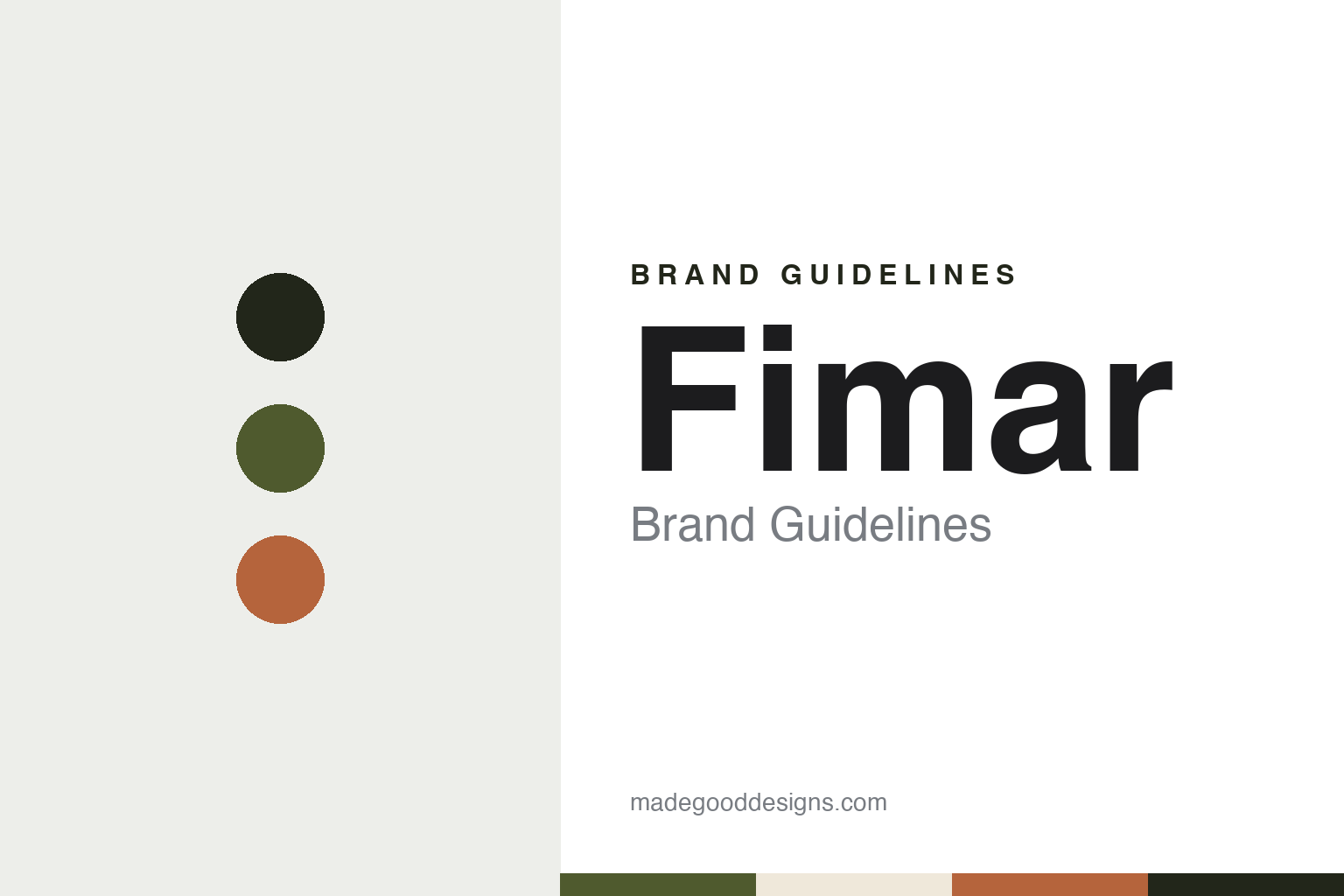
Fimar Brand Guidelines
The Rimini-area maker of mincers, slicers and dough mixers.
Aa
Two constants: an olive, cream and terracotta palette and a workshop serif register. Abstract homage — not a Fimar product or mark; no machine, logo or nameplate is reproduced.
Lazzari-Tamburini
A precision workshop that turned to mincers.
Fimar traces its story to 1974 and to Oriano Tamburini. Fimar Group, based at Villa Verucchio, inland from Rimini in Emilia-Romagna, says its history began that year with the opening of Lazzari-Tamburini, a small precision workshop doing contract work for other companies. A few years later, in 1979, the company says, it decided to specialise in professional catering, developing the first of a long series of meat mincers.
The group says its management has been the same since 1974, when Oriano Tamburini founded his first company, and that he now leads the group together with his daughter, Eleonora. It describes Fimar S.p.A. as an Italian company that designs, makes and sells machinery for professional catering, and on its group pages counts “50 years of Fimar”; its quality policy speaks of almost 50 years of designing and selling professional catering machines at Villa Verucchio.
Fimar is now one half of Fimar Group, which joins Fimar and Forcar under one management. The group says Forcar is 25 years old, and that in 2021, after Forcar srl was merged into Fimar by incorporation, all five of the group’s brands became the property of Fimar S.p.A. Those brands include Easyline, Forcar Multiservice, Forcar Refrigeration and Forcold, alongside Fimar itself. The group says it still follows its first idea: to design, build, import and distribute products that are simple, reliable and solid, so that customers anywhere can use them easily and for a long time.
Colour
Made at Villa Verucchio, imported as Easyline.
Fimar separates what it makes from what it imports. The group says the Fimar brand covers products “Made in Italy,” while Easyline is an import line, and that most of its machines are produced at its Villa Verucchio site, where it lists its headquarters, a logistics area and a production area; Forcar’s production is in the same town. It says all products sold under its brands, including imported ones, are selected and tested before they join the range.
The independent record is local. In June 2017 the Rimini weekly Il Ponte, profiling a potter who works in Villa Verucchio, placed his workshop a short walk from “colossi” — giants — such as Scm and Fimar.
The group has described its own investments in dated posts. In May 2022 it announced a 2,000-square-metre building for metalwork, fitted with automated laser-cutting machines from Amada and staffed by ten new employees, next to Fimar’s production, so that components can move easily between the two and on to logistics, the group says; at that point it counted five brands, four automatic warehouses and two production plants. In February 2024 it reported a robotic welding island and integrated production logistics, part-funded under a regional programme. Its team page counts about 100 employees and specialist collaborators, and its quality policy follows the ISO 9001 standard, the company says.
The Fimar catalogue is organised by task: cooking, washing, meat processing, pasta and dough, peeling, cutting and preserving, and snack-bar equipment. The meat line runs from mincers to burger presses and band bone saws; the preserving and cutting line includes gravity, flywheel and vertical slicers, vegetable cutters and potato peelers. For dough it sells spiral, fork and planetary mixers, pizza rollers and fresh-pasta machines.
Its signature dough machine is Berta. In January 2020 Fimar described Berta as a mixer it had patented, with a hook tool designed to reproduce the movement of hands, a bowl, tool and grid lid in AISI 304 stainless steel, and versions for 7, 15, 25 and 35 kilograms of dough; it presented the machine at Host in Milan in 2019 and calls it “Made in Italy.”
Typography
Machines for the prep kitchen.
Makers of commercial food-preparation equipment sell to a practical audience: chefs, bar owners, butchers, bakers and the dealers who fit out their kitchens. Their brands are built less on advertising than on catalogues, spec sheets and demonstrations, and the machines themselves, slicers, mixers, stick blenders, juicers and vegetable cutters, do most of the talking.
The imagery of the category is consistent. Machines are shown as cut-outs on white for the catalogue, or set on stainless-steel counters in a working prep kitchen, often with a chef’s hands at the controls. Close-ups of blades, discs, bowls and whisks stand in for the engineering inside, and a colour on a base or a housing can become part of a machine’s identity.
Trade fairs carry much of the brand work. Host in Milan, Internorga in Hamburg and the National Restaurant Association Show in Chicago are among the shows where makers set up working stands, run live demonstrations and launch new models to importers and dealers; Dynamic says it launched its combined vegetable slicer at Host, and Santos says it chose a limited colour for its #11 juicer after a visitor vote there in 2019.
Some of these makers are independent companies and some sit within larger industrial groups, and several make the place where their machines are built part of their identity. This guide sets out what can be checked about each brand, who founded it, who owns it and what it says about where its products are made, and marks clearly what rests only on the company’s own word.
Aa
A warm workshop serif for a family-led Italian maker. (Specimen set in Fraunces, a serif STAND-IN; NOT the Fimar logo.)
Fimar
One name for Italian-made, another for imports.
Fimar’s brand architecture is explicit. The group keeps its founding name for the machines it calls “Made in Italy” and gives imported equipment a separate name, Easyline, with its own website; refrigeration and other lines sit under the Forcar and Forcold names. The group site presents all of them side by side as the brands of one company.
Its reach is set out as a list of places. Besides the Villa Verucchio headquarters, the group names an export department at Conegliano, in the Veneto, and offices or representatives for France in Paris, the United Kingdom in Liverpool, Spain in Tarragona, South-East Europe in Athens, the Middle East in Dubai, South-East Asia in Singapore, Japan in Tokyo and Latin America in Lima. It also runs an online portal for spare parts and dealer access.
The company tells its history as a family story tied to one place: a precision workshop in 1974, a first mincer in 1979, a merger with Forcar in 2021, and new metalwork and welding halls beside the factory in the 2020s, with the founder and his daughter at the head of the group.
For a design guide, Fimar shows how a family-led maker can sort a wide range into clearly named brands while keeping its own name for what it builds at home. Compare Sammic, a Basque maker of preparation and warewashing machines, and Robot-Coupe, the French maker of professional food processors. For this guide we use olive, flour cream and terracotta with a serif, an unofficial interpretation; no product or logo is reproduced.
Explore & save
Keep Fimar’s identity on hand — save it to a board in the Made Good inspiration library.
Fimar identity set
Pin the Fimar olive, cream and terracotta palette and the workshop serif register to your own board.