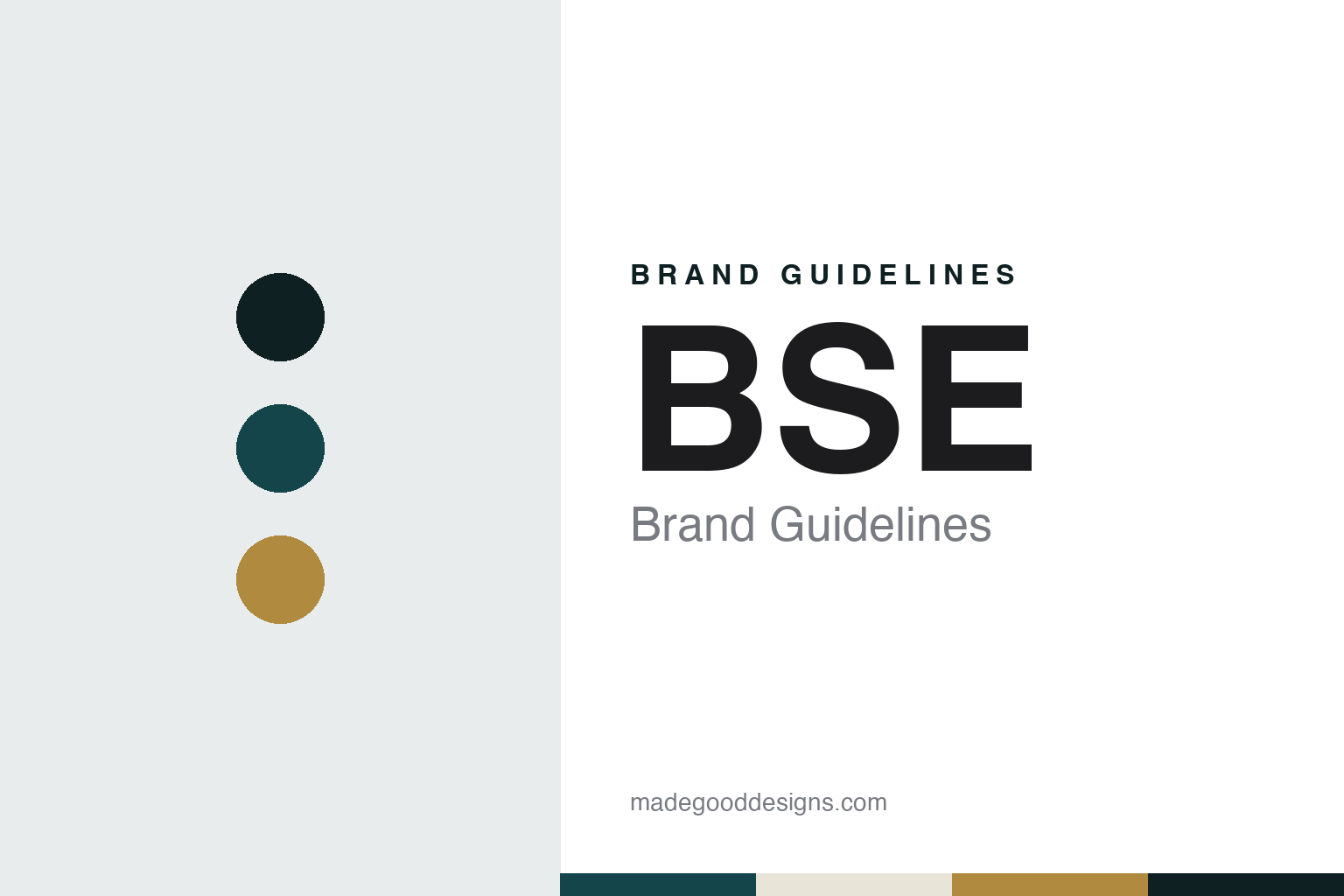
BSE Brand Guidelines
The 1875 brokers’ association behind the Sensex, a Dalal Street tower and India’s first listed exchange.
Aa
Two constants: a BSE teal and brass palette and an Old-style serif register. Abstract homage — not a BSE product or mark; no logo, index mark or building is reproduced.
Under a Banyan Tree
Cotton traders, a brokers’ association and a Dalal Street home.
BSE — formerly the Bombay Stock Exchange — traces itself to traders who met in South Mumbai in the mid-nineteenth century. An IANS agency report carried by the Free Press Journal in April 2025 says traders gathered under a banyan tree from 1855 to buy and sell cotton, and that as their numbers grew the Native Share and Stock Brokers’ Association was formally established on 9 July 1875. The same report names Premchand Roychand, known as the “Cotton King of Bombay,” as one of its key founders, and calls BSE the oldest stock exchange in Asia, founded three years before the Tokyo Stock Exchange. Business Today also described it as Asia’s oldest stock exchange in July 2023.
The association put down roots on what became Dalal Street. IANS says the land on which BSE stands was bought in 1928 and that building work began in 1930. On 31 August 1957 the exchange was granted permanent recognition under the Securities Contracts (Regulation) Act, according to a milestone list published by Business Today in July 2023 and sourced to BSE.
Its present home is Phiroze Jeejeebhoy Towers, named after Phiroze Jamshedji Jeejeebhoy, who chaired the exchange from 1966 to 1980; IANS dates the building’s construction to 1970.
Colour
India’s first equity index and an on-line trading system.
BSE’s index reaches further than the exchange’s own name. The Sensex — called the S&P BSE Sensex by Business Today in 2023 — was launched on 2 January 1986 as the country’s first equity index, the magazine’s timeline says, with a base of 100, according to IANS. It closed above 1,000 for the first time on 25 July 1990 and above 10,000 on 7 February 2006, Business Today reported, and IANS says it passed 80,000 in 2024. Business Today noted in 2023 that any mention of the health of India’s capital markets is incomplete without the Sensex, even though the newer National Stock Exchange leads BSE by market share.
Trading moved from the floor to screens. Business Today’s timeline says the BSE On-Line Trading system, BOLT, was expanded across the country in 1997; equity derivatives followed on 9 June 2000, currency derivatives on 1 October 2008, and a dedicated platform for small and medium-sized enterprises on 13 March 2012. BSE says that on 13 October 2015 it became the fastest exchange in the world, with a median response time of six microseconds, a claim listed in the same timeline. In December 2018 it launched BSE Startups, a platform for start-up listings, and on 24 October 2022 it introduced Electronic Gold Receipts during the Diwali Muhurat trading session.
MarketsWiki says BSE also runs India INX, which it describes as India’s first international exchange, opened in GIFT City in Gujarat in January 2017, and that in 2023 BSE ranked fourth among the world’s exchanges by derivatives contracts traded, according to the Futures Industry Association’s annual volume survey. The same entry says trades on BSE are cleared by Indian Clearing Corporation, a wholly owned subsidiary, and that the exchange runs BSE Bond, an electronic platform for private placements of debt. IANS reported in April 2025 that more than 4,100 companies were listed on BSE.
Typography
How exchanges present themselves.
Stock exchanges sell something that cannot be held: access to a market. Most of their public image is therefore built from rituals, rooms and numbers rather than products. One common ritual is the ceremony around the opening or closing of trading. Borsa İstanbul, for example, says it announces the start and end of each session by ringing a bell symbolically, offers bell-ringing ceremonies to listed companies and other organisations, and hands guests a crystal gong hammer as a keepsake.
Rooms come next. Older exchanges often began in borrowed spaces: the Shanghai Stock Exchange reopened in 1990 in the ballroom of a hotel on the Bund before moving to a purpose-built tower in Pudong. Exchanges also show off their trading floors and technology: Borsa İstanbul lists a renewed trading floor and a primary data centre among its milestones. Exchange buildings themselves, from façades to statues at the entrance, become part of the identity.
Numbers carry the rest. Index names such as the SSE Composite or the BIST 100 work as brands in their own right, quoted daily in news reports and printed on tickers and screens. Listing ceremonies supply the backdrops that newly listed companies use in their own announcements, and cross-border links such as Stock Connect give exchanges a story to tell about reach.
Exchanges also publish a great deal: annual and integrated reports, investor-education material and milestone timelines. This guide uses those documents alongside independent dated sources, and marks clearly where a fact rests only on the exchange’s own account. The palettes and typefaces shown are unofficial interpretations, not the exchanges’ own marks.
Aa
An old-style serif for an exchange that dates itself to 1875. (Specimen set in Libre Baskerville, a serif STAND-IN; NOT the BSE logo.)
A Listed Bourse
A brokers’ association that became a public company.
For most of its life BSE was owned by its brokers. MarketsWiki says it demutualised in 2005. On 3 February 2017 it became India’s first listed stock exchange when its shares were listed on the platform of its rival, the National Stock Exchange, because SEBI rules do not allow an exchange to list on itself, an agency report in the Millennium Post said that day; the offer was also the first share sale by a domestic stock exchange. At the listing ceremony, BSE’s chairman said he looked forward to NSE listing on BSE’s platform. That happened on 24 September 2026, when NSE shares listed on BSE, the Free Press Journal reported.
The 2017 listing changed who owned the exchange. BSE had been largely owned by brokers for most of its life, its chief executive told reporters at the listing; after the offer, he said, traditional brokers held less than 30 per cent and the public about 70 per cent, the Millennium Post report said.
The identity was refreshed ahead of the 150th anniversary. At its 149th Foundation Day on 10 July 2023, held at the BSE International Convention Hall and opened with the exchange’s traditional bell-ringing ceremony, BSE unveiled a new logo, which it said represents “prosperity, vibrance, growth, and new beginnings,” together with continued trust and greater responsibility, according to the IANS report. Business Today reported the new logo the same day. IANS noted in April 2025 that BSE would complete 150 years that year.
For a design guide, BSE shows how an exchange can carry a nineteenth-century origin story — a banyan tree, a brokers’ association, a Dalal Street tower — into an index name quoted every trading day. Compare NSE, the Mumbai exchange on whose platform BSE’s own shares trade, and Japan Exchange Group, owner of the Tokyo exchange that IANS dates to three years after BSE’s association. For this guide we use deep teal, brass and stone with a serif, an unofficial interpretation; no product or logo is reproduced.
Explore & save
Keep BSE’s identity on hand — save it to a board in the Made Good inspiration library.
BSE identity set
Pin the BSE teal and brass palette and the Old-style serif register to your own board.


