Key Apparel Brand Guidelines
The Kansas bib overall.
Aa
Two constants: a duck-brown palette and a trade-sans register. Abstract homage — not a Key Apparel garment or mark.
The Kansas bib overall
Key Apparel is the American bib-overall name from Fort Scott, Kansas, founded in 1908, whose garments today carry no stated country of make.
Key Apparel opens the round with the archetypal work garment — the American bib overall. From Fort Scott, Kansas, Key makes bib overalls above all, with coveralls, carpenter dungarees and work pants, in denim, duck canvas and hickory stripe. Its answer to how a maker becomes a name is a single garment held for over a century: build the bib overall, in the cloths farmers and tradesmen always wore. A bib overall, plain and known.
Its identity is the Kansas bib overall. Key Apparel’s bib overalls, its denim-duck-and-hickory cloths and its Fort Scott heritage are the work it is known for. An overall, in the American mould. Work clothing, since 1908.
(Honest notes, so the story stays precise, and the make needs care. Key Apparel — at keyapparel.com — is known above all for its famous overalls, in denim, duck canvas and hickory stripe. By the company’s own account, it was founded in 1908 in Fort Scott, Kansas, as the Lakin-McKey Manufacturing Company by C. A. Lakin and Harry McKey, with the “Key” name taken from McKey’s surname; we present the 1908 founding and this lineage as reported, since they rest on the company’s own telling. On where it is made — the crux of this round — Key makes no “Made in USA” claim anywhere on its site: its country of manufacture is simply not stated, which for a heritage maker usually means production is now imported, with Fort Scott serving as headquarters rather than a working overall factory. So we do not call Key a made-in-USA overall maker, and we do not repeat any “oldest continuous” claim; we say an American heritage name whose current origin is undisclosed. On ownership, we could not confirm it, so we describe it only as the privately held Key Industries. Its name and marks are IP, described but never reproduced, and there is no official brand hex; these tones are an unofficial interpretation. This is design commentary and does not promote any product.)
Colour
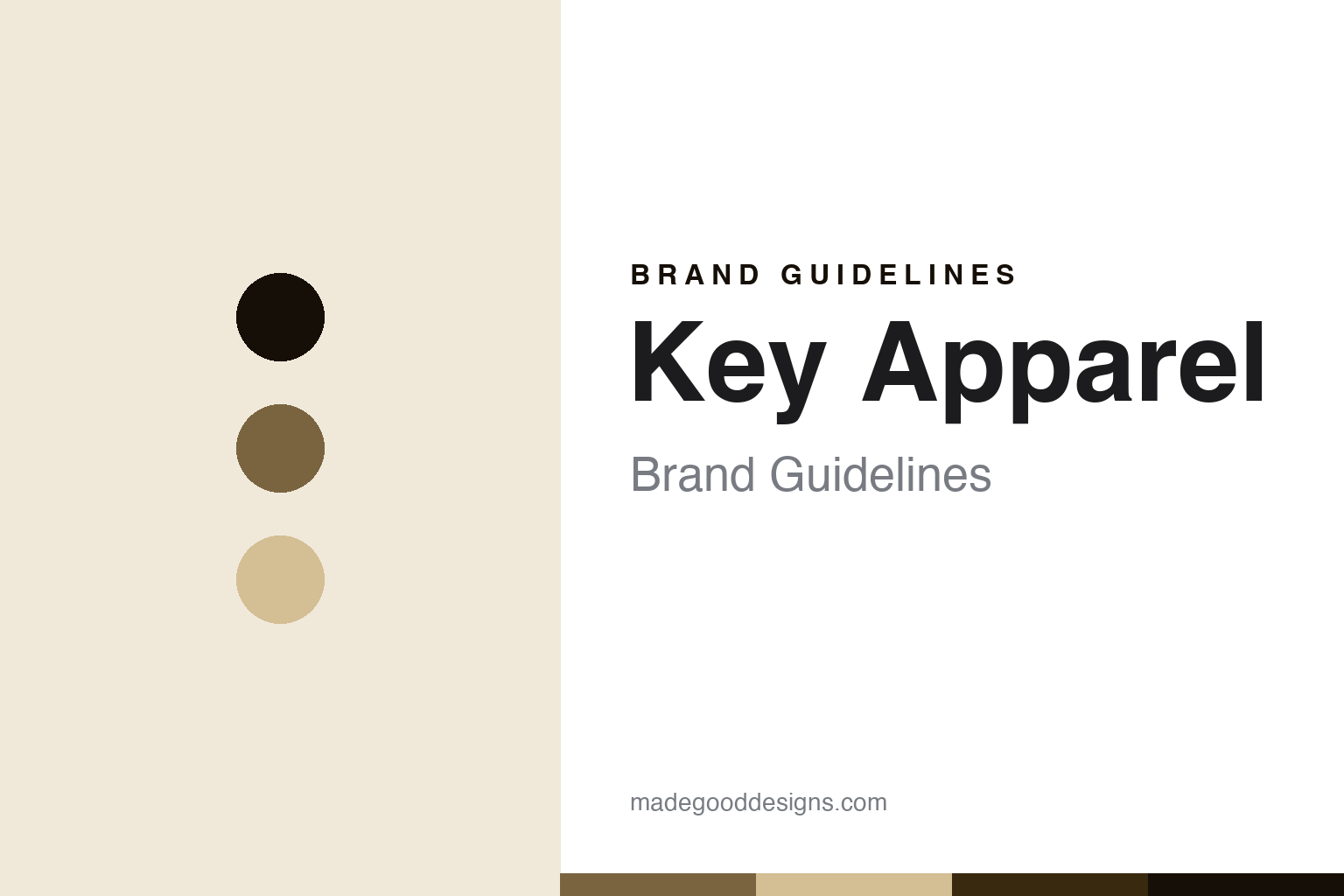
Key Apparel lives in a duck-brown palette. Click a swatch to copy the hex.
Key Apparel’s identity is plain, hard-wearing and American — a duck brown, an ink, a wheat, a deep duck, and a paper. The palette leans duck brown and wheat: the register of a duck-canvas bib overall and worn denim. It signals a century-old work garment. The honest caveat: with no published brand hex, these values are an original, unofficial interpretation, not first-party colours.
The lesson is a duck-brown palette signals a plain, bib-overall identity. Key Apparel’s world is a plain, cotton, working object. For designers, it is a reminder that a warm duck brown and a soft wheat can carry an overall maker — the brown of duck canvas and the neutral of worn denim. Because these tones can fail as small text, keep type dark and let the colour live in the accents, palette and band. The takeaways: hold one garment; keep the cloths honest; don’t claim a make you can’t verify; and treat any single hex as unofficial.
Typography
The register is a trade sans — plain, sturdy, made.
Key Apparel’s identity carries a plain, sturdy, working spirit — a workwear name, not a fashion label. A trade sans captures the mood: honest, even and unfussy, the register of a Kansas overall house. Set in a duck-brown palette, the trade sans feels sturdy and plain — exactly the personality Key Apparel carries. It is a work garment rather than a logo, mirroring a bib overall. (Key Apparel’s real wordmark is a thing we describe but do not reproduce, and the exact typeface is not ours to use.) Because it is not ours to use, the honest description is “a trade-sans spirit,” shown here in a stand-in. The type behaves like the overall: plain, sturdy and working.
Aa
A trade-sans spirit — sturdy and plain. (Specimen set in Work Sans, a trade-sans STAND-IN; NOT the Key Apparel wordmark.)
The overall, the dungaree and the boilersuit
Key Apparel stands for the American bib overall, its make now unstated.
Key Apparel opens the round with the garment every entry answers: the bib overall. A duck-brown palette, a trade sans and a bib overall make one thing — the Kansas bib overall — the whole identity: plain, hard-wearing and American. The century-old overall is the differentiator, and the honest reading of its make is the meaning. The point is a heritage American overall name that still carries the garment, but no longer says where it is made.
Put to work, the identity is a plain garment, read honestly, as design. A maker in this spirit would hold one archetype and keep it simple — the bib overall, in denim, duck and hickory. A reader in this spirit would notice what is missing: a country of make. Heritage makers that still cut and sew at home say so on every tag; Key says nothing, so the honest move is to treat it as an American heritage name whose current origin is undisclosed and most likely imported, not a made-in-USA holdout. Key opens the round’s central question — where is the overall really made now? — and answers it with a silence, which the round’s later makers fill in their different ways. It also opens the status thread: a name founded 1908 as a Kansas overall factory, whose making today is simply unstated. The honest editorial moves are to present the 1908 founding and the Lakin-McKey lineage as the company’s own account, to withhold any made-in-USA or “oldest continuous” claim, and to leave ownership as privately held. The lesson Key teaches is that a garment can hold an identity even when the geography goes quiet: the overall gives it substance, and the honesty about the silence keeps it credible. The bib overall is the personality, and the unstated make is the question.
For designers and brand-builders, Key opens the overall, the dungaree and the boilersuit, from America: hold the archetype — and don’t claim a make you can’t verify. The lessons: own one garment; keep the cloths honest; read a missing country-of-origin as a fact, not an oversight; attribute a heritage to its source; and never reproduce a logo. It is also a reminder to stay precise: Key Apparel is the American bib-overall name from Fort Scott, Kansas, founded in 1908, whose garments today carry no stated country of make — with the palette here an unofficial interpretation. Key made the bib overall the identity — proof that a work garment, honestly read, can be the difference.
Explore & save
Keep Key Apparel’s identity on hand — save it to a board in the Made Good inspiration library.
Key Apparel identity set
Pin the duck-brown palette and the trade-sans register to your own board.