Lynas Brand Guidelines
The Perth gold explorer that turned to rare earths at Mount Weld.
Aa
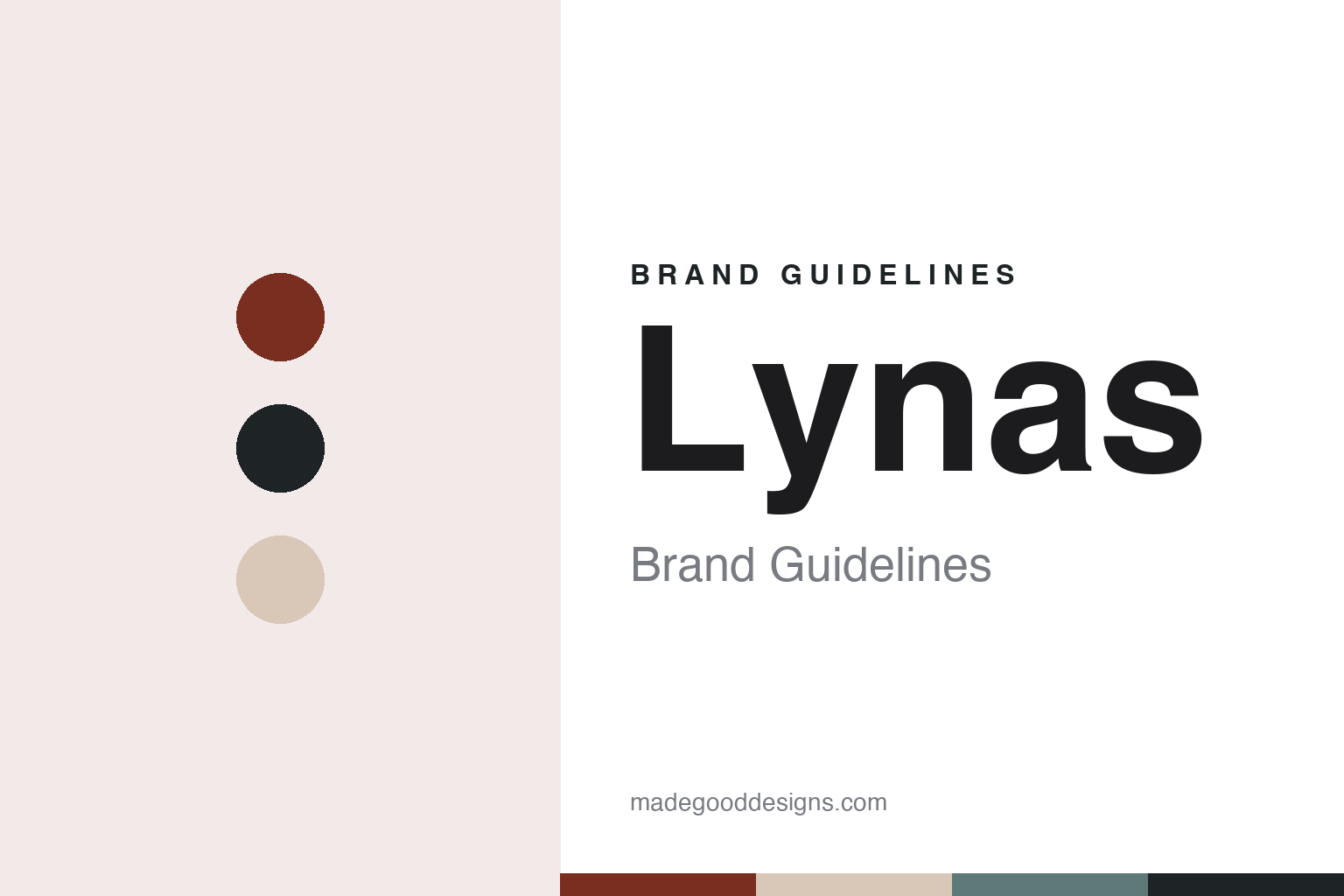
Two constants: a laterite red, charcoal and pale oxide palette and an industrial sans register. Abstract homage — not a Lynas product or mark; no plant, logo or product is reproduced.
From gold to rare earths
A gold explorer that bought a rare-earth deposit.
Lynas Rare Earths is an Australian company headquartered in Perth, Western Australia. It mines rare earths at Mount Weld, about 35 kilometres south of Laverton, and processes them at a plant in Kalgoorlie and at a larger plant at Gebeng, near Kuantan on the east coast of Malaysia. The company describes itself as the world’s only commercial producer of separated light and heavy rare earth oxides outside China; that is its own description.
Lynas did not begin in rare earths. English Wikipedia says the company was founded in 1983 as Yilgangi Gold, took the name Lynas Gold in 1985 and listed on the Australian Securities Exchange in 1986, and that in 1994 it opened its first gold mine, at Lynas Find, south of Port Hedland. The same account says that in 2000 its managing director learned that Ashton Mining wanted to sell the Mount Weld rare earths project, that Lynas agreed to buy it, and that in 2001 the company became Lynas Corporation and sold its gold business to concentrate on rare earths. The company now trades as Lynas Rare Earths Ltd.
Turning a deposit into a supply chain took more than a decade. Mining Technology, in a history of the mine published in 2023, says Lynas completed a feasibility study in March 2005 and began mining at Mount Weld in 2007. The company says its concentration plant, 1.5 kilometres from the pit, was commissioned in 2011, and that the Malaysian plant began production in 2012. Lynas says the Mount Weld deposit sits in a volcanic plug about two billion years old, and that its high grade and shallow ore keep the mine itself relatively small.
Colour
Mine, kiln and solvent extraction.
The company’s operations follow the ore from the ground to a finished oxide. At Mount Weld, Lynas says, ore is trucked from the pit to the concentration plant, where crushing, grinding, flotation and filtration produce a mixed rare earth concentrate. The concentrate travels in half-height containers, which the company calls rotainers, either to Kalgoorlie or by sea to Malaysia.
The Kalgoorlie plant is the newest link. Lynas describes it as the first facility of its kind in Australia: concentrate is mixed with concentrated sulphuric acid and “cracked” at high temperature in a rotating kiln the company gives as 110 metres long, then leached in water to remove impurities and neutralised to make a mixed rare earth carbonate, which is shipped on to Malaysia for separation. The first feed from Mount Weld entered the plant in December 2023, which the company called the move from commissioning to first production, the Australian Mining Review and Free Malaysia Today reported that month; the company planned to send its carbonate to Malaysia from early 2024. By-products, the company says, go back to Mount Weld for storage in mine landforms.
The Lynas Malaysia plant stands on a 100-hectare site in the Gebeng Industrial Estate, a zone built for the petrochemical industry. The company says it has three processing areas: cracking and leaching; solvent extraction, where liquid phases run through counter-current trains to separate the elements; and product finishing, where they are precipitated and some are roasted into oxides. Its products include neodymium-praseodymium oxide for magnets, cerium and lanthanum-cerium products, and separated heavy rare earths including dysprosium, terbium and samarium oxides, which the company says go to customers in east Asia, the United States and Europe.
Typography
How the category presents itself.
Rare-earth and magnet companies sell materials most people never see, so their pictures do a lot of the explaining. The usual opening image is the mine: an open pit cut in benches into red or ochre desert ground, haul trucks small against the terraces, and a wide sky above. It tells a viewer that the story starts with rock and with a particular place, which matters in a business where origin is part of the product.
The next scenes are inside the plant. Separation is slow chemistry, and companies often show it as long rows of mixer-settler tanks, pipework and walkways, or a rotating kiln seen from its end. The finished goods then appear as oxide powders in small dishes or heaps, often in soft pastel shades of pink, green, grey and cream, a quiet way to show that one ore becomes many separate elements.
Magnets bring the story to the customer. Silver blocks, rings and arcs stacked on a bench, or set into a cutaway of an electric motor or a wind-turbine generator, link the material to the products people know. Investor presentations add the periodic table, usually with the lanthanides picked out in a highlight colour, along with maps that trace the route from mine to separation plant to magnet factory.
The same visual vocabulary appears at trade gatherings, from the events of the Rare Earth Industry Association to the Magnetics conference, where stands and slides lean on the same few motifs: the pit, the plant, the powder and the magnet. For a designer, the category shows how a technical, slow-moving industry can be made legible through a short, repeated sequence of images rather than through slogans.
Aa
An industrial sans for a mine-to-oxide company. (Specimen set in Archivo, a sans STAND-IN; NOT the Lynas logo.)
Kuantan
A licence reviewed for more than a decade.
The Malaysian plant has been the subject of public debate since before it opened. English Wikipedia records local opposition from 2008, including a civil-society group formed in Kuantan that December and, later, the campaign Save Malaysia Stop Lynas, over the plant’s radioactive residue. It says Malaysia’s Atomic Energy Licensing Board granted a temporary two-year operating licence in September 2012; that the Court of Appeal dismissed a challenge to that licence in December 2012; and that a full operating stage licence followed in September 2014. A 2020 licence, the same account says, required Lynas to move its cracking and leaching steps out of Malaysia, and in February 2023 the government ordered that part of the plant to stop.
That was not the end of the process. In October 2023 Lynas Malaysia received a variation to its licence allowing it to keep importing and processing concentrate from Mount Weld, Free Malaysia Today and the Australian Mining Review reported that December; The Star wrote that the 2023 amendment allowed operation until March 2026, and Free Malaysia Today reported a two-year renewal in 2024. On 2 March 2026 Malaysia renewed the licence for ten years, effective the next day, The Star reported. Under its terms, the science ministry said, Lynas must stop producing radioactive waste after five years, residue made before then must be treated by thorium extraction or another approved method, and from 2031 the company will no longer be required to build a disposal facility for that residue. Free Malaysia Today reported that the minister tied the renewal to bringing the residue below one becquerel per gram through a research programme.
The leadership changed the same year. In January 2026 Lynas announced that Amanda Lacaze would step down as chief executive after twelve years, and that its board had begun a search for a successor, The Star reported, citing Bernama. English Wikipedia, citing a company announcement of June 2026, says the chief operating officer, Pol Le Roux, became interim chief executive from 1 July.
For a design guide, Lynas shows how a mining company can present a chain of places, from a desert pit to a kiln and a coastal separation plant, as one product story. Compare MP Materials, the American miner and magnet maker, and Iluka, another Perth company building rare-earth processing. For this guide we use a laterite red, charcoal, a pale oxide tone and a muted teal with a sans, an unofficial interpretation; no product or logo is reproduced.
Explore & save
Keep Lynas’s identity on hand — save it to a board in the Made Good inspiration library.
Lynas identity set
Pin the Lynas laterite red, charcoal and pale oxide palette and the industrial sans register to your own board.