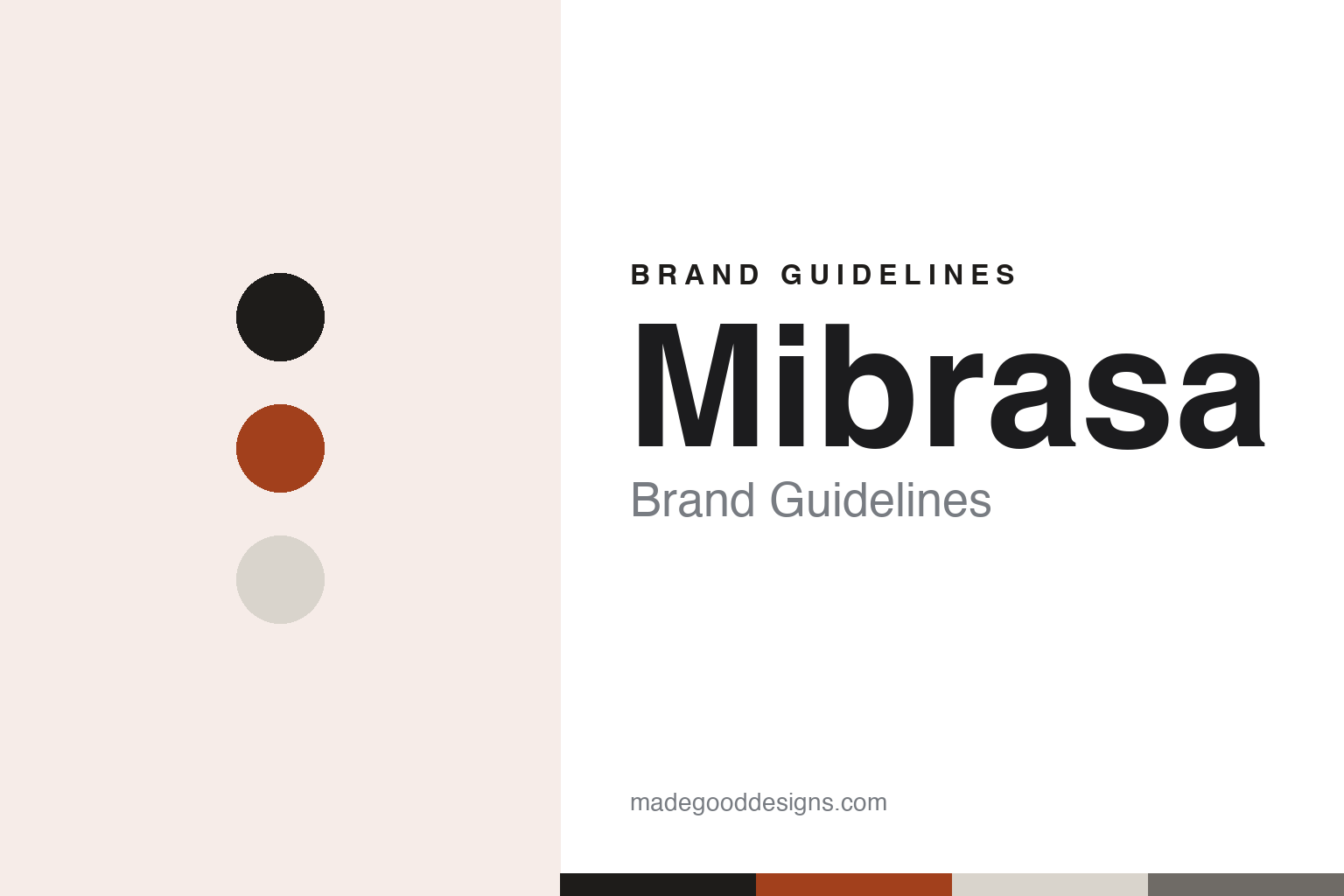
Mibrasa Brand Guidelines
Charcoal ovens and grills from a workshop on the Costa Brava.
Aa
Two constants: a charcoal, ember and ash palette and a condensed sans register. Abstract homage — not a Mibrasa product or mark; no oven, grill, logo or nameplate is reproduced.
Palamós
A family firm on the Costa Brava.
Mibrasa is a maker of charcoal-fired cooking equipment for restaurants, based in Palamós, a port town on the Costa Brava in the province of Girona, Catalonia. Its legal name, given on its own website, is Mibrasa Charcoal Ovens, SL, and its products carry the Mibrasa name in every market. The company’s own slogan calls the people behind it “craftsmen of fire”.
The firm’s start date is reported differently by different sources. The Catalonia Industry Suppliers directory, run by the Catalan government’s trade and investment agency and last updated in March 2020, gives the company’s founding year as 1996. In June 2017, the Girona newspaper Diari de Girona published an interview with Dani, Pere and Víctor Hernández, whom it named as the owners of Mibrasa, and described the business as a young company that had started six years earlier, in the middle of the economic crisis, and had been on an industrial estate in Palamós for those six years.
In that interview the owners described Mibrasa as the result of the work of two generations of business people from the hospitality trade, added to by younger entrepreneurs. They said they had been born and raised in Palamós and had chosen to stay there, on the Mediterranean coast. At that point, Diari de Girona reported, the brand was already exporting to more than 45 countries, and the owners spoke of an international distribution network with demonstration kitchens run with chefs.
Mibrasa still describes itself as a young, family company. On its website it says its workshop in Palamós, “in the heart of the Costa Brava”, is where it produces equipment for customers around the world, and that it works with chefs to develop its products. The company says its clients and partners are now spread across more than 70 countries.
Colour
Ovens, parrillas and robatas.
The company’s core product is the charcoal oven, an enclosed oven fired with charcoal. Mibrasa sells these as the HMB family, in versions it names on its website as Compact and Space for worktops, Base on a stand, Vertical with a heated cabinet below, and Hot with heated holding drawers. Each comes in several widths, and the model codes on its pages show the options: a stand, a tray rack, an upper or lower heated cabinet.
Around the oven the company has built a wider range of open-fire equipment. Its parrilla grills, in the Argentine and Spanish open-grill style, come in Slim, Classic, Fire and Custom versions, the last with a refractory wall and hanging grids. Its robata grills, after the Japanese robatayaki tradition, come as Beast, Fix and Lift, the last with a lifting system for its tiers. A Duo line combines a grill and a compact oven on one stand, and a small hibachi is sold alongside accessories, grillware, charcoal and fire-lighting products. Extraction hoods are offered under the name Mibrasa by Supravent.
The company’s marketing leans heavily on chefs. Its website lists restaurants that use its equipment, from Ángel León’s Aponiente in Spain to Dominique Crenn’s Atelier Crenn in San Francisco and Fireside in Hong Kong, each paired with the Mibrasa model in its kitchen. In 2017 the owners told Diari de Girona that Michelin-starred kitchens including Paco Pérez’s Miramar in Llançà and Hertog Jan in Belgium were then fitted with Mibrasa ovens.
Mibrasa also sells through trade fairs and distributors. Its own news pages report stands at Host Milano 2025, FHA Singapore 2026, the US National Restaurant Association show in 2026 and Madrid Fusión in 2026, and cooking days with dealers abroad, including one with an Australian distributor at a restaurant in Melbourne.
Typography
Ovens and the trade.
Commercial ovens are bought by chefs, restaurant chains and kitchen designers rather than by shoppers, and their makers present them that way. Catalogues and websites lean on stainless steel product shots against plain backgrounds, close-ups of touch-screen control panels, and oven fronts photographed in working restaurant, bakery and convenience-store kitchens, often with a chef at the door.
The category covers several kinds of machine. Combi steamers join convection heat and steam in one cabinet; speed ovens pair fast-moving hot air with other sources of heat; conveyor and deck ovens serve pizza and baking; and charcoal ovens put live fire inside a closed box. Many makers sell more than one kind, and several of these names now sit inside larger equipment groups, Middleby of Elgin, Illinois, among them, rather than standing alone.
Much of the selling happens face to face. HostMilano in Milan, Internorga in Hamburg and the National Restaurant Association Show in Chicago are among the fairs where makers show new ovens, often with chefs cooking on the stand. Alto-Shaam says it first showed its Cook & Hold oven at the 1968 NRA Show, and the makers’ own websites still point buyers to test kitchens and live cooking demonstrations, where an oven can be judged by what comes out of it. TurboChef’s website offers a way to find one of its test kitchens, and Alto-Shaam’s lists demonstrations and virtual events under the name Taste of Alto-Shaam.
This guide sets out what can be checked about each brand — who founded it, who owns it now, and where its ovens are made — and marks clearly what rests only on the company’s own word.
Aa
A condensed sans for a maker of fire equipment. (Specimen set in Barlow Condensed, a sans STAND-IN; NOT the Mibrasa logo.)
Mibrasa
A Catalan name in other markets.
Mibrasa sells abroad through local dealers. In June 2024 the Romanian business site Economica.net reported that Bilancia, a Romanian distributor of hospitality equipment founded in 1992, had added Mibrasa charcoal ovens to its range. Bilancia marked the launch with an event of live cooking demonstrations and tastings, attended by the economic and commercial counsellor of the Spanish embassy in Romania, who spoke of the place of fire in Spanish cooking.
The owners described the same approach in 2017, when Diari de Girona reported a distribution network with demonstration rooms in several countries. The company now runs separate language versions of its website for Spanish, Catalan, English, French and Italian readers, and a US version.
Mibrasa’s own pages stress high-grade steel, careful detailing and engineering, and the company says that everyone behind the brand, from the welder to the chef, shares the aim of making robust equipment for restaurant kitchens. It also describes its work as rooted in Mediterranean cooking over fire.
Its visual identity is not set out in any published guide. The company sets its name in capitals as MIBRASA across its website and uses its “craftsmen of fire” line as a signature on its pages. No designer of its logo is named in the sources available.
For a design guide, Mibrasa shows how a small regional maker can carry one idea — cooking over charcoal — across ovens, grills and accessories under a single name; compare it with Josper and Marra Forni. For this guide we use charcoal, ember and ash tones with a condensed sans, an unofficial interpretation; no product or logo is reproduced.
Explore & save
Keep Mibrasa’s identity on hand — save it to a board in the Made Good inspiration library.
Mibrasa identity set
Pin the Mibrasa charcoal, ember and ash palette and the condensed sans register to your own board.


