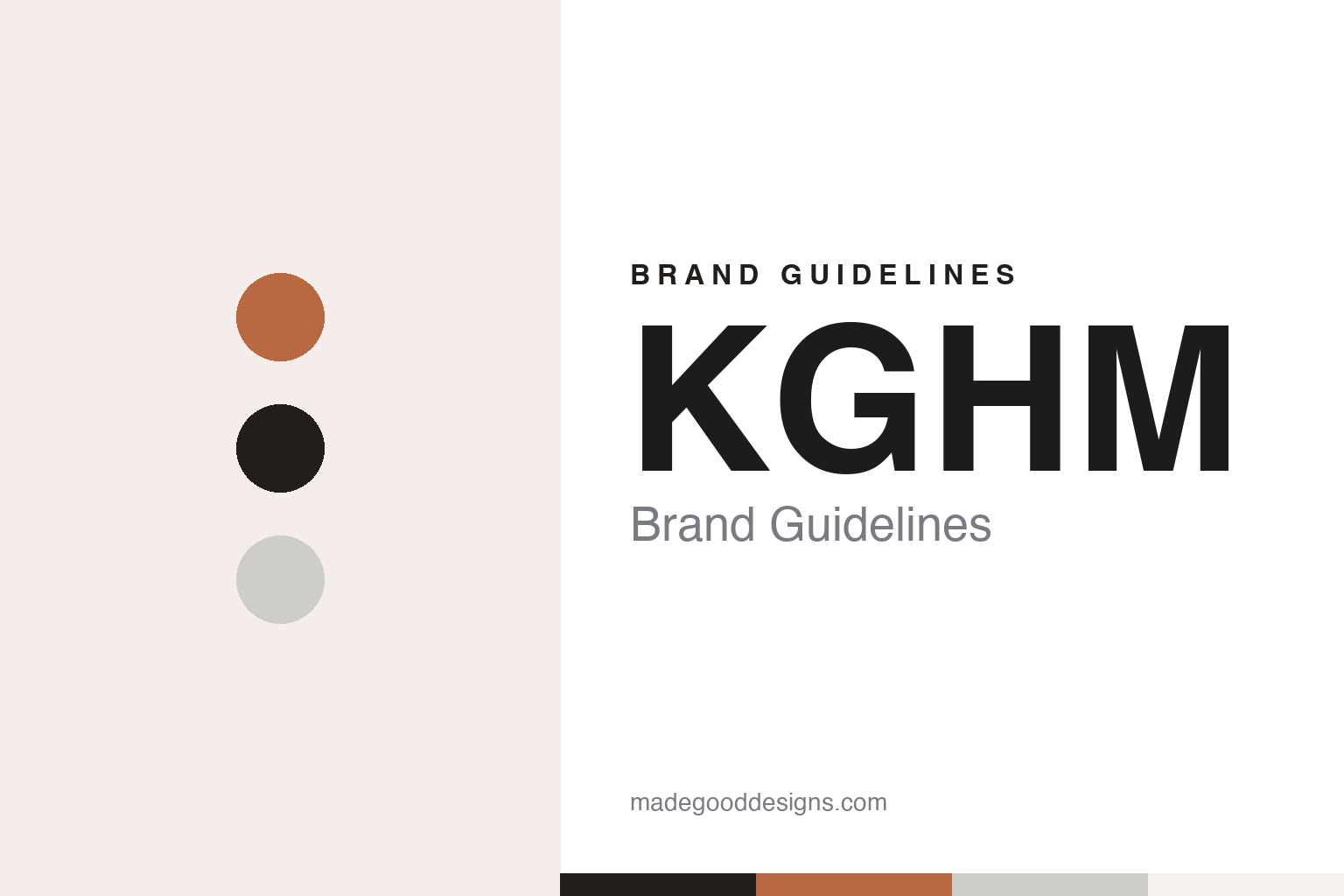
KGHM Brand Guidelines
A state combine’s initials, carried into a listed copper and silver company.
Aa
Two constants: a copper, near-black and silver palette and an industrial sans register. Abstract homage — not a KGHM product or mark; no logo or nameplate is reproduced.
Kombinat Górniczo-Hutniczy Miedzi
A 1957 ore find and a state combine in Lower Silesia.
KGHM began as a state enterprise in Lower Silesia, in south-western Poland. Its roots lie in a discovery: on 23 March 1957, the company’s own history says, the geologist Jan Wyżykowski found the main copper ore deposit near Lubin and Polkowice, at a depth of more than 650 metres, after a drilling programme that had met doubts because earlier German surveys had not confirmed ore in the area. English and Polish Wikipedia record the same discovery in 1957.
Copper had already come from an older basin in the foothills of the Sudetes. Between 1949 and 1954, the company says, the Lena, Konrad and Nowy Kościół mines there were reactivated, and a smelter at Legnica, begun in 1951, made its first copper casting on 24 December 1953. On 28 December 1959, according to English and Polish Wikipedia, the Ministry of Heavy Industry set up a mining enterprise at Lubin, then still under construction; in 1961 it became the Kombinat Górniczo-Hutniczy Miedzi, the Copper Mining and Smelting Combine, which the company dates to 1 May 1961. The initials of that name are still the brand.
The 1960s and 1970s were years of building. Sinking shafts through water-bearing rock meant freezing the ground first, which the company describes as new to Poland at the time. The Lubin and Polkowice mines were completed in 1968, the year the first concentrate came from the Lubin ore plant; the Głogów smelter was commissioned in July 1971; and the Rudna mine, built from 1969 to 1974 on richer deposits found in the late 1960s, is described by the company as its biggest mine. Until August 1976, Wikipedia says, the combine answered to the Minister of Heavy Industry, and afterwards to the metallurgy ministry.
Colour
From a state combine to Warsaw, Vancouver and the Atacama.
The combine was reorganised in 1991. On 9 September 1991, Polish Wikipedia says, the state enterprise was turned into a joint-stock company wholly owned by the State Treasury, KGHM Polska Miedź S.A., entered in the commercial register at Legnica three days later. In July 1997 the State Treasury sold shares in a public offering and KGHM was listed on the Warsaw Stock Exchange; the company says it also listed global depositary receipts in London, a programme it ended in December 2009. Polish Wikipedia gives the State Treasury’s holding as 31.79 per cent, and says the shares belong to the WIG20 and WIG30 indices.
In Poland the business remains concentrated in the Legnica–Głogów Copper Belt: the Lubin, Rudna and Polkowice-Sieroszowice mines — the last formed by merging two mines in January 1996 — an ore-enrichment branch, and smelters at Głogów, Legnica and Cedynia. Polish Wikipedia names the main products as refined cathode copper, copper wire rod for cables and wires, and refined silver. The company says a precious-metals plant at Głogów, started up in 1993, produces refined silver, gold and selenium from refining residues, and that an Upcast line for oxygen-free copper wire opened at Cedynia in October 2006.
Expansion abroad came through Canada. On 6 December 2011 KGHM agreed to take over Quadra FNX Mining; the deal closed on 5 March 2012, and the company was renamed KGHM International, based in Vancouver, according to English and Polish Wikipedia and the company. Its assets included the Robinson mine in Nevada, the Carlota mine in Arizona and the Sierra Gorda copper-molybdenum project in northern Chile. The company says Sierra Gorda was formally opened on 1 October 2014 and named after Ignacy Domeyko, a Polish geologist who spent most of his life in Chile; commercial production followed in 2015. KGHM holds 55 per cent. The other 45 per cent, once held by two Sumitomo companies, passed to the Australian miner South32, which completed its purchase on 22 February 2022, The Motley Fool Australia reported.
Not every project went ahead. English Wikipedia says the Ajax copper-gold project in British Columbia, a venture KGHM led from 2010, was rejected by the Canadian government on environmental grounds in 2018.
Typography
Copper miners and their image.
Copper miners sell a raw material, not a consumer product, so their identities are built for investors, governments, employees and the communities near their mines. The pictures tend to repeat across the sector: terraced open-pit benches lit by low desert sun, haul trucks whose wheels stand taller than the workers beside them, the long sheds of a concentrator, and stacks of copper cathode sheets ready for shipment. Copper itself often supplies the colour, in warm orange and brown tones that run through reports and presentations.
Much of the communication is formal. Annual reports, sustainability reports and technical reports on reserves are published on fixed calendars, and quarterly results are written for analysts. Alongside the numbers sit recurring themes: safety, presented as a daily routine rather than a slogan; community programmes in schools, clinics, water and local suppliers; and, increasingly, the place of copper in electricity grids, electric vehicles and renewable energy, framed as the metal of the energy transition.
The sector also has its own meeting places. The PDAC convention in Toronto and the Mining Indaba in Cape Town gather miners, explorers, investors and ministers each year, and company stands, logos and presentation decks are designed for those rooms as much as for the web. Trade titles such as The Northern Miner and Mining Technology report on projects, permits and disputes, which are part of the public record of every large miner.
The companies in this guide differ widely in origin: some began as subsidiaries of older American smelting groups, some as small exploration companies, some as state enterprises. This guide sets out what can be checked about each one — who founded it, who owns it, where it mines and what has been reported about its disputes — and marks clearly what rests only on the company’s own word.
Aa
An industrial sans for a copper combine’s initials. (Specimen set in Archivo, a sans STAND-IN; NOT the KGHM logo.)
KGHM
Deep shafts, a jubilee slogan and four countries.
The company’s own history records the risks of deep mining. In March 2013, the company says, a rock-mass tremor at the Rudna mine cut off 19 miners, who were reached by rescue teams after more than seven hours. On 29 November 2016 a rockburst at Rudna became what the company itself calls the largest mining disaster in its history; each year on that date, it says, staff and local people gather at a memorial outside its head office in Lubin. Its newest major shaft, GG-1 at Kwielice, reaches 1,348 metres, which the company says is the deepest in Poland, and is meant to open up the Deep Głogów deposit.
The company presents copper as a material of the future. For its 60th anniversary in 2021 it used the slogans “Explorer, Giant, Visionary” and “Future is made of copper,” with murals in Legnica and Warsaw, a touring exhibition and a commemorative film, the company says. In 2022 it signed an agreement with the United States company NuScale Power on small modular reactors, as both English Wikipedia and the company report, and it says its Legnica and Głogów smelters passed a Copper Mark audit that year. Polish Wikipedia notes that KGHM is a major sponsor of sport, including the football club KGHM Zagłębie Lubin, and a patron of the Royal Castle in Warsaw.
Today KGHM Polska Miedź is headquartered in Lubin and, English Wikipedia says, has operations in Poland, Canada, the United States and Chile. Its name is still the abbreviation of the 1961 combine.
For a design guide, KGHM shows how a state combine’s initials can become a listed company’s brand. Compare Codelco, the Chilean copper company, and Antofagasta, another copper miner in Chile. For this guide we use a smelter copper, a near-black and a silver grey with a sans, an unofficial interpretation; no product or logo is reproduced.
Explore & save
Keep KGHM’s identity on hand — save it to a board in the Made Good inspiration library.
KGHM identity set
Pin the KGHM copper, near-black and silver palette and the industrial sans register to your own board.


